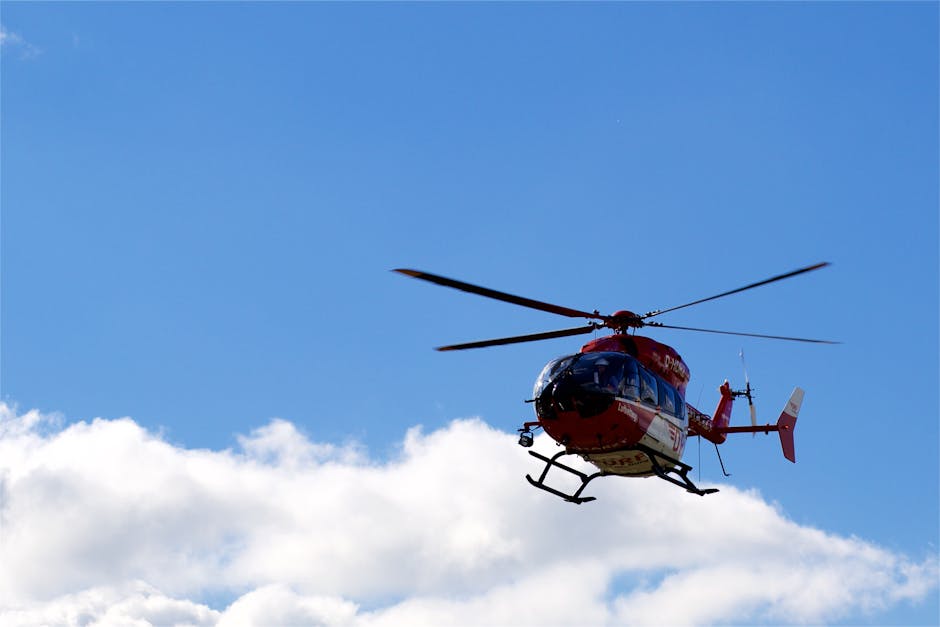
- NASA engineers have tested next-generation Mars helicopter prototypes at speeds exceeding Mach 1, a first for any rotorcraft designed for extraterrestrial use.
- The new helicopters could transform planetary exploration by accessing rugged terrain unreachable by rovers and transmitting high-resolution data to orbiters and Earth-based teams.
- Future Mars missions could deploy high-speed aerial scouts capable of covering vast distances in a fraction of the time.
- The new prototypes feature swept rotor blades, lightweight carbon-composite airframes, and adaptive control systems engineered for Mars’ thin CO₂ atmosphere.
- NASA’s next-generation Mars helicopters represent a paradigm shift in planetary exploration, surpassing the capabilities of the successful Ingenuity helicopter.
In a wind tunnel outside Pasadena, California, NASA engineers have pushed the limits of aerospace engineering by testing next-generation Mars helicopter prototypes at speeds exceeding Mach 1. This marks the first time any rotorcraft designed for extraterrestrial use has undergone supersonic evaluation. With Mars’ atmosphere just 1% the density of Earth’s, achieving controlled flight is a monumental challenge—yet these new tests suggest that future missions could deploy high-speed aerial scouts capable of covering vast distances in a fraction of the time. If successful in real-world deployment, these helicopters could transform planetary exploration by accessing rugged terrain unreachable by rovers, all while transmitting high-resolution data back to orbiters and Earth-based teams.
Beyond Ingenuity: The Next Era of Mars Aviation

The success of NASA’s Ingenuity helicopter, which completed 72 flights on Mars between 2021 and 2024, proved that powered flight on another planet was possible. But Ingenuity was limited by its slow speed—maxing out at around 10 km/h—and short operational range. Now, NASA’s Jet Propulsion Laboratory (JPL) is developing advanced rotorcraft designed to fly faster, farther, and more efficiently. The new prototypes feature swept rotor blades, lightweight carbon-composite airframes, and adaptive control systems engineered specifically for Mars’ thin CO₂ atmosphere. These enhancements are not incremental—they represent a paradigm shift in how we approach aerial reconnaissance on alien worlds. With plans for integration into upcoming Mars Sample Return and human exploration missions, the agency aims to deploy fleets of autonomous helicopters that can scout landing zones, map subsurface ice, and even assist astronauts in real time.
Supersonic Breakthrough in Simulated Martian Conditions

The recent tests were conducted at NASA’s Ames Research Center using a specialized wind tunnel capable of replicating Mars’ low-pressure, cold environment. Engineers subjected scaled models of the new helicopters to airflow speeds up to Mach 1.2 while monitoring blade stability, lift generation, and structural integrity. Unlike Earth-based helicopters, which suffer from transonic drag and shockwaves at high speeds, the Martian prototypes exploit the planet’s thin atmosphere to minimize aerodynamic resistance. According to Dr. Aerox Lin, lead aerospace engineer on the project, “We’ve observed stable rotor performance even as tip speeds surpass the speed of sound—an achievement many believed impossible for rotary-wing aircraft in such conditions.” The data collected will inform the design of full-scale vehicles expected to reach cruising speeds over 150 km/h, more than ten times faster than Ingenuity.
Engineering the Future of Interplanetary Flight

The leap to supersonic rotorcraft hinges on advances in materials science, computational fluid dynamics, and AI-driven flight control. The new blades are shaped like those of high-speed military drones but optimized for low Reynolds number environments typical on Mars. Simulations run on supercomputers at NASA’s Advanced Supercomputing Facility revealed that slight twists and anhedral angles could prevent blade stall and shock-induced vibrations. Moreover, onboard AI systems adjust rotor pitch in real time to maintain stability amid sudden gusts and pressure shifts. These innovations are not just theoretical—test models demonstrated controlled lift and maneuverability throughout the transonic regime. Experts say this progress could shorten flight times between key geological sites from weeks to hours, dramatically increasing the scientific return of each mission.
Implications for Mars Exploration and Human Missions

Supersonic Mars helicopters could redefine mission architecture for both robotic and crewed expeditions. For robotic missions, they offer rapid deployment to hazardous zones like cliff faces, lava tubes, and impact craters where rovers cannot go. For future human explorers, such aircraft could serve as aerial scouts, emergency responders, or cargo delivery platforms across vast Martian outposts. They may also carry miniaturized spectrometers and ground-penetrating radar to locate water ice deposits critical for life support and fuel production. Given that time is a precious resource on Mars, where communication delays with Earth stretch up to 20 minutes, autonomous high-speed flight offers a strategic advantage. These rotorcraft could become the eyes and ears of surface operations, enhancing situational awareness and decision-making in real time.
Expert Perspectives
While many aerospace experts applaud the breakthrough, some urge caution. Dr. Lena Cho, planetary scientist at the University of Colorado Boulder, notes, “Supersonic flight introduces new risks—vibrations, thermal stress, and navigation errors—that could jeopardize mission success.” Others, like Dr. Rajiv Mehta of MIT’s Space Systems Lab, argue the benefits outweigh the risks: “If we want to explore Mars efficiently, we can’t rely solely on slow-moving rovers. High-speed aerial platforms are the logical next step.” There is growing consensus that a mixed fleet—combining slow, precision flyers like Ingenuity with fast scouts—will maximize scientific output and operational flexibility.
As NASA prepares for the next round of atmospheric testing in 2026, all eyes are on how these helicopters perform under prolonged stress. Will they maintain control during sudden dust storms? Can they land safely after high-speed descents? And how will they integrate with existing Mars orbiters and surface assets? The answers could determine whether supersonic rotorcraft become standard equipment on future Red Planet missions. With private space companies also showing interest, the race to master Martian aviation has only just begun.
Source: Techspot