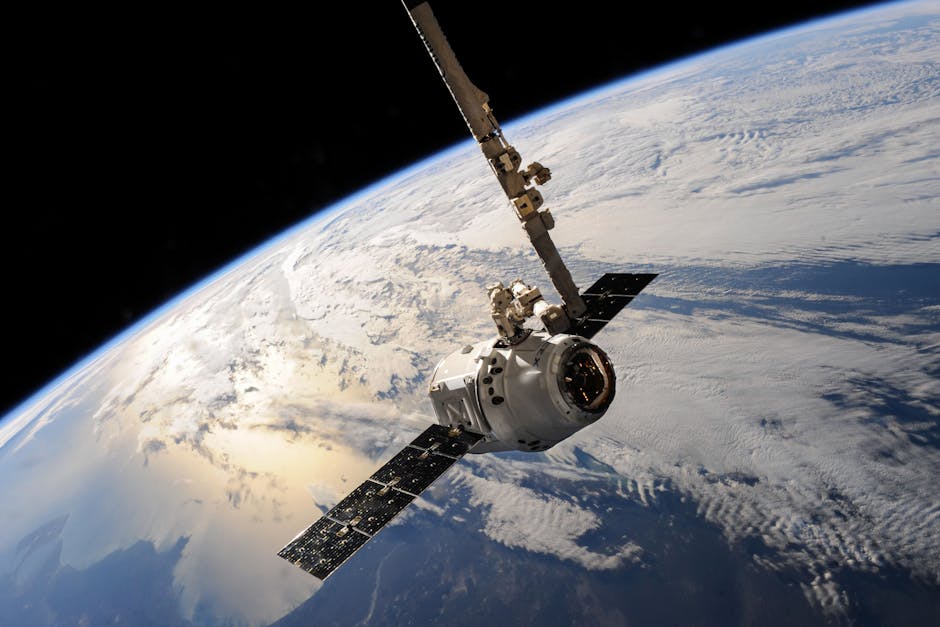
- 45% of orbiting objects in space are considered space debris, posing a threat to operational satellites and spacecraft.
- High-speed fragments of dead satellites, rocket stages, and spacecraft are accumulating in Earth’s orbit, making them increasingly hazardous.
- The density of debris in some low Earth orbits has reached a tipping point, potentially triggering a chain reaction known as Kessler Syndrome.
- Millions of small debris fragments are undetected, in addition to the 35,000 larger pieces being tracked by the European Space Agency and US Space Surveillance Network.
- Active satellites make up only 28% of all tracked objects, while derelict spacecraft and debris make up the majority.
High above Earth, where the atmosphere thins into silence, a silent storm is gathering. At speeds exceeding 17,500 miles per hour, fragments of dead satellites, spent rocket stages, and shattered spacecraft streak through the void—unseen, uncontrolled, and increasingly numerous. From the vantage of ground-based radar and orbital tracking stations, the picture is stark: nearly half of all cataloged objects circling our planet serve no purpose other than to pose a threat. These remnants of humanity’s spacefaring ambitions—bolts, lens caps, frozen coolant droplets, and entire defunct satellites—form an invisible cloud of debris. In some low Earth orbits, the density has reached a tipping point, where one collision could trigger a chain reaction known as Kessler Syndrome, potentially rendering entire orbital paths too dangerous to traverse.
\n\n
Debris Outnumbers Active Satellites

\n
According to the latest data from the European Space Agency (ESA) and the U.S. Space Surveillance Network, more than 35,000 pieces of orbital debris larger than 10 centimeters are currently being tracked, and millions more smaller fragments elude detection. Shockingly, active satellites constitute only about 28% of this population, while derelict spacecraft, abandoned rocket bodies, and fragmentation debris make up the rest. A 2023 analysis published in Nature Astronomy revealed that non-functional objects now account for nearly 47% of all tracked orbital residents. These figures underscore a growing imbalance: for every new satellite launched, multiple debris-generating events—explosions, collisions, or deliberate anti-satellite tests—add exponentially to the problem. The most congested zone, between 800 and 1,000 kilometers above Earth, has become a graveyard of outdated missions, including decommissioned spy satellites and remnants of Cold War-era launches.
\n\n
The Legacy of Six Decades of Spaceflight

\n
The roots of the current crisis stretch back to the dawn of the Space Age. Since the launch of Sputnik in 1957, over 11,000 metric tons of human-made objects have been placed into orbit. Early missions left behind upper rocket stages and payload adapters, with little regard for long-term consequences. The problem accelerated in the 1990s and 2000s as satellite constellations expanded and launch frequency increased. A pivotal moment came in 2007, when China conducted an anti-satellite missile test, destroying one of its own weather satellites and generating over 3,500 trackable fragments. Just a year later, a U.S. rocket stage exploded due to residual fuel, adding another 1,000 large debris pieces. These single events alone increased the total debris population by nearly 20%. The 2009 collision between the defunct Russian Kosmos-2251 and the operational Iridium 33 satellite further demonstrated the fragility of orbital space, producing over 2,000 new debris objects and serving as a wake-up call to the international community.
\n\n
Engineers and Regulators Race Against Time

\n
Today, a coalition of scientists, aerospace engineers, and policy makers is working to reverse the trend. At ESA’s Space Debris Office in Darmstadt, Germany, researchers are developing active debris removal technologies, including net-capture systems and robotic arms. In Japan, Astroscale has launched experimental missions to dock with and deorbit dead satellites. Meanwhile, SpaceX and other private operators have committed to deorbiting satellites within five years of mission completion, a significant improvement over past practices. Yet regulatory enforcement remains weak. While international guidelines recommend post-mission disposal, compliance is voluntary. Some newer satellite operators cut corners to save fuel, leaving their spacecraft in long-lived orbits. Motivated by competition and profit, commercial ventures often prioritize deployment speed over sustainability, exacerbating the problem even as they promise global broadband and Earth observation services.
\n\n
Threats to Satellites, Space Stations, and Future Missions

\n
The proliferation of space junk poses immediate risks to operational spacecraft. The International Space Station regularly performs avoidance maneuvers—over 30 since 1999—to evade potential impacts. Even a 1-centimeter paint fleck once cracked a window on the Space Shuttle Challenger, illustrating the destructive potential of high-velocity debris. With mega-constellations like Starlink planning to deploy tens of thousands of satellites, the danger of collision cascades grows. Insurance costs for satellite operators are rising, and some orbits may soon become economically unviable. Moreover, debris threatens critical infrastructure: weather forecasting, GPS navigation, disaster monitoring, and military reconnaissance all depend on stable access to space. If key orbital lanes become impassable, the consequences could ripple through global economies and scientific research for generations.
\n\n
The Bigger Picture
\n
Earth’s orbit is a finite resource, and like the oceans or atmosphere, it suffers when treated as a commons without stewardship. The rise of space debris reflects a broader pattern of technological advancement outpacing ethical and regulatory frameworks. As humanity looks to the Moon, Mars, and beyond, the way we manage near-Earth space will set a precedent. If we fail to clean up our orbital backyard, we risk not only losing access to vital services but also undermining the very foundation of future exploration. Sustainable space operations must become the norm—not an afterthought.
\n\n
Looking ahead, several pilot missions aim to capture and deorbit large debris objects by the mid-2020s. The success of these efforts will determine whether we can reclaim control of Earth’s orbital environment. Without coordinated global action—binding treaties, enforced disposal protocols, and investment in cleanup technology—the sky above us may become too cluttered to safely traverse. The era of reckless space expansion must end, not with a crash, but with a commitment to responsibility.
Source: Popsci