- US inflation surged by 3.5% in April, driven by a 29.7% jump in gasoline prices, the largest increase in over a year.
- Escalating tensions between Iran and its regional adversaries are fueling a sharp energy-driven inflationary shock.
- The national average for regular gasoline exceeded $3.80 per gallon, impacting American households.
- Economists warn that the inflation spike could force the Federal Reserve to reconsider its interest rate outlook.
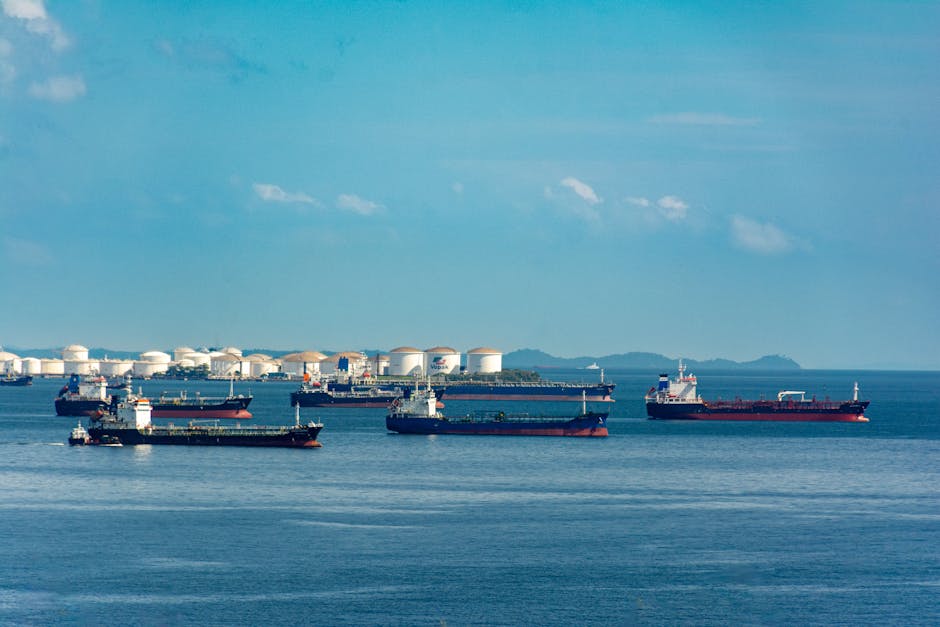
- Global supply chains face renewed stress due to military movements in the Persian Gulf, exacerbating the inflation crisis.
U.S. consumer prices surged in April at the fastest pace in over a year, reigniting concerns about inflation just as geopolitical tensions in the Middle East reach a boiling point. The Labor Department reported a 3.5% year-over-year increase in the Consumer Price Index, driven largely by a staggering 29.7% jump in gasoline prices compared to April 2023. This spike marks one of the sharpest energy-driven inflationary shocks in recent memory, with crude oil briefly topping $95 per barrel amid escalating hostilities involving Iran. As global supply chains face renewed stress and military movements intensify in the Persian Gulf, American households are already feeling the pinch at the pump, with the national average for regular gasoline exceeding $3.80 per gallon. Economists warn this could derail hopes for a soft landing, forcing the Federal Reserve to reconsider its interest rate outlook.
Why Markets Are on Edge Over Iran’s Role in Oil Supply

The current inflation spike is rooted in escalating military and diplomatic tensions between Iran and regional adversaries, amplified by attacks on shipping lanes and threats to key oil infrastructure. Since early March, Iran-linked forces have targeted commercial vessels in the Red Sea and Persian Gulf, disrupting one of the world’s most critical energy corridors. The U.S. and European allies have responded with airstrikes and naval deployments, raising fears of direct conflict. According to Reuters analysis, each escalation has added a risk premium of $7 to $10 per barrel to global oil prices. With Iran producing over 3 million barrels of crude per day and controlling access to the Strait of Hormuz—through which about 20% of globally traded oil passes—any disruption could have cascading effects. This isn’t just a regional crisis; it’s a direct threat to energy security in advanced economies, particularly the U.S., where transportation fuels make up a significant portion of household spending.
Key Players and Escalating Actions in the Conflict

The current crisis stems from a series of retaliatory actions that began in early 2024, after an Iranian consulate in Syria was destroyed in an Israeli airstrike, killing several high-ranking Islamic Revolutionary Guard Corps (IRGC) officers. Iran responded with an unprecedented drone and missile assault on Israel, marking the first direct attack from Iranian soil. Though most projectiles were intercepted, the event shattered a long-standing deterrence framework. The U.S., bound by defense pacts with Israel, deployed additional aircraft carriers and missile defense systems to the region. Meanwhile, Houthi rebels in Yemen—backed by Iran—have intensified drone attacks on commercial shipping, prompting U.S. and UK-led strikes on Houthi positions. On the economic front, sanctions have been tightened on Iranian oil exports, but black-market shipping networks continue to funnel crude to China and India, complicating global enforcement. These dynamics have created a volatile feedback loop: military action drives oil volatility, which fuels inflation, which in turn constrains policy options in Washington.
How Energy Costs Are Reshaping Inflation and Policy

The link between energy prices and broader inflation is now more apparent than at any point since the 2022 post-pandemic surge. Energy costs feed into nearly every sector of the economy—from transportation and manufacturing to food distribution—amplifying price increases across the board. The Bureau of Labor Statistics noted that the transportation index alone rose 4.1% in April, the largest monthly gain since mid-2022. Analysts at the Federal Reserve Bank of New York warn that sustained high fuel prices could lead to second-round effects, such as wage demands and higher service costs. While core inflation—which excludes food and energy—rose a more moderate 2.6%, the resurgence of energy-driven inflation undermines confidence in the Fed’s ability to cut rates this year. “We’re seeing a classic supply shock,” said Dr. Lena Choi, senior economist at the Peterson Institute. “Unlike demand-driven inflation, you can’t fix this with higher interest rates—it requires geopolitical resolution.”
Who Bears the Brunt of Rising Prices?

Low- and middle-income households are disproportionately affected by the current spike in energy prices, as transportation costs consume a larger share of their budgets. Rural Americans, who often rely on personal vehicles and live far from public transit, face particular strain. Small businesses, especially in logistics and delivery, are also cutting margins or passing costs to consumers. Airlines have announced new fuel surcharges, and trucking firms report shrinking profit margins. Even sectors seemingly distant from oil—like agriculture—are feeling the pressure, as fertilizer and machinery operation costs rise. For the Federal Reserve, the dilemma is acute: holding rates steady risks entrenching inflation, but raising them further could choke off growth. With presidential elections approaching, the political stakes are equally high, as voters historically punish administrations during periods of rising living costs.
Expert Perspectives
Experts are divided on the likely trajectory. Some, like Dr. Michael Adler of Georgetown University, argue that “this is a temporary risk premium that will fade if diplomacy holds.” Others, such as former Treasury official Karen Young, caution that “the Middle East is structurally more unstable than in previous decades, and energy markets must price in chronic volatility.” While military deterrence may prevent full-scale war, the consensus is that sporadic attacks and sanctions will keep oil prices elevated, sustaining inflationary pressure well into 2025.
Looking ahead, markets will watch for de-escalation signals—such as resumed nuclear talks or reduced naval deployments—as potential triggers for price relief. Yet with Iran’s regional ambitions and Israel’s security concerns fundamentally at odds, a lasting resolution remains elusive. The Federal Reserve, meanwhile, is expected to maintain a cautious stance, delaying rate cuts until inflation shows sustained improvement. As global energy markets remain hostage to geopolitical flashpoints, the U.S. economy faces a new era of inflation shaped less by monetary policy and more by the unpredictability of conflict.
Source: Al Jazeera