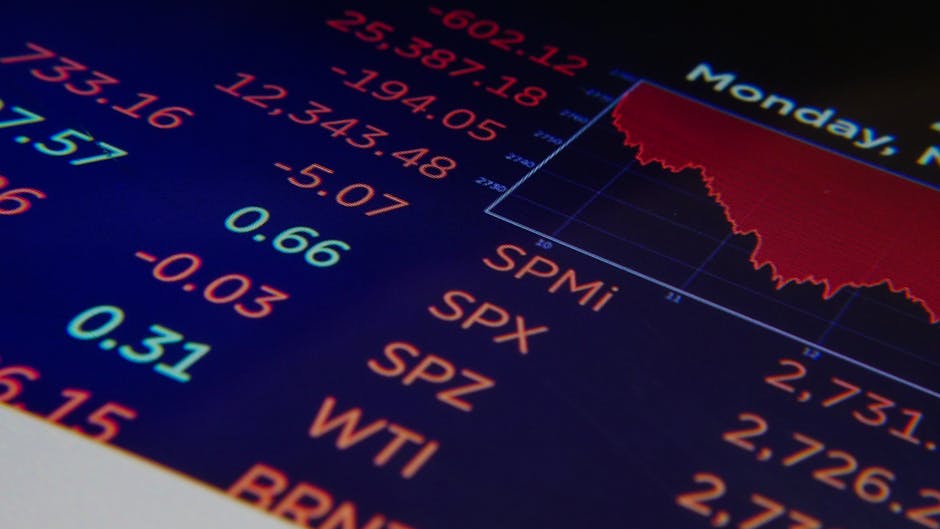
- Inflation surged 1.4% in April, more than double the predicted rate, marking the largest jump since mid-2022.
- The Producer Price Index increase was driven by sharp rises in intermediate goods, energy, and service costs.
- Core PPI, excluding food and energy, rose 0.8%, exceeding the 0.3% consensus and indicating sustained inflationary pressures.
- The surge in producer prices was broad-based, with final demand services margins climbing 1.8%, the fastest pace in over two years.
- Year-over-year PPI now stands at 5.8%, up from 2.8% in March, reflecting persistent inflationary trends.
In a quiet government office in Washington, D.C., analysts scrolled through early morning spreadsheets as numbers blinked into place—numbers that would soon ripple through bond markets, corporate boardrooms, and kitchen tables across America. The April Producer Price Index had just been released, and the figure was jarring: a 1.4% monthly increase, more than double what even the most hawkish economists had predicted. The data, released by the Bureau of Labor Statistics, landed like a thunderclap in financial markets already teetering on the edge of uncertainty. Traders on Wall Street paused mid-conversation, their eyes fixed on Bloomberg terminals. For months, the narrative had been one of gradual disinflation, of inflation slowly bending toward the Federal Reserve’s 2% target. That story, for now, may be over.
Producer Prices Accelerate Unexpectedly

The April PPI report revealed a 1.4% month-over-month increase in producer prices—the largest jump since mid-2022—driven by sharp rises in intermediate goods, energy, and service costs. Core PPI, which excludes food and energy, rose 0.8%, also well above the 0.3% consensus. Notably, the surge was broad-based: margins for final demand services climbed 1.8%, the fastest pace in over two years, reflecting persistent strength in transportation, logistics, and professional services. Year-over-year, the PPI now stands at 5.8%, up from 2.8% in March. Analysts point to sticky wage growth, renewed energy price volatility, and supply chain bottlenecks in Asia as key contributors. The data contradicts recent optimism that inflation was on a sustained downward path, potentially altering the Federal Reserve’s calculus as it weighs its next interest rate decision. Treasury yields spiked immediately after the release, with the 10-year note climbing above 4.7%.
From Disinflation to Reacceleration

Just three months ago, the economic narrative was one of cautious optimism. Inflation, as measured by the Consumer Price Index, had cooled to 3.2% year-over-year in January, down from a 9.1% peak in 2022. The Fed had paused rate hikes, signaling confidence that monetary tightening was working. But underlying pressures never fully dissipated. Supply chains, though improved, remain fragile—particularly in maritime shipping and semiconductor logistics. Geopolitical disruptions, including Red Sea tensions and China’s uneven post-zero-COVID recovery, have hampered global trade flows. At the same time, labor markets have remained historically tight, with job openings still well above pre-pandemic levels. Wages grew at 4.1% annually in April, outpacing productivity gains and feeding into pricing power across service sectors. The PPI data suggests that what looked like disinflation may instead have been a pause in a longer, more volatile journey.
The Policymakers and Market Makers

At the Federal Reserve, officials are now reevaluating their stance. Chair Jerome Powell, who recently emphasized a data-dependent approach, faces mounting pressure to resume rate hikes. Insiders suggest that the central bank may delay a June cut and instead hold rates steady through the summer. Meanwhile, Treasury Secretary Janet Yellen has quietly convened emergency meetings with energy and transportation officials to assess supply-side interventions. On Wall Street, hedge fund managers like Ray Dalio and economists at firms such as PIMCO have warned that structural inflation drivers—aging demographics, decarbonization costs, and deglobalization—are underappreciated. Corporate pricing strategies are also shifting: companies from freight haulers to software providers are passing through margin pressures faster than in previous cycles, reflecting less tolerance for margin compression. These decisions, made in boardrooms from Dallas to Detroit, are collectively reshaping the inflation landscape.
Implications for Consumers and Businesses

The PPI jump is unlikely to remain confined to wholesale markets. Historically, about 60-70% of producer price increases are eventually passed through to consumers, though with a lag of several months. That means higher prices at gas stations, for shipping services, and in professional fees could be on the horizon. Small businesses, which often lack the pricing power of major corporations, may face squeezed margins. The housing market, already strained by elevated mortgage rates, could see renewed pressure as construction input costs rise. For workers, the upside is potential wage growth, but only if productivity gains don’t erode real income. Investors, meanwhile, are bracing for volatility: equities dipped in early trading, while inflation-protected securities like TIPS saw renewed demand. The Fed’s ability to engineer a soft landing now hinges on whether this spike proves transitory or the start of a new phase.
The Bigger Picture
This PPI surge is more than a monthly anomaly—it’s a signal that the post-pandemic economy remains structurally unbalanced. The era of ultra-low inflation, anchored by globalization and technological efficiency, may be giving way to a new regime of higher volatility. Climate change, geopolitical fragmentation, and labor scarcity are reshaping cost structures across industries. Central banks, accustomed to fine-tuning demand, may find they have less control over supply-driven inflation. The April data doesn’t just reflect what’s happening in factories and freight yards; it reflects a world where economic stability can no longer be taken for granted.
What comes next depends on whether policymakers can adapt to this new reality. The Fed may need to hold rates higher for longer, even at the risk of slowing growth. Congress could revisit fiscal strategies that amplify inflation, such as energy subsidies or infrastructure spending. For households, the message is clear: inflation isn’t gone. It’s evolving. And the era of predictable price trends may be over.
Source: Investing