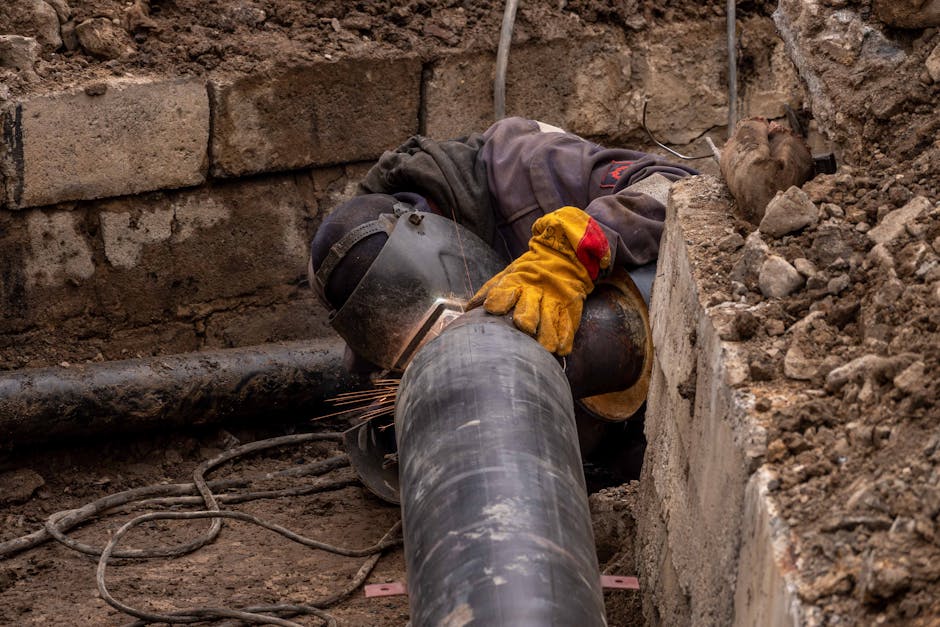
- The Keystone XL and Dakota Access pipelines are being reborn as a network of repurposed segments, regulatory loopholes, and state-level approvals.
- The current plan, dubbed ‘Frankenpipelines,’ bypasses federal oversight by reconfiguring the defunct Keystone XL as smaller, state-regulated extensions.
- Proponents are leveraging existing rights-of-way and decommissioned segments to reconnect southern Alberta crude flows into Montana’s refineries and rail hubs.
- The new approach is designed to survive in an age of climate reckoning and grassroots resistance.
- The pipelines are being resurrected in a more fragmented and politically agile version compared to the 2015 pipeline era.
Across the windswept prairies of Montana and the oil-stained soil of North Dakota, a quiet transformation is underway — not of land or ecology, but of ambition. Bulldozers creep along survey lines where protests once roared, and survey stakes mark routes through tribal buffer zones still scarred by past confrontations. What appears to be scattered upgrades to aging infrastructure may in fact be the scaffolding for something far more consequential: a covert resurrection of two of North America’s most controversial oil pipelines. Once canceled, mourned, and celebrated as dead by environmentalists, the Keystone XL and Dakota Access pipelines are being reborn not as monolithic projects, but as a stitched-together network of repurposed segments, regulatory loopholes, and state-level approvals. This is not the pipeline era of 2015 — it is a more fragmented, politically agile version designed to survive in an age of climate reckoning and grassroots resistance.
Keystone’s Stealth Comeback

The current plan, informally dubbed ‘Frankenpipelines’ by energy analysts, hinges on bypassing federal oversight by reconfiguring the defunct Keystone XL as a series of smaller, state-regulated extensions. Instead of seeking a new presidential permit for cross-border construction, proponents are leveraging existing rights-of-way and decommissioned segments to reconnect southern Alberta crude flows into Montana’s refineries and rail hubs. According to filings with the Montana Department of Environmental Quality, at least three separate projects — the Red Butte Connector, the Milk River Reversal, and the Sweetgrass Link — would collectively restore 78% of Keystone XL’s original U.S. route. Meanwhile, the Dakota Access Pipeline’s northern expansion, long dormant, is being advanced through a joint venture between Energy Transfer and Canadian midstream firm Pembina, proposing a 125-mile extension from Stanley, North Dakota, into Saskatchewan. Together, these projects could funnel up to 830,000 barrels per day of heavy crude into U.S. and global markets.
From Cancellation to Comeback

The path to this moment began in 2021, when President Joe Biden revoked the Keystone XL cross-border permit on his first day in office, fulfilling a campaign promise to environmental voters. That decision followed over a decade of legal challenges, Indigenous resistance, and shifting economic calculus. The original $8 billion project, backed by TransCanada (now TC Energy), had been approved under President Obama only to be rescinded, then revived under President Trump in 2017. By 2022, TC Energy formally abandoned the project after sustained opposition from landowners and the Ponca, Sioux, and Northern Cheyenne tribes. Yet, the underlying infrastructure — surveyed corridors, easements, and partially laid pipe — never fully disappeared. Now, Trump-aligned energy lobbyists and state Republican lawmakers have rebranded Keystone XL’s remnants as ‘energy security upgrades,’ exploiting a loophole in the National Environmental Policy Act that exempts segmented projects under 100 miles from comprehensive federal review. This patchwork strategy was first tested in 2023 when North Dakota approved the West Olive Pipeline, a 62-mile segment later linked to the Dakota Access system.
The Architects of Resurrection

At the forefront of this revival are a coalition of fossil fuel executives, conservative state regulators, and political operatives with deep ties to Trump’s energy agenda. Harold Hamm, billionaire fracker and former energy advisor to Trump, has quietly funded lobbying groups like the American Energy Alliance, which now advocates for ‘infrastructure optimization’ — a term critics say masks pipeline expansion. In Montana, Republican Governor Greg Gianforte has fast-tracked environmental reviews for the Milk River Reversal, citing ‘rural energy independence.’ Meanwhile, TC Energy, though publicly distancing itself from Keystone XL, continues to hold key easements and has contracted engineering firms to assess reactivation costs. On the Dakota Access front, Kelcy Warren, CEO of Energy Transfer, has long sought northern expansion to access Canadian Bakken reserves, viewing the current political climate as a window of opportunity. Their shared strategy: avoid a single, high-profile battle in favor of incremental gains that, cumulatively, achieve the same end.
Consequences for Land and Climate

If completed, the revived pipeline network would cross over 14 tribal nations, at least three major aquifers, and sections of the Missouri River watershed — raising urgent concerns about spills, sovereignty, and climate impact. The Standing Rock Sioux Tribe, which led the 2016–2017 resistance at Standing Rock, has already filed a preemptive injunction against the Dakota Access extension, citing treaty violations and inadequate consultation. Environmental groups like Earthjustice and the Sierra Club warn that the combined projects could emit an additional 120 million metric tons of CO₂ annually — equivalent to 26 million cars on the road. Moreover, the use of segmented approvals could set a dangerous precedent, allowing future fossil fuel projects to evade robust environmental review by slicing proposals into smaller parts. For farmers and ranchers along the routes, the return of pipeline traffic brings both promised lease payments and fears of soil contamination and diminished land value.
The Bigger Picture
This pipeline revival is not just about oil — it’s about the future of energy governance in America. As federal climate policies face legal and political headwinds, state-level infrastructure decisions are becoming the new battleground. The ‘Frankenpipeline’ model reveals a broader trend: the decentralization of fossil fuel expansion, where ambition is realized not through grand announcements, but through regulatory fragmentation and jurisdictional arbitrage. It underscores a paradox of modern energy politics — even as the world shifts toward renewables, entrenched systems find adaptive ways to persist, often with the backing of powerful political patrons. The outcome could redefine how environmental law is enforced — or circumvented — for decades to come.
What happens next depends on the 2024 election. If Trump returns to power, these projects could receive federal blessings, funding, and expedited permitting. But even without direct support, their fragmented nature makes them harder to stop. Legal challenges will multiply, tribal nations will intensify resistance, and public scrutiny may yet force a reckoning. One thing is certain: the fight over America’s energy future is no longer confined to Washington. It’s being rerouted, segment by segment, across the heartland.
Source: Fortune