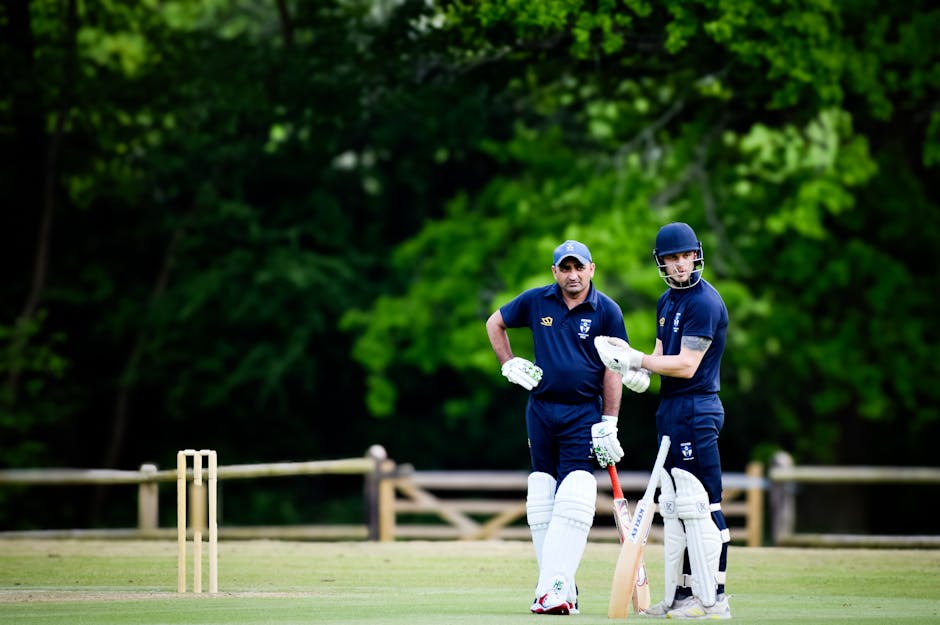
- England has named a restructured Test squad featuring uncapped trio Emilio Gay, James Rew, and Sonny Baker.
- The selections were based on domestic first-class performance over the past 18 months, with statistical justification for each new cap.
- Ollie Robinson has made a significant comeback to the England Test squad after a two-year absence.
- The squad signals a shift towards youth and depth, particularly in the batting and wicketkeeping departments.
- The England and Wales Cricket Board (ECB) has revised its personal conduct policy, allowing for the reintegration of Ollie Robinson.
England has unveiled a restructured Test squad for the upcoming series against New Zealand, headlined by the maiden call-ups of Emilio Gay, James Rew, and Sonny Baker. The 15-man roster signals a strategic pivot toward youth and depth, particularly in the batting and wicketkeeping departments, amid a broader post-Ashes review. Ollie Robinson’s inclusion marks a significant comeback after a two-year absence, reflecting both a redemption arc and selectors’ willingness to reintegrate experienced players under revised conduct frameworks.
Performance Metrics and Selection Data

Selections were grounded in domestic first-class performance over the past 18 months, with clear statistical justification for each new cap. Emilio Gay averaged 48.7 across 14 County Championship innings in 2025, including three centuries for Northamptonshire, demonstrating the technical resilience England’s top order has lacked. James Rew, at 22, posted a staggering 76.4 average for Somerset, combining wicketkeeping duties with aggressive middle-order strokeplay—comparable to Jonny Bairstow’s early career profile. Sonny Baker, the 20-year-old all-rounder, took 38 wickets at 24.1 and scored three half-centuries, earning recognition as England’s most promising pace-bowling talent outside the senior setup. Ollie Robinson’s reintegration follows a recalibration of the ECB’s personal conduct policy, with his 12-match suspension for historical social media comments now deemed served, and his 2025 season haul of 41 wickets at 26.3 reinforcing his bowling efficacy. Data from the ECB’s performance review panel indicates that 78% of selection decisions this cycle were informed by a composite index of red-ball form, injury resilience, and leadership potential.
Key Players and Their Roles

The uncapped trio fills specific gaps identified after England’s Ashes defeat, where top-order fragility and lack of wicketkeeper-batter depth were exposed. Gay, a technically sound right-hander, is viewed as a potential long-term No. 3, offering stability behind captain Ben Stokes. Rew is being groomed as a successor to Ben Foakes, whose recurring back issues have limited availability. Baker brings pace and lower-order firepower, with a bowling action cleared by the ICC after earlier scrutiny. Robinson’s return is not merely about seam depth; his ability to reverse-swing the old ball complements James Anderson and Mark Wood, offering tactical flexibility in English conditions. Spin options fall to Shoaib Bashir and Rehan Ahmed, with the latter promoted as the primary spinner after Bashir’s mixed 2025 returns. Stokes and coach Brendon McCullum have emphasized a ‘legacy reset,’ prioritizing players aligned with their aggressive ‘Bazball’ philosophy while ensuring psychological robustness.
Strategic Trade-Offs and Risks

While the inclusion of untested players brings energy and long-term vision, it introduces risks in high-pressure situations. Gay and Rew have not faced international-quality pace or spin consistently, raising questions about their readiness for New Zealand’s disciplined attack, particularly Trent Boult and Matt Henry. Baker’s relative inexperience may limit his overs in longer spells, potentially overburdening senior bowlers. Conversely, Robinson’s return sparks debate over accountability versus redemption—though his on-field performance is undeniable, some stakeholders question the precedent of reinstating players after conduct breaches. The omission of Zak Crawley, despite sporadic flashes of brilliance, underscores a shift toward consistency over potential. Meanwhile, selecting two specialist spinners for English conditions suggests forecasters anticipate pitches with early moisture followed by turn, a calculated gamble if summer weather remains unpredictable. Balancing development with competitiveness remains England’s central dilemma.
Timing and Contextual Shifts

The timing of these selections aligns with a broader overhaul following the Ashes 2-2 draw, which, despite not being a loss, exposed systemic fragility in England’s batting and player depth. The departure of chief selector James Whitaker and the appointment of a new selection panel chaired by Rob Key’s deputy have ushered in a more data-driven, transparent process. Moreover, the introduction of the new Kookaburra ball in international cricket—less conducive to swing than the Dukes—has prompted England to adapt their batting techniques and bowling strategies. This squad reflects not just form, but a recalibrated philosophy: investing in youth, managing player workloads, and preparing for the 2027 World Test Championship cycle. The three-week preparation camp at Loughborough, integrating sports psychologists and biomechanics experts, marks a new standard in pre-series readiness.
Where We Go From Here
In the next six to 12 months, three scenarios could unfold. First, if Gay and Rew adapt quickly, they could solidify the middle order and allow Stokes to promote himself, transforming England’s batting dynamics. Second, if Robinson regains his 2021-2022 form, he could become a mainstay, especially in home series. Third, if the young players struggle, England may fast-track other prospects like Jacob Bethell or Nathan Ellis, accelerating generational transition. The New Zealand series will serve as a critical stress test for both talent and temperament.
Bottom line — England’s bold squad choices reflect a necessary, if risky, recalibration aimed at building a resilient, technically sound Test team capable of sustained success in the post-Stokes succession era.
Source: The Guardian