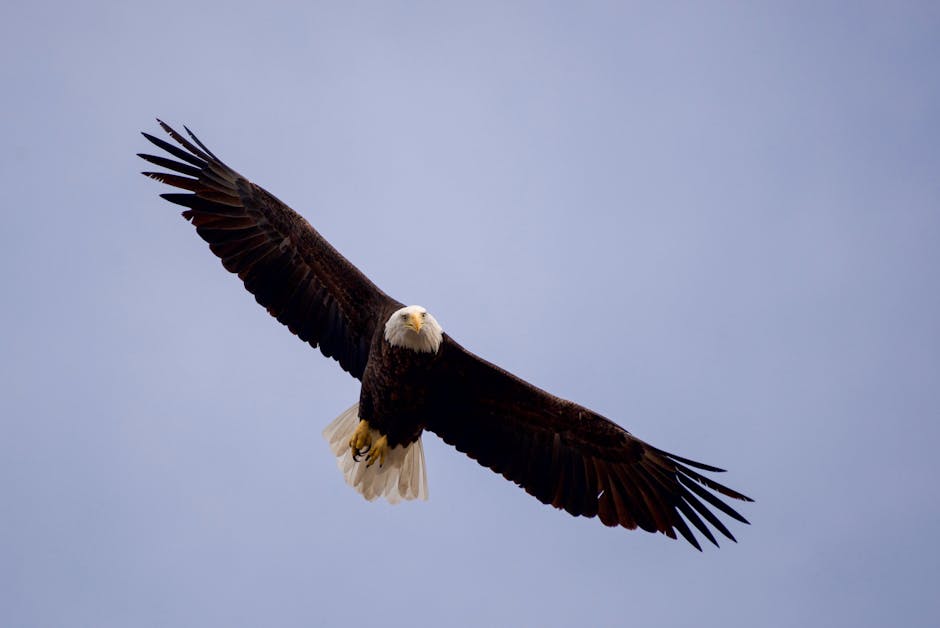
- White-tailed eagles are set to be reintroduced to Exmoor National Park after being extinct in the UK for over 200 years.
- The reintroduction program aims to establish a sustainable population of white-tailed eagles in the region.
- The eagles play a crucial role as apex predators, helping regulate populations and contribute to nutrient cycling.
- Local farmers have expressed concerns that the eagles could threaten newborn lambs and rural economies.
- The initiative follows successful reintroductions in Scotland and on the Isle of Wight, where populations have grown and spread naturally.
In a bold move for ecological restoration, white-tailed eagles—once extinct across much of the UK—are set to be released in Exmoor National Park, marking the first time the species will take flight in the region in over 200 years. Known as the UK’s largest bird of prey, with wingspans reaching up to 2.5 meters, these majestic raptors vanished from British skies in the early 19th century due to habitat loss, hunting, and poisoning. Now, a multiyear conservation initiative backed by government agencies, wildlife trusts, and the Roy Dennis Wildlife Foundation aims to reestablish a sustainable population. However, the plan has ignited fierce debate, with some local farmers warning that the eagles could threaten newborn lambs and undermine already strained rural economies.
Return of a Lost Predator

The reintroduction program represents a significant chapter in the UK’s broader rewilding movement, which seeks to restore native species and rebalance ecosystems disrupted by centuries of human intervention. White-tailed eagles, also known as sea eagles, play a crucial role as apex predators, helping regulate populations of scavengers and weak animals while contributing to nutrient cycling. Their absence has left an ecological void, particularly in coastal and moorland habitats like Exmoor. The initiative follows successful reintroductions in Scotland and on the Isle of Wight, where populations have gradually grown and even begun to spread naturally. Scientists argue that Exmoor’s rugged terrain, abundant waterways, and rich biodiversity provide ideal conditions for the birds to thrive—offering not just a sanctuary but a potential hub for future expansion across southern England.
Planned Release and Conservation Strategy

Over the next three years, conservationists plan to release up to 60 young eagles—20 per year—sourced from healthy populations in Norway, where the species remains widespread. Each bird will be fitted with GPS trackers to monitor movements, survival rates, and interactions with the environment. The release site, carefully selected within Exmoor’s protected boundaries, offers secluded nesting cliffs and minimal human disturbance. The project is led by the South West Partnership for Environment and Economic Prosperity (SWEEP) in collaboration with Natural England and the Exmoor National Park Authority. According to project leaders, the young eagles will be kept in temporary enclosures upon arrival, allowing them to acclimate before fledging. This soft-release method has proven effective in previous programs, significantly increasing survival rates during the critical first months of independence.
Roots of Farmer Resistance

Despite the ecological promise, the initiative faces strong resistance from some local farming communities. Critics, including representatives from the National Farmers Union (NFU) South West, argue that the reintroduction poses a direct threat to livestock, particularly lambing flocks. While scientific studies from Scotland suggest that white-tailed eagles primarily scavenge or hunt fish and waterbirds, rare instances of predation on young lambs have been documented. Farmers contend that even isolated incidents could have disproportionate economic and emotional impacts on small-scale operations. “We’re not against conservation,” said one Exmoor sheep farmer, “but we can’t be expected to bear the cost of a government-led project that puts our livelihoods at risk.” Compensation schemes exist for proven cases of bird-related livestock loss, but many remain skeptical about the ease and fairness of claiming.
Ecological Promise vs. Economic Concern

The debate over the eagles underscores a growing tension between conservation goals and agricultural realities. Proponents point to data from reintroduction efforts in Scotland, where white-tailed eagle populations have rebounded without widespread livestock predation. A 2022 study published in Biological Conservation found that less than 1% of lamb losses in eagle territories were attributable to raptors, with weather, disease, and foxes accounting for the vast majority. Conservationists also emphasize the potential economic upside: wildlife tourism generated over £50 million annually in areas with established eagle populations. They argue that Exmoor could see similar benefits, from guided tours to eco-lodges, creating new revenue streams for rural communities. Yet, trust remains fragile, and without transparent engagement and robust mitigation measures, the project risks deepening rural divides.
Expert Perspectives
Experts are divided on the balance between ecological restoration and rural impact. Dr. Sarah Thomas, a conservation biologist at the University of Exeter, supports the reintroduction, stating, “This is a once-in-a-generation opportunity to restore a missing keystone species and boost biodiversity.” In contrast, agricultural economist Dr. Mark Reynolds cautions, “Top-down conservation policies often overlook the lived realities of farming families. Compensation mechanisms must be swift, transparent, and generous to gain trust.” Some experts advocate for co-management models, where farmers are involved in monitoring and decision-making, potentially turning adversaries into allies in the conservation effort.
As the first eagles prepare for release in 2025, all eyes will be on Exmoor. Success will depend not only on the birds’ ability to adapt but on whether conservationists and farmers can forge a shared vision for a wilder, more resilient countryside. The outcome could set a precedent for future reintroductions across the UK, from beavers to lynx. One question remains: can a species erased by human hands be welcomed back without deepening social fractures? The answer may shape the future of British rewilding.
Source: BBC