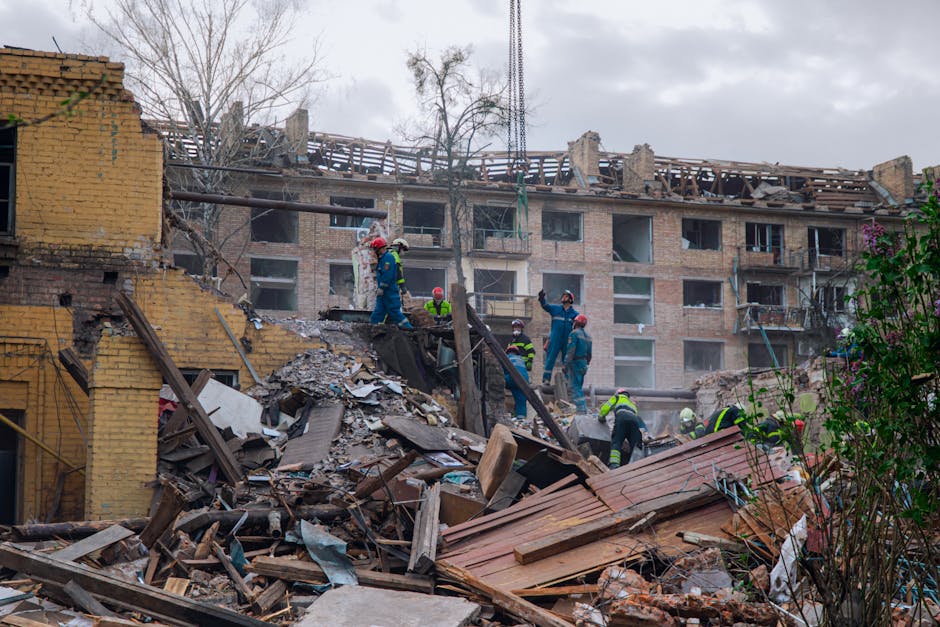
- Zelenskiy asserts that Russia demonstrates no genuine intent to end the ongoing full-scale invasion of Ukraine.
- Kyiv believes battlefield strength is the only factor that will influence Russia’s future actions and potential shift in posture.
- Ukraine is increasingly skeptical of international mediation without strong enforcement or security guarantees.
- Russian forces have significantly escalated attacks in 2024, with over 1,200 drone strikes and 450 missile strikes recorded.
- ISW reports consistent Russian advances across key regions like Donetsk, Zaporizhzhia, and Kharkiv, supported by heavy artillery.
Ukrainian President Volodymyr Zelenskiy has issued a stark assessment of Russia’s war strategy, declaring that Moscow has no genuine intention of ending its full-scale invasion. In a series of recent addresses, Zelenskiy emphasized that Russia continues to escalate hostilities despite intermittent diplomatic signals, reinforcing Kyiv’s belief that only battlefield strength will compel any shift in the Kremlin’s posture. This position reflects a deepening skepticism toward international mediation efforts, particularly those lacking concrete enforcement mechanisms or security guarantees for Ukraine.
Mounting Evidence of Sustained Russian Offensives

According to Ukraine’s General Staff, Russian forces have launched over 1,200 drone attacks and 450 missile strikes in the first quarter of 2024 alone—a 30% increase compared to the same period last year. In March, the Institute for the Study of War (ISW) documented sustained assaults across Donetsk, Zaporizhzhia, and Kharkiv oblasts, with Russian units advancing at a rate of 0.5 to 1.2 kilometers per week under heavy artillery support. Open-source geolocation data confirms the deployment of more than 30 additional battalions since early 2023, many composed of mobilized conscripts and private military contractors. Ukrainian intelligence also intercepted communications indicating operational orders to ‘maintain pressure until Ukrainian resistance degrades.’ These metrics suggest not a war of attrition aimed at negotiation, but one of incremental territorial consolidation.
Key Actors and Their Strategic Calculus

At the center of the conflict remains President Vladimir Putin, whose public statements continue to frame the war as a ‘special military operation’ against Western-backed ‘neo-Nazis’—a narrative widely discredited by international observers according to the BBC. Meanwhile, Zelenskiy has worked to solidify Western military support, securing F-16 fighter jet commitments from Denmark and the Netherlands, and advocating for accelerated artillery and air defense deliveries. On the ground, commanders like General Oleksandr Syrskyi have adapted Ukrainian tactics to counter Russian numerical superiority, including decentralized drone warfare and precision missile strikes on logistics hubs. Russia’s reliance on Wagner Group remnants and mobilized penal battalions further underscores a strategy of exhausting Ukrainian forces rather than seeking resolution.
Strategic Trade-Offs: Resilience vs. Fatigue

Ukraine’s position involves significant trade-offs between military endurance and societal strain. While Western aid has delivered over $65 billion in security assistance since 2022, delays in U.S. appropriations have created critical gaps in ammunition supply, forcing Kyiv to ration artillery fire at times. Civilian infrastructure remains under relentless assault, with over 40% of Ukraine’s energy grid damaged since 2022, according to the Kyiv School of Economics. Conversely, Russia faces its own constraints: a defense budget now consuming 40% of state spending, widespread labor shortages, and growing dependence on Iranian drones and North Korean munitions. Yet, Moscow’s ability to absorb losses—both economic and human—appears calibrated for a protracted campaign, raising concerns that Western fatigue may outweigh Russian attrition.
Why the Moment Feels Different in 2024

The current phase of the war is shaped by several converging factors: the delay of a promised $60 billion U.S. aid package in Congress, Russia’s successful winter offensives near Avdiivka and Chasiv Yar, and the erosion of early optimism around peace summits. Unlike in 2022, when Ukraine’s defense of Kyiv galvanized global support, 2024 has seen muted reactions to territorial losses, suggesting a normalization of conflict. Additionally, Zelenskiy’s own political capital has faced domestic scrutiny amid mobilization debates and wartime governance challenges. These developments have collectively shifted the perception from a war with an endgame to one settling into a grueling status quo—one that Russia appears better prepared to endure.
Where We Go From Here
Looking ahead, three plausible scenarios emerge over the next 6 to 12 months. First, a frozen conflict could take hold if Western aid stabilizes but fails to enable major counteroffensives, leaving frontlines largely unchanged. Second, a Ukrainian resurgence may occur if F-16s become operational by late 2024 and Western air defense systems blunt Russia’s aerial dominance, potentially reshaping the battlefield. Third, a Russian breakthrough cannot be ruled out if Ukraine’s manpower and ammunition shortages persist, possibly leading to the fall of key cities like Pokrovsk or Kostiantynivka. Each path hinges on the durability of Western support and the Kremlin’s tolerance for escalation.
Bottom line — Zelenskiy’s warning reflects not only battlefield realities but a strategic reckoning: peace will not come through appeals, but through power, perseverance, and the sustained will of allies.
Source: Reuters