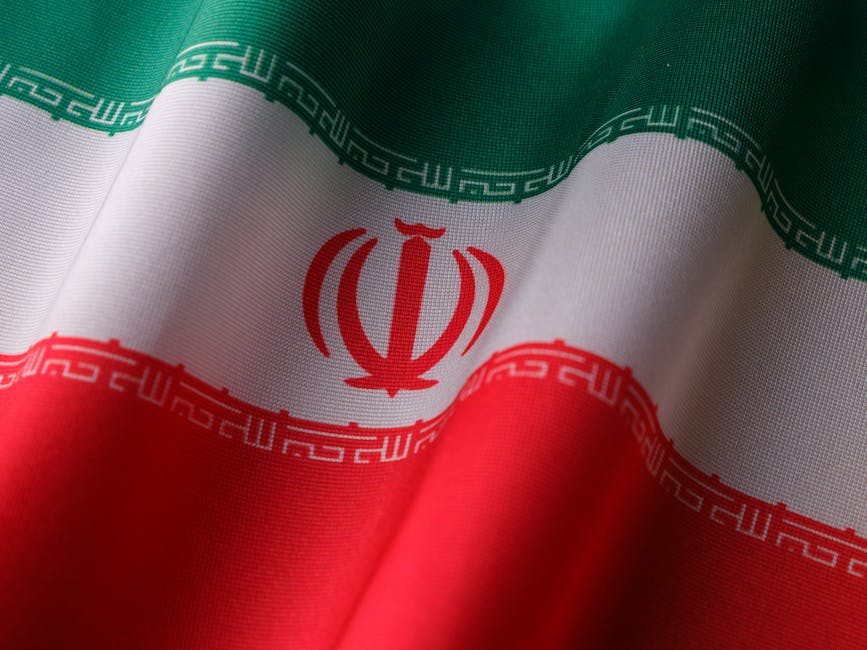
- Iran is reviewing a US-backed peace proposal aimed at ending the protracted regional conflict in the Middle East.
- The proposal’s existence marks a rare moment of diplomatic engagement between the US and Iran, two long-adversarial powers.
- Any credible peace initiative must address Iran’s regional alliances, nuclear ambitions, and longstanding US sanctions.
- The timing of Iran’s acknowledgment is critical, emerging amid a broader recalibration of Middle Eastern alliances.
- The US is seeking to avoid another open-ended military commitment through intensified backchannel diplomacy with Iranian counterparts.
Iran is reportedly in the process of reviewing a confidential U.S.-backed proposal aimed at ending a protracted regional conflict that has destabilized the Middle East for over a decade. While neither Tehran nor Washington has disclosed the terms of the plan, the mere acknowledgment of its existence marks a rare moment of diplomatic engagement between two long-adversarial powers. The move comes amid escalating violence in neighboring countries where both nations wield significant influence, including Yemen, Syria, and Iraq. Analysts note that any credible peace initiative must address Iran’s regional alliances, its nuclear ambitions, and longstanding U.S. sanctions. Though Iranian officials have stopped short of endorsing the proposal, their public admission of review signals a potential, albeit fragile, opening in a geopolitical standoff that has defied resolution through conventional diplomacy.
Why This Diplomatic Shift Matters Now

The timing of Iran’s acknowledgment is critical, emerging amid a broader recalibration of Middle Eastern alliances and growing international concern over the risk of wider conflict. With the Israel-Hamas war in Gaza triggering regional spillover and attacks by Iran-aligned groups on U.S. forces in Syria and Jordan, the stakes have never been higher. The Biden administration, seeking to avoid another open-ended military commitment, has intensified backchannel diplomacy with Iranian counterparts through intermediaries in Oman and Qatar. Simultaneously, Iran faces mounting internal pressure, with widespread protests over economic stagnation fueled by U.S. sanctions and declining oil revenues. A peace deal could offer Tehran relief from isolation while allowing Washington to project diplomatic leadership ahead of a contentious election cycle. Still, the lack of transparency surrounding the proposal’s content has fueled skepticism among regional actors and arms control experts.
Key Details of the Ongoing Diplomatic Review

According to sources close to the negotiations, the U.S. proposal was delivered through third-party envoys in late March and includes a phased approach to de-escalation. While full terms remain classified, preliminary reports suggest potential measures such as a mutual reduction in military posturing, restrictions on missile development, and a pathway to easing certain non-nuclear sanctions in exchange for verifiable limits on Iran’s uranium enrichment. The plan also reportedly calls for indirect talks between Iran and Saudi Arabia to address proxy conflicts across the region. Iran’s Supreme National Security Council has convened multiple sessions to assess the proposal, with hardliners in the Islamic Revolutionary Guard Corps voicing strong opposition. In contrast, moderate factions within President Ebrahim Raisi’s administration have signaled cautious openness, reflecting deep ideological rifts within Iran’s ruling elite.
Root Causes and Strategic Calculations Behind the Stalemate

The current diplomatic overture stems from a convergence of strategic vulnerabilities on both sides. For the U.S., prolonged military entanglement in the Middle East has become politically unsustainable, particularly as domestic attention shifts to great-power competition with China. Iran, meanwhile, faces economic contraction and diplomatic isolation, with inflation exceeding 50% and youth unemployment nearing 30%, according to BBC analysis. The war economy, once bolstered by proxy influence, is now a liability as regional partners like the Houthis in Yemen face military setbacks. Experts argue that Iran’s willingness to engage may reflect not a desire for peace per se, but a bid to fracture the U.S.-led coalition and gain leverage through negotiation. As Reuters reported, any lasting agreement would require unprecedented trust-building mechanisms and third-party verification, both of which remain in short supply.
Implications for Regional Actors and Global Powers

If the U.S.-Iran proposal leads to a formal de-escalation framework, the ripple effects would be felt across the Middle East and beyond. Israel, a staunch opponent of any deal that strengthens Iran’s regional standing, has already voiced alarm, with senior officials warning of ‘strategic miscalculation.’ Gulf states like the UAE and Bahrain, while supportive of reducing tensions, remain wary of Iranian assurances given past commitments. For ordinary Iranians, the prospect of eased sanctions could bring modest economic relief, though hardliners may resist any concessions perceived as capitulation. Internationally, a breakthrough could bolster the credibility of multilateral diplomacy, especially if backed by the UN or European powers. However, failure could deepen regional fragmentation, embolden militant groups, and increase the risk of direct military confrontation.
Expert Perspectives
Analysts are divided on the likelihood of success. Trita Parsi, founder of the National Iranian American Council, views the review as a ‘small but significant crack in the wall of hostility,’ suggesting Iran may be testing U.S. sincerity. In contrast, Behnam Ben Taleblu of the Foundation for Defense of Democracies warns that ‘Iran’s history of duplicity in negotiations demands extreme caution,’ noting that past overtures often coincided with accelerated weapons development. Some scholars argue the proposal may serve more as a confidence-building exercise than a blueprint for peace, designed to stabilize the status quo rather than resolve core disputes.
Going forward, the world will be watching for concrete actions: whether Iran halts recent advances in uranium enrichment, reduces support for proxy forces, or agrees to direct talks. The U.S. must balance diplomatic outreach with deterrence, particularly as Republican candidates vow a harder line. With trust in short supply and domestic politics on both sides complicating compromise, the path to peace remains narrow — but not impossible.
Source: The New York Times