- Scientists have discovered a natural compound in the Myrcia lingua tree that reduces COVID-19 infection risk by up to 80% in lab studies.
- The galloylquinic acids compounds block the virus from entering human cells, disrupt its replication, and suppress the hyperinflammatory response.
- This natural cocktail targets multiple vulnerabilities, potentially preventing the rapid development of drug resistance in conventional treatments.
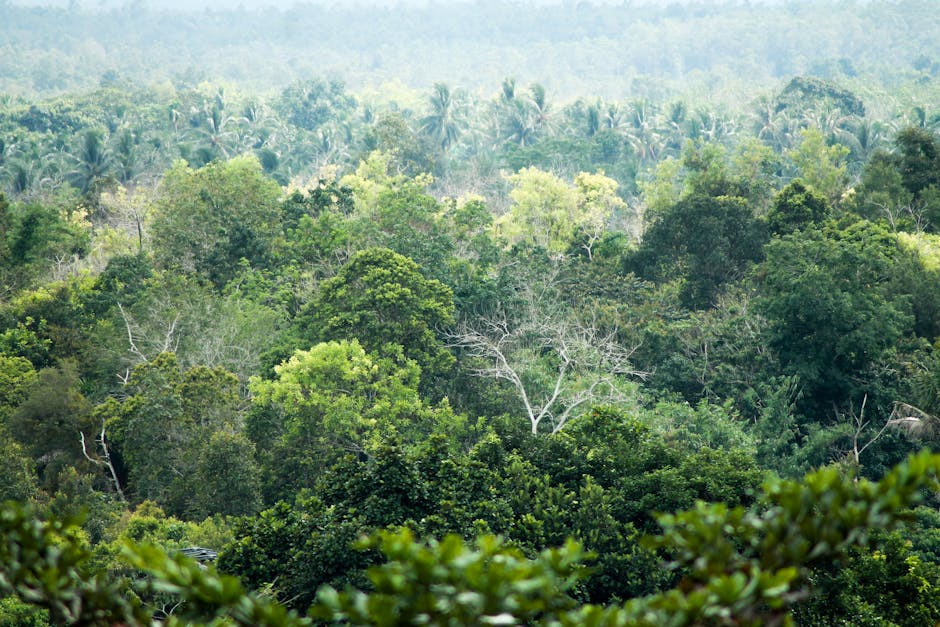
- The Myrcia lingua tree is native to the critically endangered Atlantic Forest in Brazil, a biodiversity hotspot with many undiscovered phytochemicals.
- Local communities in Brazil have used the Myrcia lingua tree for centuries in traditional medicine to treat infections and inflammation.
Deep in the understory of Brazil’s rapidly vanishing Atlantic Forest, a modest tree known as Myrcia lingua may harbor one of the most promising natural defenses yet discovered against SARS-CoV-2. Scientists have isolated a class of compounds—galloylquinic acids—from its leaves that simultaneously block the virus from entering human cells, disrupt its replication machinery, and suppress the hyperinflammatory response associated with severe COVID-19. In lab studies, these compounds reduced viral load by up to 80%, a result that has stunned virologists due to the breadth of their action. Unlike current antivirals such as remdesivir or nirmatrelvir, which target a single viral mechanism, this natural cocktail hits multiple vulnerabilities, potentially sidestepping the rapid development of drug resistance that plagues conventional treatments.
A Botanical Secret in a Biodiversity Hotspot

The Atlantic Forest, once spanning nearly 1.5 million square kilometers along Brazil’s coast, now survives in fragmented remnants covering less than 12% of its original range. Yet, this critically endangered biome remains a treasure trove of undiscovered phytochemicals. Myrcia lingua, a member of the myrtle family, has long been used in traditional medicine by local communities to treat infections and inflammation, though it remained largely unstudied by modern science. Now, researchers from the University of São Paulo and the Oswaldo Cruz Foundation have leveraged metabolomic screening and high-throughput antiviral assays to identify galloylquinic acids as the bioactive agents behind its medicinal effects. Their findings, published in Nature Communications, underscore the urgent need to preserve biodiversity not just for ecological reasons, but as a vital reservoir for future therapeutics.
Triple-Action Mechanism Unveiled

The study revealed that galloylquinic acids operate through three distinct yet complementary pathways. First, they bind to the spike protein of SARS-CoV-2, preventing it from attaching to the ACE2 receptor on human cells—a process akin to jamming a key in a lock. Second, the compounds interfere with the viral RNA-dependent RNA polymerase, an enzyme essential for the virus to copy its genome and propagate. Third, and perhaps most uniquely, they modulate the host’s immune response by suppressing NF-kB signaling, a key pathway driving cytokine storms in severe COVID-19 cases. This trifecta of action is exceptionally rare in antiviral research; most drugs are optimized for a single target. The researchers also noted minimal cytotoxicity in human cell lines, suggesting a potentially favorable safety profile for future clinical applications.
Why Multi-Target Therapeutics Matter

The emergence of antiviral resistance remains a constant threat in pandemic preparedness. Viruses like SARS-CoV-2 mutate rapidly, allowing them to evade drugs designed against a single protein target. By contrast, galloylquinic acids’ multi-pronged approach raises the evolutionary barrier for resistance—simultaneous mutations across multiple viral components would be required for the virus to escape inhibition, a much less probable event. This principle, known as polypharmacology, is increasingly recognized as a strategic advantage in drug development. According to Dr. Elena Torres, a virologist at the University of São Paulo and lead author of the study, “Nature has already optimized these compounds through millennia of plant-pathogen coevolution. We’re just beginning to decode that intelligence.”
Implications for Global Health and Drug Development

If these findings translate to human trials, galloylquinic acids could become the foundation for a new class of broad-spectrum antivirals, not only for current and future coronavirus threats but potentially for other RNA viruses like influenza or respiratory syncytial virus (RSV). The compounds may be particularly valuable in low-resource settings due to their natural origin and potential for cost-effective production. Moreover, their anti-inflammatory action could reduce the need for corticosteroids in severe cases, which, while lifesaving, carry significant side effects. However, challenges remain: scalable cultivation of Myrcia lingua, compound purification, and pharmacokinetic optimization are all critical hurdles before clinical deployment.
Expert Perspectives
While many scientists hail the discovery, some urge caution. Dr. Michael Chen, an infectious disease specialist at the CDC, notes that “hundreds of natural compounds show promise in vitro, but few make it to market due to bioavailability or toxicity issues.” Conversely, Dr. Aisha Patel, a drug development expert at Nature Reviews Drug Discovery, sees transformative potential: “This is a textbook example of how biodiversity can deliver solutions where synthetic chemistry struggles. It’s a call to invest in ethnobotanical research before these species vanish.”
As research progresses, scientists are exploring synthetic analogs of galloylquinic acids to enhance stability and potency. The next phase involves animal studies and, eventually, Phase I clinical trials. One pressing question remains: how well will these compounds perform against emerging variants with altered spike proteins? With deforestation rates in the Atlantic Forest continuing to rise, the race is on—not just to develop a new drug, but to preserve the ecosystems that may hold the next breakthrough.
Source: ScienceDaily