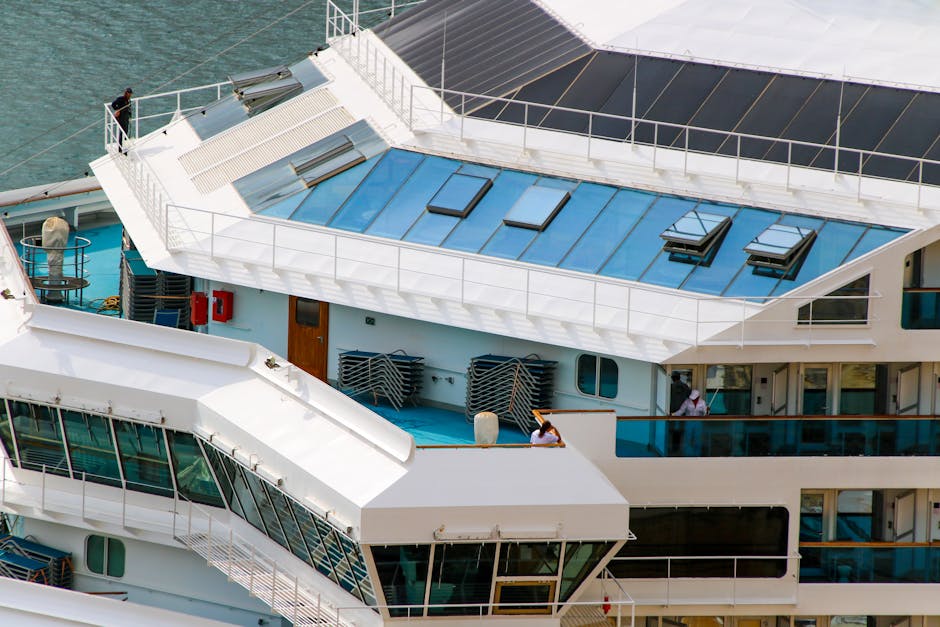
- The Diamond Princess cruise ship became a coronavirus hotspot due to ideal conditions for airborne spread.
- Close living quarters, shared dining areas, and air recirculation systems contributed to the rapid spread of the virus.
- Quarantine efforts were hindered by asymptomatic transmission and delays in testing.
- More than 700 confirmed cases were reported among passengers and crew on the Diamond Princess.
- The incident highlights the limits of containment in confined spaces during a pandemic.
What happens when a floating city becomes a petri dish? That’s the question gripping public health experts and governments after the Diamond Princess cruise ship — once a symbol of luxury travel — transformed into one of the earliest and most alarming clusters of COVID-19 outside China. As the final passengers left the vessel in Yokohama, Japan, following a chaotic five-week quarantine, data revealed more than 700 confirmed cases among passengers and crew. The ship’s saga, unfolding in real-time across news cycles and scientific journals, has become a cautionary tale about the limits of containment in confined spaces. With three more travelers testing positive even as they disembarked, the incident raises urgent questions about how pandemics spread and how authorities respond under pressure.
\n
How Did the Outbreak Begin and Spread So Rapidly?

\n
The Diamond Princess outbreak began in early February 2020 when a former passenger who had disembarked in Hong Kong tested positive for the novel coronavirus. In response, Japanese health authorities quarantined the ship off the coast of Yokohama with over 3,700 people on board. Initially, officials believed isolation would prevent further transmission. However, the virus had already taken hold. Close living quarters, shared dining areas, and air recirculation systems created ideal conditions for airborne spread. Despite efforts to isolate infected individuals, asymptomatic transmission and delays in testing allowed the virus to circulate undetected. According to a report by the U.S. Centers for Disease Control and Prevention (CDC), nearly 20% of those infected showed no symptoms, undermining containment strategies. The ship became a de facto laboratory for studying viral transmission in closed environments.
\n
What Evidence Shows About Transmission and Public Health Failures?

\n
Epidemiological models based on data from the ship suggest that without immediate and strict isolation protocols, quarantine can become a catalyst for spread rather than a barrier. A study published in Nature Medicine estimated that the virus’s reproduction number (R0) on the Diamond Princess was as high as 2.28 during the quarantine period — meaning each infected person spread it to more than two others. This contradicted early assumptions that isolation alone would suffice. Furthermore, the delayed rollout of widespread testing and inconsistent use of personal protective equipment (PPE) among crew and medical staff exacerbated the crisis. Japanese health officials faced criticism for relying on a narrow definition of exposure, initially only testing those with symptoms or close contact with confirmed cases. By the time mass testing began, the virus was already widespread.
\n
Are Quarantines Effective in Containing Pandemics on Ships?

\n
Not all experts agree that the Diamond Princess failure invalidates maritime quarantines altogether. Some argue that the problem wasn’t quarantine per se but its implementation. Dr. Hitoshi Oshitani, a virologist and member of Japan’s national infectious disease advisory board, stated that while the decision to quarantine was reasonable given the uncertainty at the time, the execution lacked coordination and scientific rigor. Others point to the successful containment on the MS Westerdam, which was denied docking in multiple countries but ultimately cleared after no infections were found. Critics also highlight ethical concerns: confining healthy individuals alongside the infected may violate human rights principles, especially when alternatives like rapid evacuation and isolation ashore are possible. The World Health Organization (WHO) has since updated its guidance, recommending that quarantines on ships be time-limited and paired with aggressive testing and contact tracing.
\n
What Are the Real-World Consequences of the Outbreak?

\n
The Diamond Princess incident had ripple effects far beyond the ship. Several countries repatriated their citizens, placing them under additional quarantine upon return — and in some cases, discovering secondary infections. For example, evacuees from the U.S. and Australia later tested positive, prompting stricter protocols for future repatriation flights. The cruise industry, meanwhile, faced a near-total shutdown in 2020, costing billions and leaving tens of thousands unemployed. Insurers and regulators began re-evaluating liability and emergency response plans for mass gatherings at sea. Perhaps most significantly, the outbreak provided early evidence of asymptomatic transmission, influencing global public health messaging about mask-wearing and social distancing. It also underscored the vulnerability of older populations, as the median age of infected passengers was 69.
\n
What This Means For You
\n
If you’re planning air or sea travel during a pandemic, the Diamond Princess story is a sobering reminder that containment measures can fail — especially in confined, high-density environments. It highlights the importance of transparency, rapid testing, and science-based decision-making in crisis response. While large-scale quarantines may seem logical, they can backfire without proper infrastructure and medical oversight. As global travel rebounds, passengers should research health protocols and understand the risks of shared spaces. Governments and companies must prioritize early detection and clear communication to avoid repeating past mistakes.
\n
Could future outbreaks on cruise ships or flights be prevented with real-time diagnostic tools and onboard isolation units? And how should international authorities coordinate when a health crisis crosses borders in motion? These questions remain unanswered — but the lessons from the Diamond Princess suggest that preparation, not reaction, will define our resilience in the face of the next pandemic.
Source: BBC