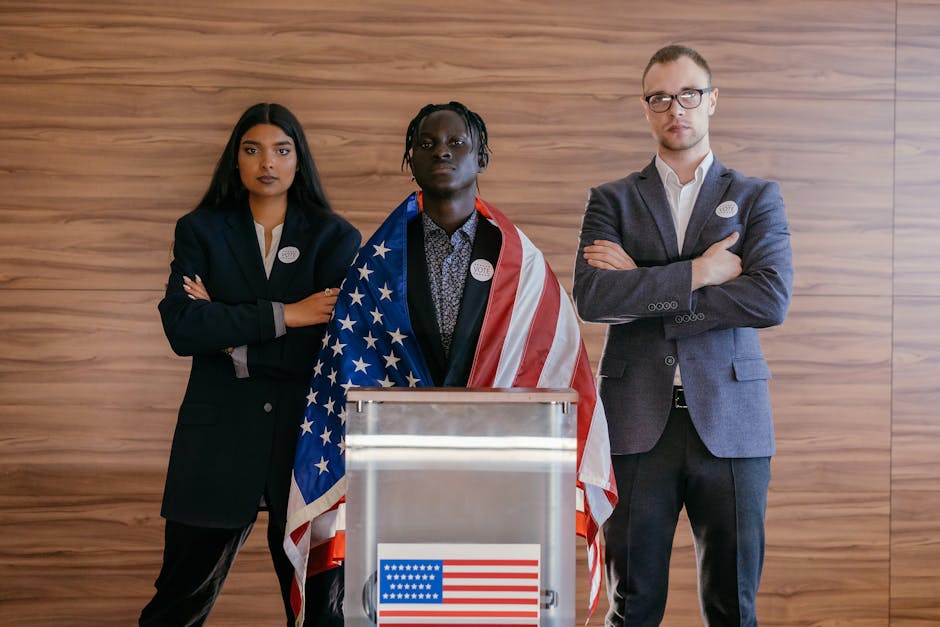
- A growing faction of Democrats is challenging US policy on Gaza, sparking a fundamental shift in the party’s foreign policy identity.
- The debate is no longer confined to policy circles, with protests surging on college campuses and in major cities.
- Democratic lawmakers are divided on how to address the Gaza conflict, with some demanding a ceasefire and others backing Israel’s right to defend itself.
- The divide in the party reflects deeper changes within the base, where younger voters, Black and Latino communities, and progressive activists are increasingly critical of US-Israel relations.
- The division could influence the 2028 presidential race, with implications for the party’s foreign policy platform and voter turnout.
Is the Democratic Party undergoing a fundamental shift in its foreign policy identity? After decades of broad consensus supporting Israel, a growing faction of Democrats—particularly younger, progressive, and minority lawmakers—are openly challenging U.S. policy on Gaza. The war following Hamas’s October 7 attacks and Israel’s subsequent military campaign, which has resulted in tens of thousands of Palestinian casualties according to Gaza health officials, has intensified scrutiny over American aid. With protests surging on college campuses and in major cities, the debate is no longer confined to policy circles. It’s now a flashpoint within the party, raising urgent questions about where Democrats stand and how this division could influence the 2028 presidential race.
Has Democratic Unity on Israel Come to an End?

Yes—though not uniformly. While President Joe Biden and most of the party’s establishment continue to back Israel’s right to defend itself, a significant and vocal minority of Democratic lawmakers are demanding a ceasefire and a reevaluation of U.S. military and diplomatic support. This fracture became undeniable in early 2024 when 13 House Democrats, including prominent progressives like Reps. Alexandria Ocasio-Cortez and Ilhan Omar, voted against a resolution reaffirming support for Israel. The growing dissent reflects deeper changes within the party’s base, where younger voters, Black and Latino communities, and progressive activists increasingly view U.S. policy as unjust and out of step with humanitarian principles. While the party has not formally split, the consensus that once made support for Israel a political taboo to question is clearly eroding.
What Evidence Shows the Democratic Split Is Real?

Polling and legislative behavior confirm the divide. A February 2024 Pew Research study found that only 37% of Democrats and Democratic leaners believed the U.S. was doing enough to protect Palestinian civilians—down from 50% in previous conflicts. Among Democrats under 30, support for a ceasefire in Gaza exceeds 60%, according to The New York Times. On Capitol Hill, the Congressional Progressive Caucus has repeatedly called for humanitarian pauses and restrictions on arms transfers. Meanwhile, pro-Israel groups like AIPAC have spent millions to oppose progressive Democrats in primaries, signaling that the stakes extend beyond rhetoric. The emergence of groups like American Muslims for Biden, which later withdrew support over Gaza policy, further illustrates how foreign policy is now a domestic political liability.
What Are the Counterarguments to This Split Narrative?

Skeptics argue that the division is overstated and concentrated among a vocal progressive wing rather than the broader party. Biden’s continued strong support for Israel—including approving emergency arms shipments during the war—shows that Democratic leadership remains aligned with traditional U.S. policy. Most Democratic members of Congress still back Israel’s security needs, and party leaders have condemned Hamas’s attacks in unequivocal terms. Some analysts suggest the dissent reflects moral concern rather than a strategic shift in foreign policy doctrine. Additionally, polling shows that while younger Democrats lean toward Palestine, older and more moderate Democrats remain firmly supportive of Israel. In this view, the party may be experiencing internal tension, but not a full ideological break—yet. The 2024 election results, where Biden retained strong support among key Democratic constituencies despite Gaza policy, may further suggest limits to voter backlash.
How Is This Division Affecting Real-World Politics?

The rift is already shaping electoral dynamics. In Democratic primaries, candidates who break with Biden on Gaza have gained traction, especially in diverse urban districts. In 2024, two members of the progressive ‘Squad’ faced tough primary challenges, with Gaza policy playing a central role in campaign ads. Meanwhile, pro-Palestinian activists have mobilized unprecedented campus protests, leading to clashes with university administrations and drawing national media attention. These movements echo earlier anti-war mobilizations and could influence youth turnout in 2028. On the international stage, the Democratic split weakens the appearance of U.S. unity, potentially undermining diplomatic efforts. Domestically, it forces candidates to navigate a delicate balance—supporting Israel’s security while responding to growing demands for accountability in Gaza.
What This Means For You
If you’re a Democratic voter, especially younger or progressive, your views on Gaza may no longer be on the party’s margins—they’re shaping its future. The 2028 nominee will likely need to address this issue directly, balancing traditional alliances with evolving moral and strategic concerns. For the broader public, the debate signals that U.S. foreign policy is becoming more contested and democratically responsive. How the party resolves this tension could determine its electoral viability in an increasingly diverse and engaged electorate.
Will the Democratic Party formalize a new foreign policy stance on Israel and Palestine, or will establishment consensus reassert itself after the current conflict subsides? And how will rising Gen Z voters—more skeptical of military intervention and more globally aware—reshape the party’s international agenda in the decade ahead? These questions remain unanswered, but their outcomes could redefine American liberalism in the 21st century.
Source: Al Jazeera