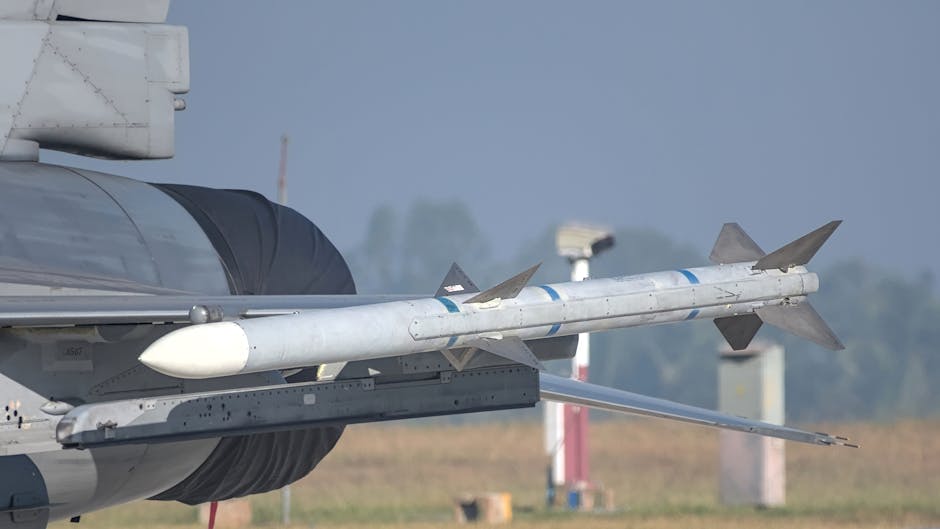
- The EU is developing a $10 billion cruise missile program, independent of US technology, to counter eroding trust in US security guarantees.
- The initiative, led by France and Germany, aims to deliver precision-strike weapons to member states by 2035.
- Europe’s growing unease over America’s commitment to European security has accelerated the push for an independent missile capability.
- The Ukraine war has exposed critical gaps in European firepower, highlighting the need for strategic autonomy.
- The EU’s new missile program marks a decisive pivot away from US-backed systems and toward a self-reliant defense strategy.
For the first time since the Cold War, European defense planners are preparing to build a long-range strike capability entirely without American technology. A proposed $10 billion EU-funded cruise missile program, revealed in draft defense planning documents obtained by Reuters, aims to deliver precision-strike weapons to member states by 2035 — a direct response to eroding confidence in U.S. security guarantees, particularly under potential return of a Trump administration. The initiative, spearheaded by France and Germany, signals a tectonic shift in transatlantic defense dynamics, as Europe confronts the reality that Washington may no longer serve as the continent’s primary military backstop. With NATO strained by divergent strategic priorities and the war in Ukraine exposing critical gaps in European firepower, the project marks a decisive pivot toward strategic autonomy.
Why Europe Can No Longer Rely on U.S. Missiles

The push for an independent European missile capability follows years of growing unease over America’s commitment to European security. While U.S.-supplied systems like the ATACMS and upcoming Precision Strike Missiles (PrSM) have been central to Ukraine’s defense, European leaders are increasingly concerned that future administrations may withhold such technology during crises. Former President Donald Trump’s repeated criticism of NATO, threats to withdraw support, and transactional approach to defense cooperation have accelerated European fears of strategic abandonment. Additionally, export restrictions and lengthy approval processes for U.S. weapons have hamstrung European efforts to rearm quickly. With Russia’s war in Ukraine underscoring the need for long-range precision weapons, and U.S. policy seen as volatile, EU officials argue that Europe must control its own deterrent. This initiative is not just about missiles — it’s about sovereignty.
Inside the EU’s New Cruise Missile Project

The newly proposed program, known informally as the European Long-Range Attack System (ELRAS), would develop a stealthy, ground-launched cruise missile with a 1,000-kilometer range capable of striking high-value targets deep behind enemy lines. Led by a consortium including France’s MBDA, Germany’s Diehl Defence, and Italy’s Leonardo, the project has already secured preliminary funding commitments from 14 EU nations. The missile is expected to integrate with existing European platforms like the Caesar and PzH 2000 howitzers, as well as future European combat vehicles. Unlike U.S. systems, ELRAS will be designed specifically for European operational doctrines and export-controlled within the EU. The European Commission has classified it as a ‘Strategic Autonomy Priority,’ fast-tracking development through the European Defence Fund. If approved, full-scale development could begin in 2025, with initial operational capability targeted for 2032.
Strategic and Industrial Implications

The ELRAS program reflects a broader effort to unify and strengthen Europe’s fragmented defense industry. Currently, European nations spend roughly €200 billion annually on defense, yet less than 15% of that goes to European-made equipment, with much of the remainder flowing to U.S. contractors. By consolidating procurement and R&D around flagship projects like ELRAS, the EU aims to create economies of scale, reduce duplication, and boost technological sovereignty. Analysts at the International Institute for Strategic Studies warn that without such integration, Europe will remain strategically dependent despite its economic weight. Moreover, the project could reshape NATO’s internal balance, potentially reducing U.S. leverage in alliance decision-making. As one EU defense official noted: ‘We’re not decoupling from the U.S. — we’re ensuring we have a credible fallback if deterrence fails.’
Who Stands to Gain — and Lose

The shift toward European-made missiles will benefit domestic defense firms and enhance interoperability among EU militaries. Countries like France and Germany, which have long advocated for strategic autonomy, stand to gain political and industrial influence. Smaller nations such as Belgium and the Netherlands, which lack indigenous missile programs, will gain access to cutting-edge systems without relying on Washington’s approval. However, the move could strain transatlantic relations, particularly if the U.S. perceives it as undermining NATO cohesion. American defense contractors, including Raytheon and Lockheed Martin, may see reduced European orders over time. Additionally, some Eastern European nations remain skeptical, fearing that delays in the EU program could leave them vulnerable in the short term. As the war in Ukraine continues, the urgency for immediate firepower competes with the long-term vision of autonomy.
Expert Perspectives
Defense analysts are divided on the viability and wisdom of the EU missile push. Dr. Kathrin Bachleitner of the Center for Strategic and International Studies argues that ‘Europe must prepare for a world where the U.S. is not always willing to lead,’ calling ELRAS a ‘necessary hedge.’ Others, like Prof. Thomas Rid of Johns Hopkins University, caution that ‘technological sovereignty is easier said than done’ — citing past EU defense projects delayed by bureaucratic infighting and cost overruns. Military strategists also note that developing a missile is only half the battle; integrating it into command systems, training crews, and ensuring secure supply chains pose equally daunting challenges.
Looking ahead, the success of the ELRAS program will depend on sustained political will, cross-border cooperation, and protection from budget cuts. The upcoming 2025 European Parliament elections could influence funding, especially if Euroskeptic parties gain ground. Observers will also watch for signals from Washington — whether the U.S. views the initiative as complementary or competitive. One open question remains: can Europe build a credible deterrent fast enough to matter? With Russian long-range strikes ongoing and defense innovation accelerating globally, the clock is ticking. The missile may be new, but the stakes are timeless.
Source: Newsukraine