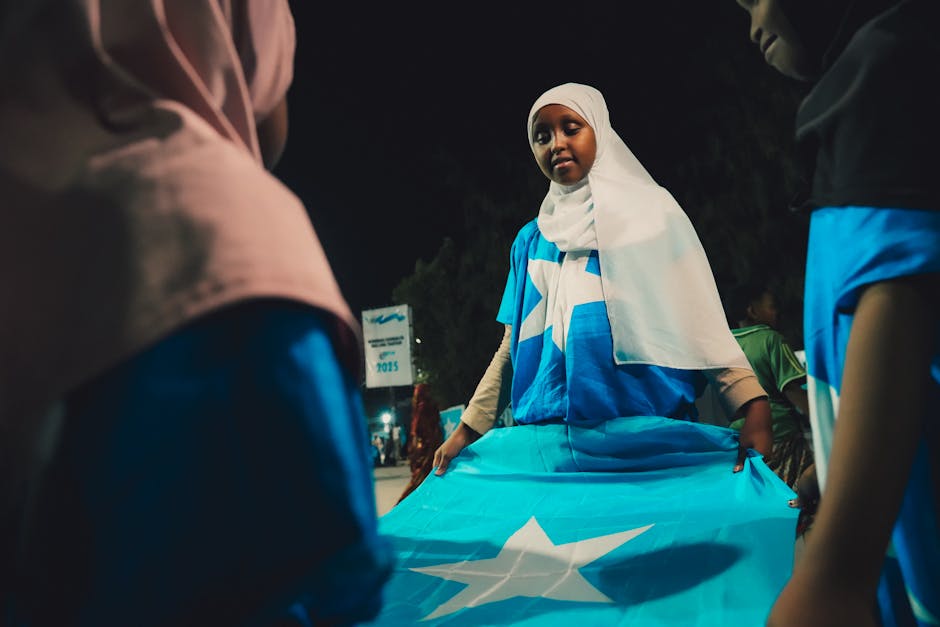
- Thousands of Somalis have been displaced due to government-ordered evictions in Mogadishu, leaving families without a home.
- The evictions are intended to make way for new development projects, but many affected families have lived in the areas for years.
- Displaced Somalis now face challenges accessing basic necessities like food, water, and healthcare.
- The complex situation in Somalia is rooted in decades of conflict and instability.
- The current government’s efforts to rebuild and stabilize the country are hindered by ongoing displacement and violence.
The sun beat down on the dusty streets of Mogadishu as hundreds of Somalis gathered to protest the government-ordered evictions that have left countless families without a home. The air was thick with tension as demonstrators, many of whom were women and children, chanted slogans and waved signs condemning the forced removals. Despite the risks, the protesters remained resolute, determined to make their voices heard in a city where instability and violence have become all too familiar.
Current Crisis

The evictions, which began several weeks ago, have already displaced thousands of people, according to Reuters reports. The government claims that the evictions are necessary to make way for new development projects, including roads and buildings. However, many of the affected families have been living in these areas for years, and some have even built their own homes using makeshift materials. The evictions have not only left them without a place to live but also without access to basic necessities like food, water, and healthcare.
History of Displacement

The story behind the evictions is complex and multifaceted. Somalia has been plagued by conflict and instability for decades, with various armed groups vying for power and control. The current government, which has been in power since 2017, has made efforts to rebuild and stabilize the country. However, these efforts have often come at the expense of the most vulnerable populations, including internally displaced persons (IDPs) and marginalized communities. The evictions in Mogadishu are just the latest example of a long history of displacement and marginalization in Somalia.
Key Players

The individuals and groups shaping this crisis are diverse and often have competing interests. The government, led by President Mohamed Abdullahi Mohamed, has been accused of prioritizing the interests of wealthy developers and foreign investors over those of its own citizens. On the other hand, the protesters, who include community leaders, activists, and ordinary citizens, are demanding justice and compensation for the displaced families. International organizations, such as the UNHCR, have also weighed in on the issue, calling on the government to respect the rights of IDPs and to provide them with adequate support and protection.
Consequences

The consequences of these evictions will be far-reaching and devastating. Not only will the displaced families struggle to access basic necessities like food, water, and healthcare, but they will also be at risk of exploitation and abuse. The evictions will also exacerbate existing social and economic inequalities, as those who are already wealthy and powerful will be the ones to benefit from the new development projects. Furthermore, the evictions will undermine trust in the government and perpetuate a cycle of instability and violence in a city that is already on the brink of chaos.
The Bigger Picture
This crisis is not just a local issue but also a symptom of a broader global problem. The forced eviction of communities is a common phenomenon in many parts of the world, often driven by the interests of wealthy elites and corporations. The Office of the High Commissioner for Human Rights has condemned such practices, emphasizing the need to protect the rights of vulnerable populations and to ensure that development projects are carried out in a way that is fair, equitable, and sustainable. As the world watches the crisis unfold in Mogadishu, it is essential to recognize the universal implications of this issue and to demand that governments and corporations prioritize the rights and dignity of all individuals.
In the end, the fate of the displaced families in Mogadishu remains uncertain. While the protests have brought attention to their plight, it is unclear whether the government will heed their demands and provide them with the justice and compensation they deserve. One thing is certain, however: the struggle for dignity and human rights in Somalia will continue, and it is up to all of us to bear witness and to demand that those in power are held accountable for their actions.
Source: Al Jazeera