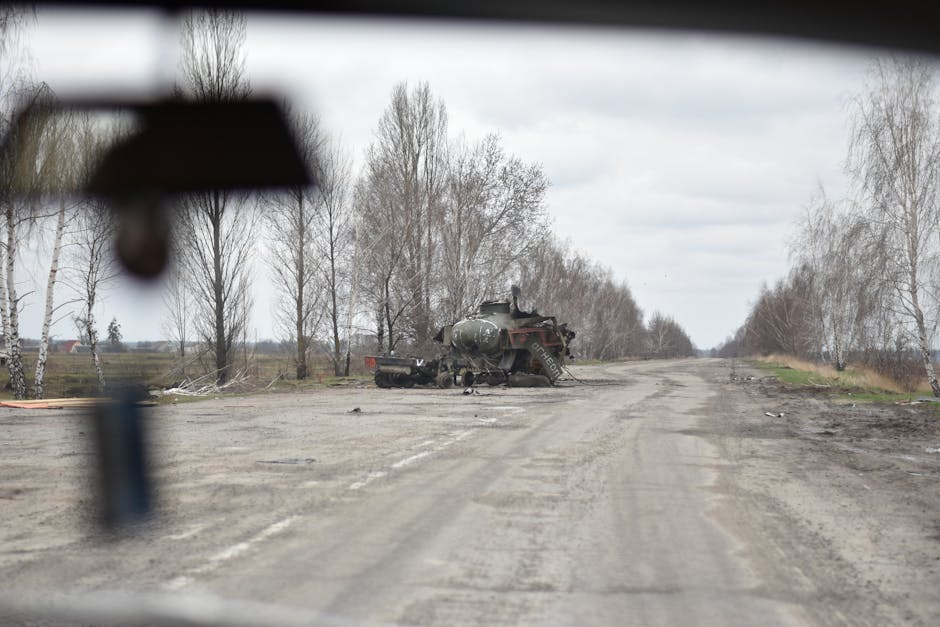
- Russia’s war in Ukraine has resulted in over 500,000 casualties since February 2022, including nearly 700 daily averages.
- Satellite imagery reveals vast networks of Russian military graves and destroyed equipment in occupied Donbas.
- Russia’s military machine is hemorrhaging manpower and equipment with limited territorial gains.
- Repeated offensives in Donbas have yielded only fragmented footholds in towns like Bakhmut and Avdiivka.
- Ukrainian forces have exploited Russia’s rigid command structure and predictable tactics with Western-supplied artillery and drones.
More than 500,000 Russian soldiers have been killed or wounded in Ukraine since February 2022, according to recent Western intelligence assessments—an average of nearly 700 casualties per day over 700 days of war. Satellite imagery from Maxar Technologies and battlefield reports compiled by the Institute for the Study of War (ISW) show vast networks of Russian military graves, makeshift field hospitals, and destroyed armored columns stretching across occupied Donbas. These visuals, increasingly shared across social media platforms like Reddit’s r/geopolitics, offer a grim window into the human toll of a war that has not delivered Moscow’s promised victory. Instead, they underscore a brutal reality: Russia’s military machine, once feared across Europe, is hemorrhaging manpower and equipment with little territorial return.
The Stalled Offensive in Eastern Ukraine

Despite launching repeated offensives in the Donbas, Russian forces have gained only fragmented footholds in towns like Bakhmut and Avdiivka, often at catastrophic cost. The Institute for the Study of War reports that Russian advances in early 2024 averaged less than 150 meters per day, even after deploying waves of conscripts and penal battalions. Ukrainian forces, fortified with Western-supplied artillery, drones, and anti-tank weapons, have exploited Russia’s rigid command structure and predictable tactics. A BBC investigation last winter documented entire Russian platoons wiped out in single assaults due to poor coordination and lack of cover. These setbacks have forced Moscow to rely on human wave tactics, raising ethical and strategic concerns among military analysts.
Visual Evidence of Russia’s Mounting Toll

Satellite photos taken over the past year show a dramatic increase in the size and number of military cemeteries in western Russian cities like Belgorod and Rostov-on-Don. One such burial site near Rostov expanded from a few hundred plots in 2022 to over 7,000 marked graves by mid-2024, with many headstones bearing the same dates—suggesting mass casualty events. In addition, thermal imaging and drone footage have revealed mass graves in occupied areas, raising alarms from human rights groups. Ukrainian intelligence has also released intercepted communications detailing supply shortages, low morale, and commanders pressuring troops to continue assaults despite unsustainable losses. These visuals, once dismissed as propaganda, are now corroborated by NATO officials and independent analysts as credible indicators of Russia’s deteriorating position.
Strategic and Economic Consequences for Russia

The war’s toll extends beyond the battlefield. Russia’s defense budget has surged to over 6% of GDP, with projected spending exceeding $100 billion in 2024—diverting funds from healthcare, infrastructure, and education. Sanctions have crippled its ability to import advanced microelectronics, forcing the military to cannibalize consumer electronics for missile guidance systems. A Reuters report from late 2023 noted a labor shortage of nearly 1.5 million workers, largely due to battlefield deaths and emigration of conscription-age men. Economically, while energy exports to China and India have offset some losses, long-term stagnation looms. Militarily, the depletion of experienced officers and elite units has weakened Russia’s ability to project power beyond Ukraine, undermining its global standing.
Human Cost and Civilian Impact

Civilians on both sides continue to bear the brunt of the war. Over 30,000 Ukrainian civilians have been killed or injured since 2022, according to the United Nations, with millions displaced. In Russian-occupied territories, forced deportations, conscription drives, and suppression of dissent have become routine. Meanwhile, in Russia, families are grappling with silence or official notifications of death, often without remains returned. The psychological toll is immense: mental health services in Ukraine are overwhelmed, and Russian veterans’ groups report spikes in PTSD and suicide. The war has also disrupted agricultural exports from the Black Sea, contributing to global food insecurity—a secondary crisis with far-reaching humanitarian consequences.
Expert Perspectives
Military analysts are divided on whether Russia can sustain its current strategy. Some, like Dr. Maria Snegovaya of the Center for Strategic and International Studies, argue that Putin’s regime is betting on Western fatigue, hoping NATO support for Ukraine will wane by 2025. Others, including retired British General Sir Richard Barrons, warn that Russia’s reliance on attrition warfare signals deeper systemic weaknesses, not strategic patience. “They’re not adapting,” Barrons stated in a recent podcast. “They’re just throwing bodies at the problem.” Meanwhile, Ukrainian commanders stress the need for continued Western aid, particularly air defense systems and long-range missiles, to maintain their defensive edge.
As the war enters its third year, the focus shifts to whether Ukraine can launch new counteroffensives and whether Russia can rebuild its shattered brigades. The outcome may hinge not on battlefield gains, but on which side’s society and economy can endure the strain longer. With U.S. aid delayed by political gridlock and European stockpiles dwindling, the coming months could determine whether Ukraine holds the line—or faces a grimmer chapter in a war with no end in sight.
Source: Inews