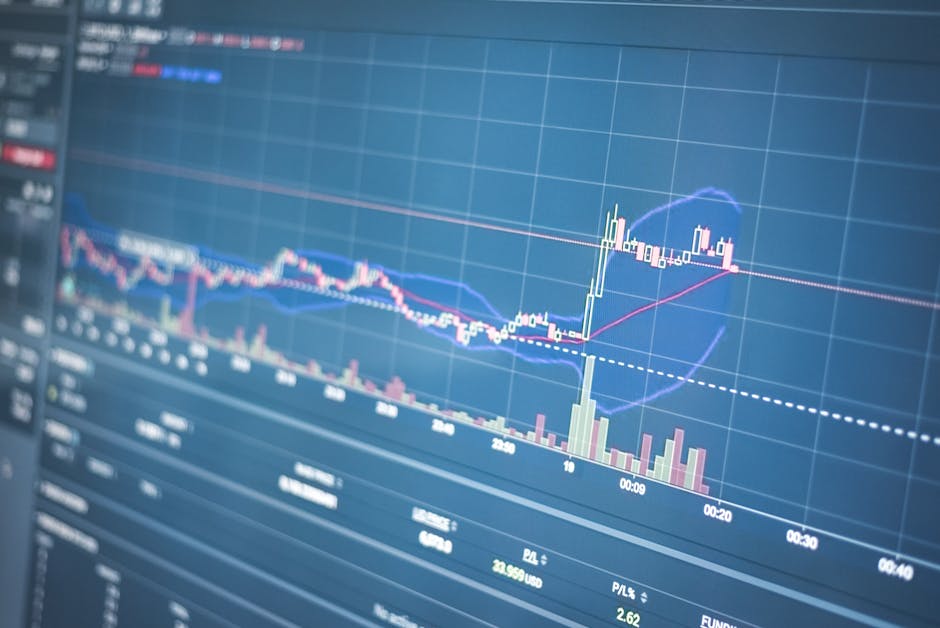
- Michael Burry warns investors to ‘reject greed’ and reduce positions in AI stocks due to market overvaluation.
- Burry sees a bubble inflating in AI stocks and momentum-driven equities, similar to the 2008 housing collapse.
- The market has become a casino where greed eclipses reason, and the house always wins, according to Burry.
- AI hype is driving market overheating, with mega-cap tech stocks like Nvidia leading the charge.
- Nvidia’s market capitalization has swelled by over 200% in the past year, driven by demand for AI chips and data center expansion.
On a quiet morning in Silicon Valley, venture capital firms toasted another unicorn birthed from lines of code and boundless optimism. Meanwhile, 600 miles south in Newport Beach, California, Michael Burry sat in his office, eyes fixed on a screen flashing red—a tapestry of overvalued tickers, frothy multiples, and sentiment indicators nearing historic extremes. The man who foresaw the 2008 housing collapse sees another bubble inflating, this time not in subprime mortgages but in artificial intelligence stocks and momentum-driven equities. In a series of blunt social media posts, Burry issued a stark warning: ‘For any stocks going parabolic, reduce positions almost entirely.’ The market, he argues, has become a casino where greed eclipses reason, and the house always wins.
AI Hype Fuels Market Overheating

Currently, the S&P 500 and Nasdaq are riding a wave of enthusiasm centered on artificial intelligence, with mega-cap tech stocks like Nvidia, Microsoft, and Alphabet leading the charge. Nvidia alone has seen its market capitalization swell by over 200% in the past year, driven by demand for AI chips and data center expansion. Analysts at Reuters report that the company’s data center revenue now accounts for more than 90% of its total, reflecting a seismic shift in computing infrastructure. But this momentum has lifted not just innovators—speculative stocks with tenuous AI ties are soaring on little more than branding. Burry points to companies rebranding as ‘AI-driven’ without fundamental revenue to back it up, warning that such behavior mirrors the dot-com bubble of 2000. Price-to-earnings ratios in the tech sector have climbed to levels not seen since the early 2000s, and margin debt is rising, a classic sign of speculative fervor.
The Path to This Moment

The roots of today’s market dynamics stretch back to the pandemic-era monetary expansion, when the Federal Reserve slashed interest rates and unleashed trillions in quantitative easing. With bonds yielding near zero, investors poured capital into growth stocks, seeking returns in a low-rate world. The rise of passive investing and ETFs amplified this trend, channeling money into the same narrow set of tech titans regardless of valuation. When ChatGPT exploded onto the scene in late 2022, it ignited a new narrative—one where AI would revolutionize every industry overnight. Companies rushed to align themselves with the trend, and retail investors, egged on by social media and meme culture, piled into anything with ‘AI’ in the name. Burry, who made his name betting against mortgage-backed securities in the mid-2000s, sees eerie parallels. ‘This isn’t investing,’ he wrote. ‘It’s gambling dressed up as innovation.’
The Contrarian and the Crowd

Michael Burry, the physician-turned-investor immortalized in “The Big Short,” has long operated from the fringes of Wall Street. His firm, Scion Asset Management, built a reputation on deep fundamental analysis and a willingness to go heavily short when markets deviate from reality. Unlike many of his peers, Burry avoids media appearances and rarely speaks publicly, making his recent warnings all the more significant. His motivations are rooted in a deep skepticism of herd behavior and a belief that markets, left unchecked by discipline, inevitably self-correct through painful crashes. While others celebrate the AI revolution, Burry is liquidating positions and holding cash—a move consistent with his past cycles of retreat before turmoil. He is not alone; analysts at firms like GMO and AQR have also raised concerns about valuation excesses, though few carry Burry’s cultural weight as a prophetic outlier.
Consequences of Ignoring the Warning

If Burry is right, the consequences for investors could be severe. Retail traders who bought AI-themed stocks at peak valuations may face steep losses when sentiment shifts. Pension funds and endowments with heavy tech allocations could see returns erode, impacting long-term liabilities. A sharp correction could also spill into broader economic indicators, affecting consumer confidence and corporate investment. Conversely, if AI delivers on its promise—driving productivity gains across sectors—the sell-off could be a temporary pullback rather than a systemic crash. But Burry’s point is not that AI lacks potential; it’s that markets have priced in perfection, leaving no room for disappointment. When reality falls short, as it often does in speculative episodes, the unwind can be brutal.
The Bigger Picture
Burry’s warning transcends stock picks and market timing. It speaks to a deeper issue in modern finance: the erosion of fundamental analysis in favor of narrative-driven investing. In an age of instant information and algorithmic trading, patience and diligence are undervalued. The rise of AI as an investment theme reflects not just technological change but a psychological one—our collective desire for simple solutions to complex problems. History shows that such moments often precede reckoning. The 1929 crash, the dot-com implosion, the 2008 crisis—all were fueled by stories that outpaced substance.
What comes next may not be immediate collapse, but increased volatility as central banks tighten policy and earnings fail to justify sky-high multiples. Burry isn’t predicting a date, nor is he calling for panic. He’s urging discipline: to sell when others are greedy, to question consensus, and to remember that every bubble starts with a belief that ‘this time is different.’ In markets, as in medicine—his original profession—prevention is always cheaper than the cure.
Source: CNBC