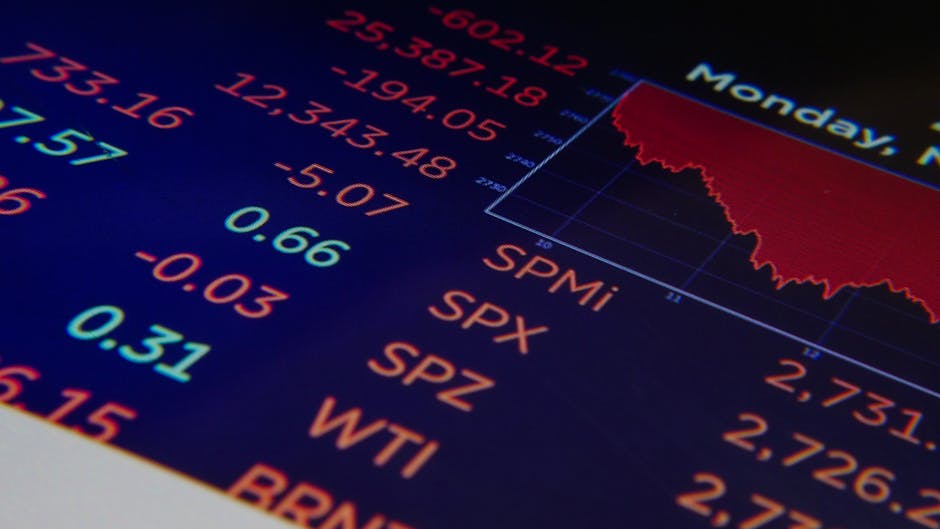
- The market is experiencing volatility, with investors wondering what’s driving the current trend.
- Investor Michael Burry believes the market today feels like the 1999-2000 bubble, which saw extreme speculation and inflation in the technology sector.
- Burry suggests that the market is being driven by other factors, such as speculation and investor sentiment, rather than job market or consumer sentiment.
- The current price-to-earnings ratio of the S&P 500 is higher than it has been in recent years, indicating potential inflation in the market.
- Similarities between the current market and the 1999-2000 bubble may suggest a potential market collapse in the future.
As the market continues to experience volatility, many investors are left wondering what’s driving the current trend. Is it the strong job market, consumer sentiment, or something else entirely? According to Michael Burry, the investor who predicted the 2008 housing market collapse, the answer lies elsewhere. He recently stated that the market today feels like the last months of the 1999-2000 bubble, leaving many to question what this means for the future of the economy.
Understanding the 1999-2000 Bubble

The 1999-2000 bubble, also known as the dot-com bubble, was a period of extreme speculation and inflation in the technology sector. During this time, investors poured money into tech startups, driving their valuations to unsustainable levels. The bubble eventually burst, leading to a significant decline in the market. Burry’s comparison between the current market and the 1999-2000 bubble suggests that he believes we are experiencing a similar period of speculation and inflated valuations. As he wrote, “Stocks are not up or down because of jobs or consumer sentiment,” implying that the market is being driven by other factors, such as speculation and investor sentiment.
Evidence Supporting Burry’s Claim

There are several pieces of evidence that support Burry’s claim. For example, the current price-to-earnings ratio of the S&P 500 is higher than it has been in recent years, suggesting that investors are willing to pay more for stocks than they have in the past. Additionally, the rise of speculative investing, such as day trading and meme stocks, has led to increased volatility in the market. As reported by Reuters, many investors are taking on more risk than they have in the past, which could lead to significant losses if the market were to decline. These factors, combined with Burry’s warning, suggest that the market may be due for a correction.
Counter-Perspectives and Criticisms

Not everyone agrees with Burry’s assessment of the market. Some argue that the current market is driven by strong fundamentals, such as low unemployment and rising consumer spending. Others point out that the market has been resilient in the face of challenges, such as the COVID-19 pandemic, and that it is likely to continue to grow. However, Burry’s warning is not without precedent. As The Guardian noted, many investors who predicted the 2008 housing market collapse were initially ignored or dismissed, only to be proven correct in the end. This serves as a reminder that even if Burry’s warning is not universally accepted, it is still worth considering.
Real-World Impact and Consequences

If Burry’s warning is correct, the consequences could be significant. A market correction could lead to significant losses for investors, particularly those who have taken on excessive risk. Additionally, a decline in the market could have broader economic implications, such as reduced consumer spending and decreased economic growth. As reported by BBC News, a market downturn could also have significant implications for retirement accounts and other investments. Therefore, it is essential for investors to be aware of the potential risks and to take steps to protect themselves.
What This Means For You
So, what does Burry’s warning mean for individual investors? First and foremost, it is essential to be cautious and to avoid taking on excessive risk. This may involve diversifying your portfolio, reducing your exposure to speculative investments, and focusing on long-term fundamentals rather than short-term gains. As Nature noted, it is also essential to stay informed and to be aware of the potential risks and opportunities in the market. By taking a thoughtful and informed approach to investing, you can help to protect yourself from potential losses and to achieve your long-term financial goals.
As the market continues to evolve, one question remains: what will be the trigger that causes the market to correct? Will it be a rise in interest rates, a decline in consumer spending, or something else entirely? Only time will tell, but one thing is certain: investors who are aware of the potential risks and who take steps to protect themselves will be better equipped to navigate the challenges that lie ahead.
Source: CNBC