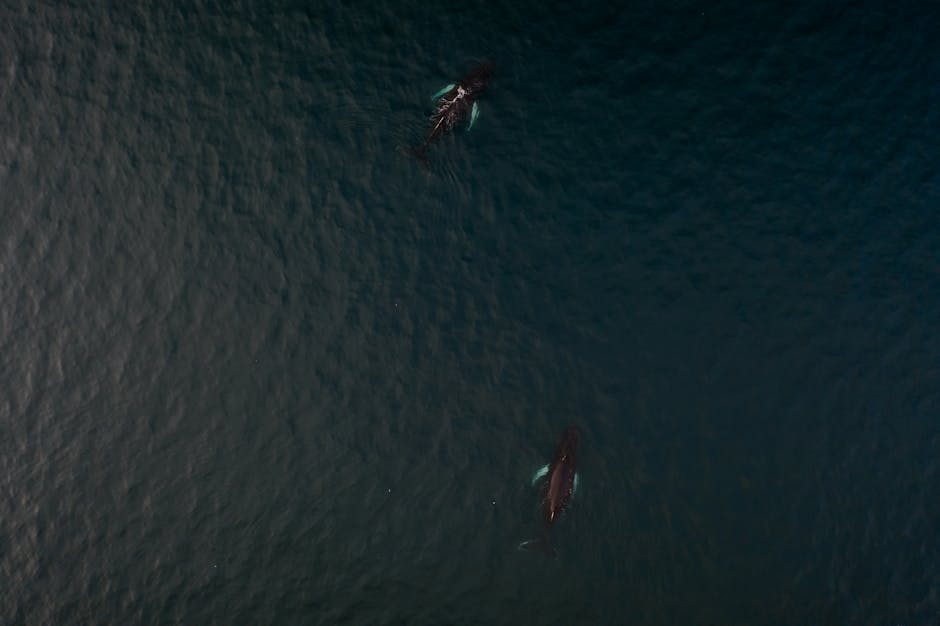
- Humpback whales exhibiting ‘gaping’ behaviour have been captured on camera off the coast of Western Australia, sparking interest in their social interactions.
- Researchers believe ‘gaping’ could be a form of social interaction, allowing whales to communicate with each other during their annual migration.
- The ‘gaping’ phenomenon is a rarely documented behaviour in humpback whales, making it an exciting area of study for experts.
- Citizen scientists are collaborating with researchers to study ‘gaping’ behaviour in greater detail, shedding new light on its possible reasons.
- Humpback whales demonstrate complex behaviour, including socializing, feeding, and breeding, during their migration through the world’s oceans.
A striking sight has been captured on camera off the coast of Western Australia, where a humpback whale is performing a mesmerizing underwater dance, its massive body pirouetting through the water as its jaw hangs wide open. This extraordinary display, known as ‘gaping’, is a rarely documented phenomenon that has left researchers fascinated and eager to learn more. With the help of citizen scientists, experts are now studying this behaviour in greater detail, shedding new light on the possible reasons behind this enigmatic display.
Uncovering the Mysteries of Humpback Whale Behaviour

The annual humpback whale migration is a spectacle that draws attention from scientists and enthusiasts alike, with thousands of these majestic creatures making their way through the world’s oceans. As researchers continue to study these animals, they are constantly reminded of the complexities and nuances of their behaviour. The ‘gaping’ phenomenon, in particular, has sparked intense interest, with many wondering what drives these whales to engage in such a peculiar display. According to experts, this behaviour could be a form of social interaction, with the whales using this unique display to communicate with each other.
Key Details of the ‘Gaping’ Phenomenon

As the humpback whales migrate through the oceans, they have been observed engaging in a range of behaviours, from feeding and breeding to socializing and playing. The ‘gaping’ phenomenon, however, stands out as a particularly intriguing example of their complex social interactions. Researchers have noted that this behaviour often occurs when the whales are in close proximity to each other, suggesting that it may be a form of non-verbal communication. Furthermore, the fact that the whales are not using this display to catch prey or defend themselves implies that it may serve a more nuanced purpose, such as reinforcing social bonds or establishing dominance hierarchies.
Analysis of the ‘Gaping’ Behaviour

Experts have been analyzing the ‘gaping’ phenomenon, seeking to understand the underlying causes and effects of this behaviour. By studying the body language and social interactions of the whales, researchers have begun to uncover the possible reasons behind this display. According to Dr. Maria Morell, a leading expert on humpback whale behaviour, ‘gaping’ may be an important aspect of the whales’ social repertoire, allowing them to convey information and reinforce social bonds. This theory is supported by data from previous studies, which have shown that humpback whales are highly social creatures that engage in a range of complex behaviours to communicate with each other.
Implications of the ‘Gaping’ Phenomenon

The ‘gaping’ phenomenon has significant implications for our understanding of humpback whale behaviour and social interactions. As researchers continue to study this behaviour, they may uncover new insights into the complex social dynamics of these creatures. Furthermore, this knowledge could inform conservation efforts, highlighting the importance of protecting the whales’ social habitats and reducing human impact on their migration routes. For example, the humpback whale’s migration patterns are closely tied to the availability of food and suitable breeding grounds, making it essential to preserve these critical habitats.
Expert Perspectives
Experts in the field of marine biology have been weighing in on the ‘gaping’ phenomenon, offering a range of perspectives on its possible significance. While some researchers believe that this behaviour may be an important aspect of the whales’ social interactions, others argue that it could be a response to environmental factors, such as changes in ocean temperature or the availability of prey. According to Science Daily, further research is needed to fully understand the causes and effects of this behaviour.
As researchers continue to study the ‘gaping’ phenomenon, they are left with more questions than answers. What triggers this behaviour in the whales? How does it impact their social interactions and migration patterns? As the scientific community seeks to uncover the mysteries of this enigmatic display, one thing is clear: the ‘gaping’ phenomenon is a fascinating example of the complex and nuanced behaviour of humpback whales, and further research is needed to fully appreciate its significance.
Source: The Guardian