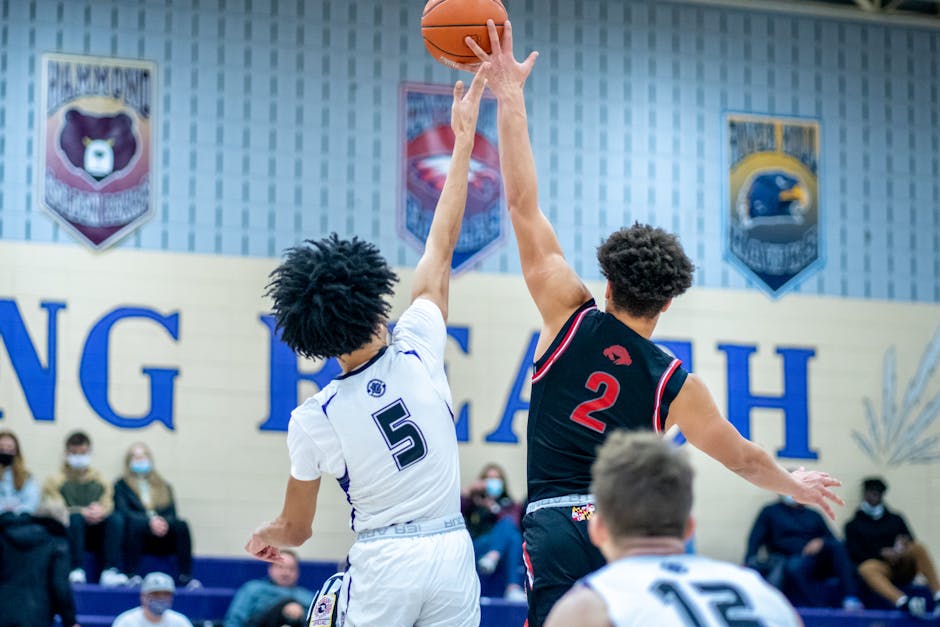
With the 2026 NBA Draft lottery order now confirmed, the Washington Wizards are positioned to reshape their franchise around consensus five-star recruit AJ Dybantsa, who is projected as the No. 1 overall selection in Adam Finkelstein’s inaugural mock draft. A dynamic 6’9” wing with elite scoring versatility, defensive switchability, and high basketball IQ, Dybantsa has dominated high school and international youth circuits, drawing comparisons to Jayson Tatum and Kawhi Leonard. His selection by the Wizards represents not just a short-term roster upgrade, but a foundational shift toward building through elite youth talent in a post-Bradley Beal era.
Top Prospects Backed by Elite Scouting Metrics

Dybantsa’s rise to the top of the 2026 draft class is supported by overwhelming statistical and scouting evidence. In 2025, he averaged 26.4 points, 9.1 rebounds, and 3.8 assists per game for Prolific Prep, shooting 58.7% from the field and 41.2% from three on high volume. On the Nike EYBL circuit, he posted a Player Efficiency Rating (PER) of 32.4, highest among all underclassmen. International exposure further solidified his standing: he led USA Basketball to gold at the FIBA Under-18 AmeriCup, earning MVP honors with 21.6 points and 7.3 rebounds per game. Combine these outputs with a near-7’0” wingspan and advanced shot creation off the dribble, and evaluators see a near-complete offensive package. According to Synergy Sports data, Dybantsa scored 1.23 points per possession in isolation—ranking in the 98th percentile—underscoring his readiness for NBA physicality.
Key Teams and Front Office Decisions

The Washington Wizards, holding the No. 1 pick after finishing with the league’s worst record, face a pivotal moment in their rebuild under GM Michael Winger. After trading Beal in 2023 and entering a full-scale renovation, the team has accumulated young assets like Kyle Kuzma and dynamic guard Jordan Poole, but lacks a true cornerstone. Selecting Dybantsa would align with their strategy of prioritizing high-upside, two-way wings. Meanwhile, the Utah Jazz, picking second, are projected to select explosive scorer Darryn Peterson, a 6’5” guard from Ohio who led the Nike Peach Jam in scoring with 31.2 points per game. Utah, under GM Justin Zanik, has built around young bigs like Walker Kessler and Keyonte George, making Peterson’s shot-making and on-ball pressure a natural fit. Other teams in the top 10—including the Pistons, Raptors, and Kings—are expected to target positionless forwards and defensive specialists, reflecting a broader league trend toward versatile, switchable personnel.
Risks and Rewards of Drafting High-School Phenoms

While Dybantsa’s projection is exceptionally high, drafting a player directly from high school carries inherent risks. The NBA last allowed such a move in 2005 before instituting an age minimum, but with the G League Ignite program and NIL-era recruitment shifts, the pathway is reemerging. The upside is clear: unrefined raw talent with years of development potential, untainted by collegiate systems. However, the transition from high school to NBA is steep—historically, only a fraction of prep-to-pro prospects have become All-Stars, with exceptions like LeBron James and Kobe Bryant overshadowing busts like Korleone Young. Moreover, mental readiness, injury management, and media scrutiny loom large. Yet Dybantsa’s maturity, demonstrated through interviews and leadership roles with Team USA, suggests he may handle the pressure. Teams also weigh the financial benefit: a No. 1 pick on a rookie scale contract offers maximum value for long-term cap flexibility.
Why the 2026 Draft Class Is Gaining Momentum Now

The 2026 draft is gaining focus not just because of Dybantsa, but due to structural changes in player development and eligibility. With the NCAA’s loosening of NIL rules and the NBA reconsidering its one-and-done policy, prospects now have more routes to professional play. Dybantsa, who has opted to skip college and play a post-grad season with a national prep team, exemplifies this shift. Additionally, the 2025 lottery’s tanking incentives—evident in Washington’s 18-64 record—highlight how teams are increasingly willing to endure short-term pain for access to generational talent. The last time a high school player was drafted was in 2005 (Andray Blatche), so Dybantsa’s potential entry would mark a historic shift. With the Collective Bargaining Agreement negotiations ongoing, 2026 could become a benchmark class for future draft format reforms.
Where We Go From Here
Over the next 6 to 12 months, three scenarios could unfold. First, Dybantsa could reaffirm his status as the top prospect by dominating the 2025 FIBA U19 World Cup, leading to a smooth transition into the No. 1 pick. Second, an injury or underperformance in high-profile showcases could open the door for challengers like Peterson or big man EJ Evans. Third, the NBA and NBPA could jointly announce a rule change delaying prep-to-pro eligibility, forcing Dybantsa into a G League or international stint before becoming draft-eligible in 2027. Each path carries implications for team strategies, player development pipelines, and the league’s long-term talent ecosystem.
Bottom line — AJ Dybantsa’s projected No. 1 selection by the Washington Wizards marks a potential turning point for both a franchise in rebuild and the NBA’s approach to elite youth talent, blending high-risk potential with transformative upside in a shifting basketball landscape.
Source: CBS Sports