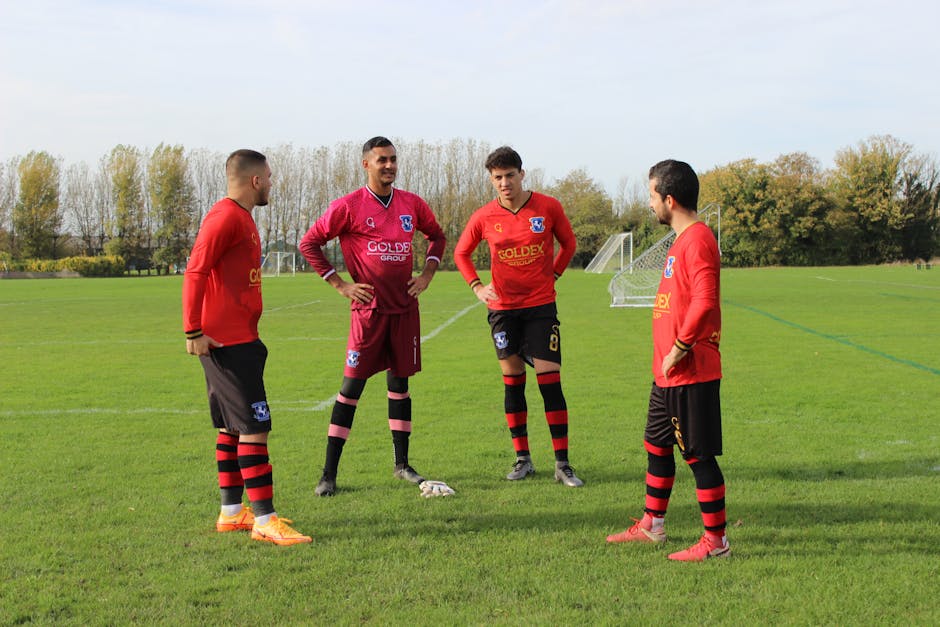
- Iran’s national football team threatens to withdraw from the 2026 World Cup unless FIFA provides binding guarantees on player safety and neutrality.
- The ultimatum comes amid rising tensions between Iran and Western nations, with Iranian athletes facing domestic reprisals for perceived political statements.
- Iran’s football federation claims participation in the World Cup risks endangering players’ lives and careers without formal protections.
- The 2026 World Cup is co-hosted by the United States, Canada, and Mexico, and the tournament draws nearer as geopolitical tensions sharpen.
- Iran’s players have become symbolic figures in a struggle between state authority and individual expression, particularly in silent protests during games.
Iran’s national football team, ranked 26th globally by FIFA, is threatening to withdraw from upcoming 2026 World Cup qualifiers unless the governing body delivers binding guarantees on player safety and political neutrality. The unprecedented ultimatum comes amid rising tensions between Tehran and Western nations, with Iranian athletes historically facing domestic reprisals for perceived political statements on the global stage. In 2022, several players were reportedly interrogated after wearing green wristbands in support of Mahsa Amini’s protests, and at least one international fixture was canceled over anthem-related disputes. With global scrutiny intensifying, Iran’s football federation insists that without formal protections, participation in the sport’s premier tournament risks endangering players’ lives and careers.
Why This Ultimatum Matters Now

The timing of Iran’s demand is no coincidence. As the 2026 World Cup—co-hosted by the United States, Canada, and Mexico—draws nearer, geopolitical fault lines are sharpening. Iran’s players have become symbolic figures in a broader struggle between state authority and individual expression, particularly after several appeared to withhold support for the national anthem during games in 2022 as a silent protest. FIFA’s prior responses have been criticized as inconsistent: while it has mandated neutral venues for matches involving countries in conflict zones, it has not established a formal mechanism to shield athletes from post-tournament repercussions in authoritarian regimes. With Iran scheduled to face regional rivals in tense qualifiers, the federation argues that ambiguity endangers not only players but the integrity of international competition itself.
Key Details of the Demand

The Iranian Football Federation (IFF) submitted a formal request to FIFA in early 2024, outlining three core demands: written assurances that players will not face domestic punishment for on-field conduct, the right to compete in neutral venues when political tensions escalate, and a third-party monitoring mechanism to verify compliance. The federation cited precedents such as Russia’s partial exclusion from international football after its invasion of Ukraine, arguing that geopolitical risk mitigation is already part of FIFA’s operational framework. Notably, Iran is not seeking special treatment but parity with existing protocols. The IFF has also called for confidential consultations with FIFA’s Ethics Committee, emphasizing that anonymous reporting channels for players could prevent retaliation. While FIFA has acknowledged receipt of the request, no public response has been issued, fueling speculation about diplomatic sensitivities.
Root Causes and Systemic Pressures

The underlying catalyst for Iran’s stance is a long history of state surveillance and punishment of athletes who deviate from official narratives. According to BBC Sport investigations, at least five Iranian players were suspended or detained following the 2022 World Cup for failing to sing the national anthem or expressing solidarity with protest movements. Human rights organizations have documented cases where athletes’ family members were threatened or interrogated by security forces. This climate of fear undermines FIFA’s principle of “football for all” and raises ethical questions about the organization’s complicity through silence. Experts argue that without structural reforms, international sport risks becoming a theater for political coercion. As Dr. Leila Ahmed, a sports sociologist at Tehran University, noted, “Players are caught between national pride and personal survival—a tension FIFA has so far failed to resolve.”
Global Implications for Athlete Rights

If Iran follows through on its withdrawal threat, the ripple effects could redefine international sports governance. Smaller nations with similar political constraints—such as Syria, Belarus, or Eritrea—may invoke Iran’s precedent to demand protections or, conversely, face increased scrutiny. More immediately, the crisis highlights a gap in FIFA’s regulatory framework: while the organization bans discriminatory chants and political symbols on the pitch, it lacks enforcement mechanisms for off-field retaliation. Broadcast partners and sponsors, including Adidas and Qatar Airways, may also face reputational risks if tournaments proceed without addressing athlete safety. For fans, the stakes are equally high; a boycott by Iran—a team with a passionate global following—would diminish competitive balance and fan engagement, particularly across Asia and the Middle East.
Expert Perspectives
Opinions are sharply divided. Human rights advocates like Mina Alavi of Amnesty International’s Sports and Rights Initiative argue that FIFA has a moral obligation to act: “Silence equals endorsement of repression.” In contrast, sports diplomats caution against unilateral decisions, with former FIFA ethics officer Cornel Borbély warning that overreach could fracture global unity in football. Some analysts suggest a mediated solution, such as temporary neutral status for Iranian players or confidential FIFA liaisons embedded within the team. Others dismiss the demand as leverage in broader political negotiations, noting that Tehran often uses sports as a diplomatic bargaining chip.
Looking ahead, FIFA’s response—or lack thereof—will set a precedent for how global sports bodies navigate authoritarian regimes. The 2026 qualifiers begin in mid-2024, giving the organization a narrow window to negotiate. Key indicators to watch include whether other nations publicly support Iran’s call, whether player advocacy groups mobilize, and whether FIFA revises its statutes on political neutrality. One unresolved question remains: can international sport remain truly global when participating carries existential risk for athletes? The answer may determine the future credibility of the beautiful game.
Source: BBC