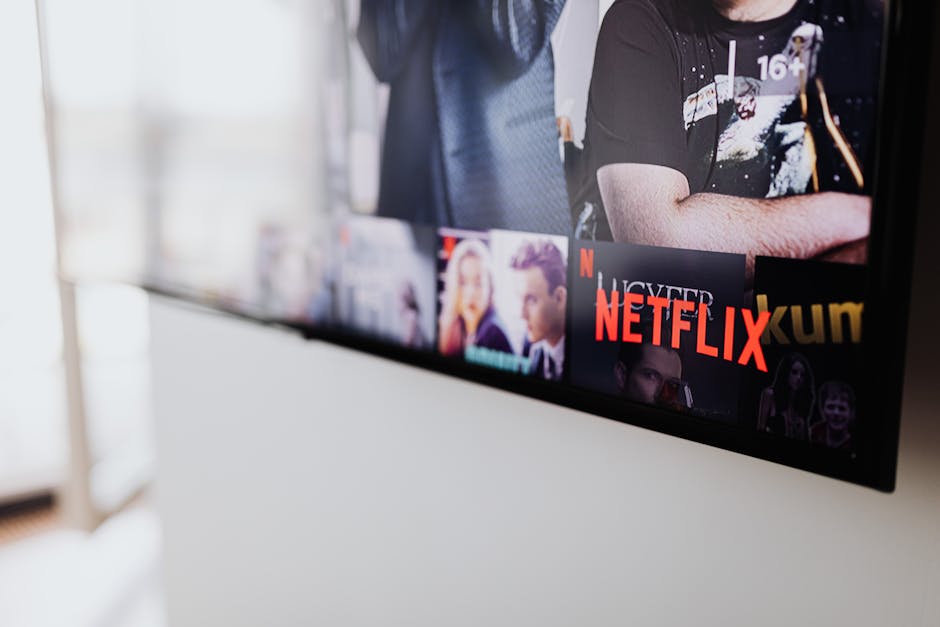
- Streaming services are beginning to introduce ads to make their ad-free options more expensive, mirroring traditional TV models.
- Netflix’s price hike to $20 for its standard, ad-free plan is a strategic move to combat slowing subscriber growth and rising content costs.
- The average revenue per user (ARPU) for Netflix in North America has exceeded $18, driven by tier upgrades and regional adjustments.
- Netflix’s ad-supported plan has gained over 15 million subscribers in 2023, contributing to the company’s financial growth.
- The dream of uninterrupted, on-demand viewing is becoming a premium luxury, and sustaining content without ads may no longer be economically viable.
In a quiet corner of a Los Angeles living room, a couple scrolls through Netflix late at night, debating whether to renew their subscription. The usual $16.99 plan is gone. Now, the ad-free version costs $20—a 18% jump in just two years—while a cheaper $7.99 option plays commercials every 12 minutes. This moment, repeated across millions of households, marks a quiet inflection point: streaming, once heralded as the ad-free savior of entertainment, is beginning to mirror the very system it sought to replace. The dream of uninterrupted, on-demand viewing is becoming a premium luxury, and the math driving this shift reveals a stark reality—sustaining content without ads may no longer be economically viable.
The $20 Ad-Free Threshold

Netflix’s introduction of a $20 monthly fee for its standard, ad-free plan in the U.S. signifies a strategic recalibration in response to slowing subscriber growth and rising content costs. While the ad-supported tier remains at $6.99, the jump to $20 for uninterrupted viewing is the latest in a series of price hikes that have doubled the cost of Netflix’s core offering since 2016. According to the company’s Q2 2024 earnings report, average revenue per user (ARPU) in North America now exceeds $18, driven by tier upgrades and regional adjustments. But more telling is the explosive growth of its ad-supported plan, which gained over 15 million subscribers in 2023 alone, contributing significantly to Netflix’s first-quarter operating margin expansion to 24%. This dual-tier model—luxury for some, affordability with compromise for others—is becoming the blueprint across the industry, with Disney+, Hulu, and Max following suit.
How We Got Here: The Streaming Bubble Bursts

The shift began in earnest around 2020, when streaming services, flush with pandemic-driven subscriptions, poured billions into original content in a bid to dominate global markets. Netflix spent over $17 billion annually on content, while Disney+ launched with a $12 billion war chest. But by 2023, growth plateaued. Households with multiple subscriptions began “subscription stacking,” cycling through services to watch specific shows before canceling. Churn rates climbed, and Wall Street demanded profitability over user acquisition. The result was a reckoning: cost-cutting, password-sharing crackdowns, and a pivot to advertising. In 2022, Netflix shocked the market by announcing an ad-supported tier—something it had long resisted. The move mirrored traditional TV economics, where advertisers, not viewers, bear much of the cost. As broadband penetration maxes out and global markets saturate, streaming platforms are reverting to a familiar playbook: make viewers either pay more or watch ads.
The Executives Rewriting the Rules

At the center of this transformation is Netflix co-CEO Ted Sarandos, whose long-held belief in ad-free storytelling gave way to financial pragmatism. In a 2023 interview with Reuters, he admitted, “We’re evolving, not abandoning our mission.” Similarly, Disney CEO Bob Iger has championed the ad-supported tier of Disney+ as essential to reaching price-sensitive markets. Meanwhile, executives at Warner Bros. Discovery have aggressively bundled Max with advertising partnerships, aiming to double ad revenue by 2025. These leaders are not just reacting to market forces—they are actively reshaping consumer expectations, betting that most users will accept ads for lower prices. Their motivation is clear: deliver consistent returns to shareholders in an era where endless growth is no longer guaranteed.
What This Means for Consumers and Creators

For viewers, the implications are both economic and experiential. Middle- and lower-income households may find ad-supported plans more sustainable, but they trade time and attention for savings. Creators, meanwhile, face new pressures. Advertisers favor broad-appeal content, potentially marginalizing niche or experimental programming. Data from BBC News shows that ad-supported streams now account for nearly 40% of Netflix’s U.S. watch time, influencing algorithmic recommendations and greenlight decisions. Studios are increasingly designing shows with natural ad breaks, altering narrative pacing. For advertisers, the shift unlocks access to granular viewer data—demographics, viewing habits, engagement metrics—offering precision unmatched by traditional TV. Yet privacy advocates warn of deeper surveillance baked into entertainment.
The Bigger Picture
This transformation reflects a broader economic truth: free or low-cost digital services require trade-offs. Streaming, like social media before it, is moving toward an advertising-dominated model because it scales profitably. The era of venture capital-fueled expansion is over; sustainability now dictates strategy. As more services adopt hybrid models, the line between streaming and broadcast TV blurs. What was once a revolution in viewer freedom is becoming a tiered ecosystem of access—where uninterrupted viewing is a privilege, not the norm.
What comes next may be a bifurcated entertainment landscape: a premium, ad-free tier for those who can afford it, and an ad-supported mainstream for everyone else. This isn’t the future streaming promised, but it may be the one it can afford. As Netflix’s $20 plan settles in, it stands as a quiet monument to a new reality—convenience has a price, and attention is the currency.
Source: CNBC