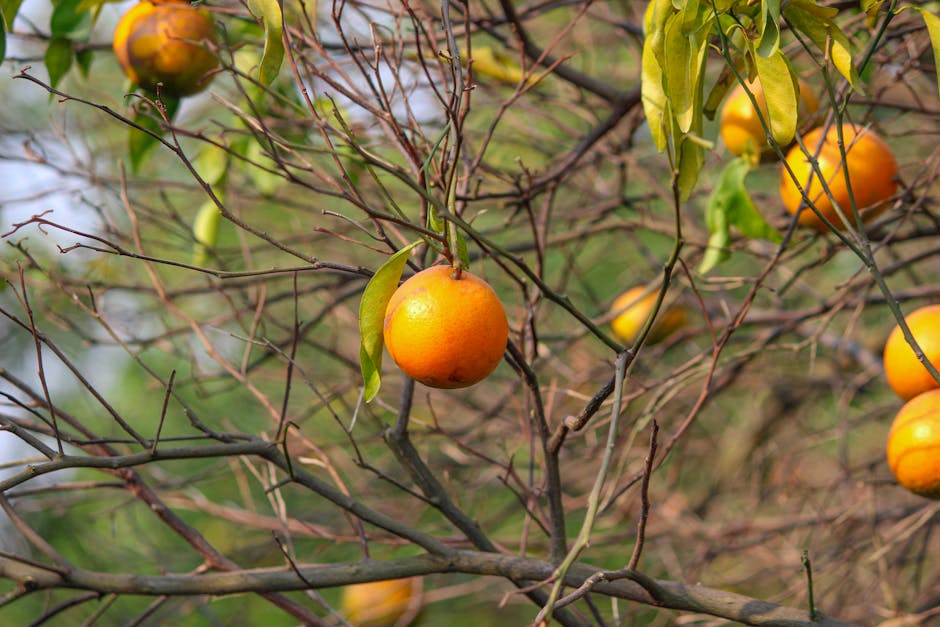
- Over 420,000 mature peach trees in California’s Central Valley are being destroyed due to Del Monte’s collapse, devastating local farmers.
- The trees, some over a decade old, could produce up to 1,000 pounds of peaches annually, but have lost their market due to Del Monte’s exit.
- Del Monte’s abrupt cancellation of contracts has left farmers with no market for their harvest, putting their livelihoods at risk.
- The processor’s exit has led to a 60% loss in the region’s clingstone peach volume, primarily used for canning.
- Spot market prices for peaches have drastically dropped, further exacerbating the financial strain on farmers.
In the golden light of early morning, the orchards of California’s Central Valley shimmer under a thin haze, rows of peach trees standing like silent sentinels across the dry earth. But beneath the pastoral beauty lies a scene of quiet devastation. Across dozens of family-run farms, crews are preparing to rip out hundreds of thousands of mature peach trees—healthy, productive, and bearing fruit for years to come. These orchards, once symbols of agricultural resilience, are now being destroyed, not by drought or disease, but by the sudden collapse of a corporate buyer. With Del Monte Fresh slicing its canned fruit operations entirely, contracts have evaporated overnight, leaving farmers with no market for their harvest and no choice but to abandon what they’ve spent decades cultivating.
Orchards Uprooted, Livelihoods at Risk

More than 420,000 peach trees are slated for removal across Fresno, Madera, and Kings counties—regions that long served as the backbone of California’s stone fruit industry. These are not young saplings but mature trees, some over a decade old, capable of producing up to 1,000 pounds of peaches annually. Farmers who once relied on guaranteed contracts with Del Monte are now facing financial ruin. The processor had accounted for nearly 60% of the region’s clingstone peach volume, primarily used for canning. With its exit, buyers have vanished, and spot market prices have cratered. “We’re not just losing income this season,” said Maria Serrano, a third-generation grower near Reed frost, “we’re losing our long-term investment. Each tree costs over $250 to plant and takes four years to bear fruit. Now we’re paying to destroy them.”
The Fall of a Food Giant

Del Monte Fresh, a legacy brand under Del Monte-owned company Fresh Del Monte Produce Inc., announced in March that it would cease all canned fruit operations in North America, citing declining consumer demand and rising operational costs. The move shocked suppliers, many of whom had relied on multi-year contracts with the company. Clingstone peaches, which adhere tightly to their pits and are ideal for canning, have few alternative markets. Fresh Del Monte’s pivot away from processed fruit reflects broader shifts in American eating habits—consumers increasingly favoring fresh-cut, organic, or ready-to-eat produce over canned goods. According to Reuters, the company is redirecting investment toward higher-margin tropical and fresh produce. But for Central Valley farmers, the transition is not so simple. They lack the infrastructure, certifications, or market access to pivot quickly to export or organic markets, leaving them stranded.
The People Behind the Trees

The farmers caught in this crisis are predominantly family-run operations, many of whom have worked the same land for generations. They are not agribusiness giants but mid-sized growers who bet on stability—signing long-term contracts to ensure predictable income. For them, Del Monte’s withdrawal wasn’t just a business setback; it was a betrayal of trust. “We planted these orchards because they said they’d buy everything we grew,” said Jorge Mendez of Mendez Family Orchards. “Now they’re gone, and we’re stuck.” Laborers, too, face uncertainty. Seasonal workers who once pruned, thinned, and harvested peaches may lose months of income. Local packing houses and transport firms, dependent on fruit volume, are bracing for layoffs. The human toll extends far beyond the fields, threatening entire rural economies built around stone fruit cultivation.
Economic and Environmental Fallout

The destruction of 420,000 trees carries consequences far beyond lost income. Each tree removed represents a carbon sink erased, soil stability compromised, and years of agricultural stewardship undone. Uprooting requires heavy machinery, diesel fuel, and disposal—often through chipping or burning—releasing stored carbon back into the atmosphere. Economically, the loss could ripple through local tax bases, affecting school funding and infrastructure. The USDA has offered limited emergency grants, but they fall short of covering the $100 million estimated in total losses. Some growers are exploring niche markets, like artisanal preserves or farm stands, but these cannot absorb the scale of the surplus. Without swift intervention, experts warn, the region could see a permanent contraction in peach production.
The Bigger Picture
This crisis underscores a fragile truth in modern agriculture: small and mid-sized farmers remain deeply vulnerable to the decisions of distant corporate buyers. As food systems consolidate, a handful of processors wield outsized power over what gets grown and who gets paid. The Del Monte collapse is not isolated—it echoes past disruptions when sugar beet, tomato, or dairy processors exited regional markets, leaving farmers stranded. In an era of climate volatility and shifting consumer trends, resilience depends on diversification, both in crops and in market access. Yet systemic barriers—from trade policies to distribution monopolies—make such flexibility difficult to achieve.
What comes next remains uncertain. Some farmers are petitioning the state for aid or seeking partnerships with food banks to salvage fruit. Others are switching to almonds or pistachios, though those crops demand different water and soil conditions. The orchards being torn out today may never be replanted with peaches. As the tractors roll through the rows, uprooting trees once full of promise, they carry with them a warning: without stronger safeguards for growers, even the most fertile fields are no match for the whims of the market.
Source: Independent