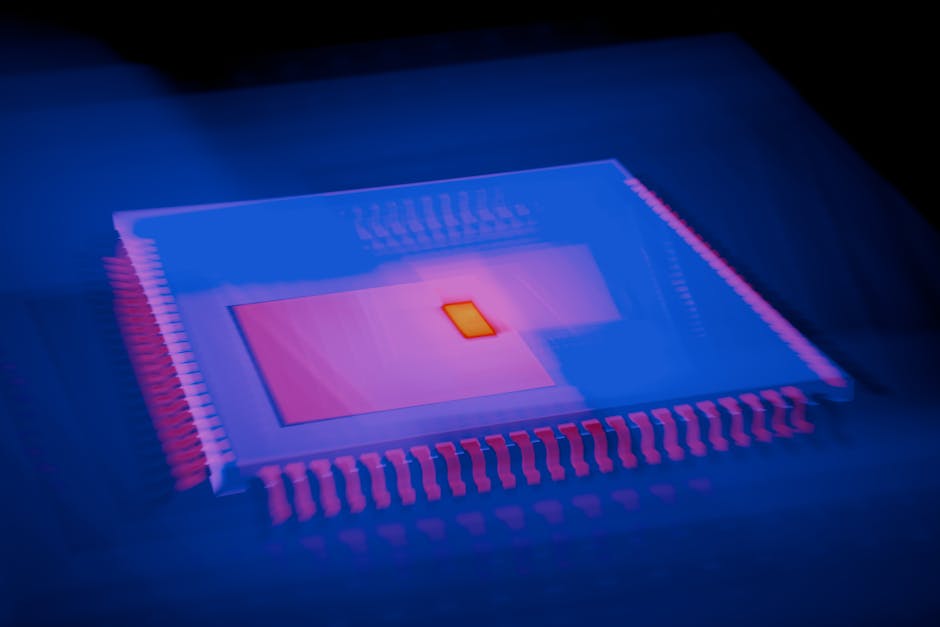
- SpaceX is investing $55 billion in a semiconductor manufacturing facility called Terafab.
- Terafab will produce advanced AI-specific chips using 2-nanometer process technology for terrestrial and orbital applications.
- This move marks a pivot for SpaceX from relying on custom electronics to becoming a full-scale chip manufacturer.
- SpaceX aims to challenge industry giants like NVIDIA and TSMC with its $55 billion investment in Terafab.
- The Terafab project aligns with Elon Musk’s strategy to vertically integrate critical technologies and reduce reliance on external suppliers.
Is Elon Musk positioning SpaceX not just as a leader in space exploration, but as a dominant force in artificial intelligence hardware? The company’s announcement of a $55 billion investment in a semiconductor manufacturing facility called Terafab has sent shockwaves through both the tech and aerospace sectors. While SpaceX has long relied on custom electronics for its rockets and satellites, the scale and ambition of Terafab suggest a fundamental pivot. With global demand for AI chips surging and supply chains under strain, the question isn’t just whether SpaceX can make chips — it’s whether it can challenge industry giants like NVIDIA and TSMC from an unexpected front.
What Is SpaceX’s Terafab Project?

SpaceX plans to build Terafab, a state-of-the-art semiconductor fabrication plant, with an initial investment of $55 billion, according to internal documents and supply chain sources familiar with the project. Located near Austin, Texas, the facility is designed to produce advanced AI-specific chips using 2-nanometer process technology, enabling unprecedented computing power for both terrestrial and orbital applications. While SpaceX has previously developed in-house chips for Starlink and flight control systems, Terafab represents a quantum leap — transforming the company from a consumer of semiconductors into a full-scale manufacturer. This move aligns with Elon Musk’s broader strategy to vertically integrate critical technologies, reducing reliance on external suppliers amid global chip shortages and geopolitical tensions over semiconductor supply chains.
What Evidence Supports SpaceX’s Semiconductor Ambitions?

Multiple signals point to SpaceX’s serious commitment to chipmaking. In 2023, the company quietly hired over 120 engineers from leading semiconductor firms including AMD, Intel, and TSMC, many specializing in chip architecture and fab process engineering. Public job listings now advertise roles in “advanced semiconductor packaging” and “high-yield wafer production.” Satellite imagery from Reuters reveals rapid construction at the Bastrop County site, with cleanroom-ready infrastructure and power substations capable of supporting high-energy fabrication tools. Furthermore, SpaceX has filed patents for radiation-hardened AI processors ideal for satellite constellations. As AI workloads grow in autonomous spacecraft and real-time Earth observation, controlling the entire hardware stack — from design to production — offers strategic advantages in performance, security, and deployment speed.
Are Experts Skeptical About SpaceX’s Chipmaking Plans?

Despite the momentum, some industry analysts remain cautious. “Building a competitive fab isn’t just about money — it’s about decades of process refinement, ecosystem integration, and yield optimization,” said Dr. Lena Choi, semiconductor analyst at the Massachusetts Institute of Technology. “Even with $55 billion, catching up to TSMC or Samsung will take years, if not a decade.” Others question whether SpaceX can manage such a complex venture while maintaining its core missions in launch services and Mars exploration. There are also concerns about duplication of effort within Musk’s empire, given that Tesla already develops AI chips for autonomous driving. Could internal competition for talent and resources dilute focus? Moreover, the U.S. semiconductor industry still faces challenges in equipment availability, skilled labor, and environmental approvals — hurdles that even well-funded companies cannot bypass overnight.
What Are the Real-World Impacts of Terafab?

If successful, Terafab could transform multiple industries. For SpaceX, in-house chips mean faster iteration for Starlink’s AI-driven network management, improved autonomy for Starship missions, and enhanced data processing from orbital sensors. Beyond space, Terafab could supply AI accelerators to government agencies, defense contractors, and research institutions seeking secure, domestic alternatives to foreign-made chips. The economic impact is also significant: the facility is expected to create over 8,000 high-tech jobs and stimulate regional semiconductor supply chains. In the long term, vertical integration could lower costs and increase resilience — a model other tech firms may emulate. As AI becomes central to national infrastructure, controlling the silicon layer may prove as strategic as controlling launch capacity.
What This Means For You
For consumers and professionals alike, SpaceX’s move into chipmaking signals a broader trend: the convergence of space, computing, and artificial intelligence. This integration could lead to faster internet via smarter satellites, more reliable AI systems, and innovations in autonomous technologies. It also highlights how a single company’s ambition can reshape global tech landscapes. While Terafab won’t immediately affect your smartphone or laptop, the ripple effects — from job markets to national security — will be felt for years. As AI hardware becomes a battleground for technological supremacy, the companies building the brains of the future may not be the ones we expect.
Will Terafab succeed in making SpaceX a major player in the semiconductor industry, or will it become a costly detour in Musk’s portfolio of high-risk ventures? And as private companies take on roles once reserved for nation-states, how should regulators and the public assess their growing influence over foundational technologies? The answers may redefine the future of innovation.
Source: The New York Times