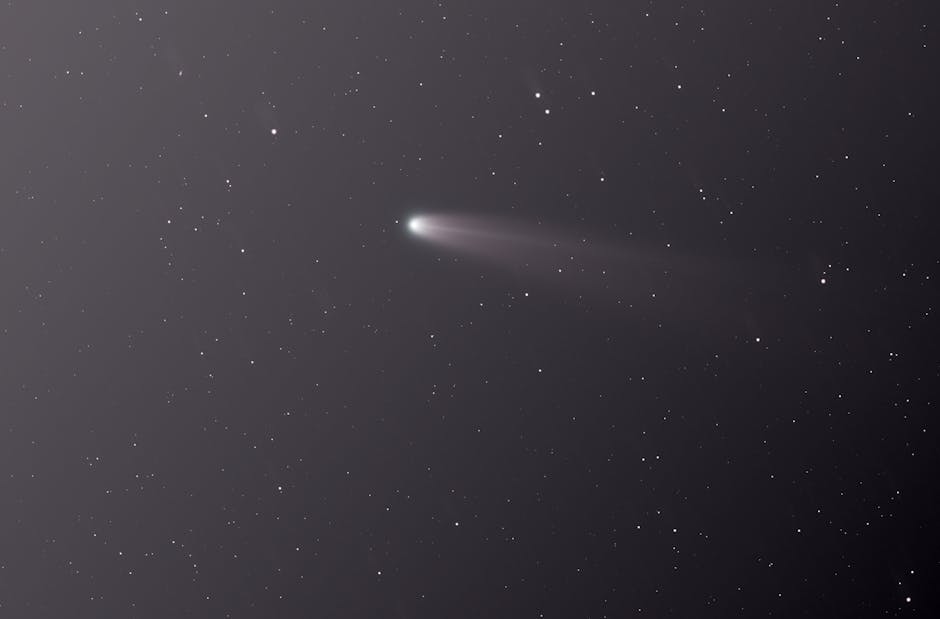
- Interstellar comet 3I/ATLAS offers a rare chance to study a visitor from beyond our solar system, providing insights into alien world formation.
- Scientists are analyzing 3I/ATLAS’s composition as it approaches the Sun, revealing surprising details about its origins and potential history.
- A significant finding is the unusually high concentration of ‘heavy water’ within the comet, differing from water found on Earth.
- The presence of heavy water challenges existing models of comet formation and raises questions about conditions in the comet’s origin star system.
- This discovery, hailed by NASA, is considered a major breakthrough in astrobiology, potentially revolutionizing our understanding of the universe.
In the vast expanse of space, a mysterious comet from beyond our solar system is hurtling towards the Sun, carrying with it secrets of the cosmos. The interstellar visitor, called 3I/ATLAS, is a rare and fascinating sight for astronomers, who are eager to unravel its mysteries. As the comet approaches, it is giving scientists a unique opportunity to study its composition and gain insights into the formation of alien worlds. With its origins shrouded in mystery, 3I/ATLAS is a time capsule from a distant star system, holding secrets of the universe that are waiting to be unlocked.
Current Observations

Astronomers are abuzz with excitement as they study the comet’s composition, which has revealed some astonishing findings. The interstellar comet contains an unusually high amount of “heavy water,” a rare form of water that is different from the water found on Earth. This discovery has sparked intense interest among scientists, who are eager to understand the implications of this finding. The presence of heavy water in such large quantities is a significant departure from what is typically seen in our own solar system, and it has raised questions about the comet’s origins and the conditions under which it formed. According to NASA, the discovery of heavy water in 3I/ATLAS is a major breakthrough in the field of astrobiology.
Formation Theories

The story behind the comet’s formation is a complex and fascinating one, involving the collision of gas and dust in a distant star system. Scientists believe that 3I/ATLAS may have formed in a region of space that is far colder and stranger than anything found in our own solar system. The presence of heavy water in the comet suggests that it may have originated in a place where the temperature and pressure conditions were very different from those found in our own cosmic neighborhood. As researchers study the comet’s composition, they are gaining insights into the conditions under which it formed, and what this might reveal about the diversity of planetary systems beyond our own. The formation of comets is a complex process that is still not fully understood, and the study of 3I/ATLAS is helping scientists to shed new light on this phenomenon.
Key Players

The study of 3I/ATLAS is a collaborative effort involving astronomers and researchers from around the world. The team of scientists working on the project is led by experts in the field of astrobiology and cometary science, who are using a range of cutting-edge techniques to analyze the comet’s composition. As the comet approaches the Sun, the team is working tirelessly to gather as much data as possible, using a combination of ground-based telescopes and space-based observatories. The researchers involved in the project are motivated by a desire to understand the origins of our solar system and the potential for life beyond Earth. By studying the composition of 3I/ATLAS, they hope to gain insights into the conditions under which life might arise on other planets, and what this might reveal about the possibility of extraterrestrial life.
Consequences and Implications

The discovery of heavy water in 3I/ATLAS has significant implications for our understanding of the universe and the potential for life beyond Earth. The presence of this rare form of water in such large quantities suggests that the comet may have formed in a region of space that is capable of supporting life. As scientists continue to study the comet, they may uncover more secrets about the origins of life in the universe and the conditions under which it can arise. The study of 3I/ATLAS is also providing valuable insights into the diversity of planetary systems beyond our own, and what this might reveal about the possibility of extraterrestrial life. According to the CDC, the study of comets like 3I/ATLAS can provide valuable insights into the origins of life on Earth and the potential for life beyond our planet.
The Bigger Picture
The study of 3I/ATLAS is part of a broader effort to understand the universe and our place within it. By studying the composition of the comet and the conditions under which it formed, scientists are gaining insights into the diversity of planetary systems beyond our own and the potential for life beyond Earth. The discovery of heavy water in 3I/ATLAS is a reminder that the universe is full of mysteries waiting to be uncovered, and that the study of comets and other celestial bodies can provide valuable insights into the origins of our solar system and the potential for life beyond our planet. As researchers continue to explore the universe, they may uncover more secrets about the origins of life and the conditions under which it can arise, and what this might reveal about our place in the grand scheme of things.
The study of 3I/ATLAS is an ongoing project, and scientists are eagerly awaiting the opportunity to gather more data as the comet approaches the Sun. As the comet continues on its journey, it will provide a unique opportunity for researchers to study its composition and gain insights into the origins of our solar system and the potential for life beyond Earth. With its mysterious origins and rare composition, 3I/ATLAS is a fascinating sight for astronomers, and its study is sure to reveal more secrets about the universe and our place within it. As the New York Times reports, the study of comets like 3I/ATLAS is a major area of research in the field of astrobiology, and is providing valuable insights into the origins of life in the universe.
Source: ScienceDaily