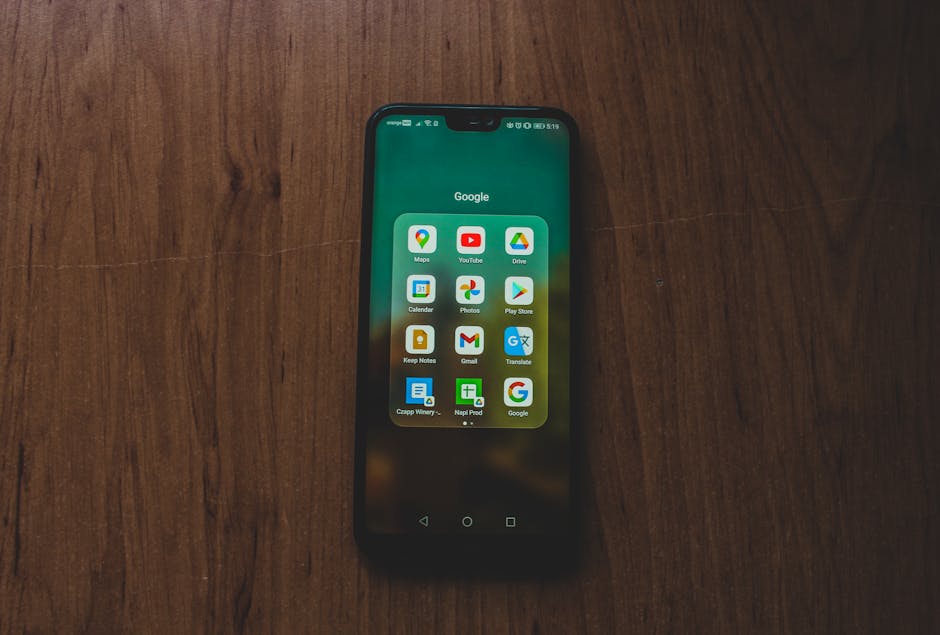
- The Google Pixel 10a delivers impressive photography results despite its modest price and design.
- The phone’s camera system uses Google’s HDR+ and Night Sight for computational photography.
- The Pixel 10a retains the same Tensor G4 chip and 60Hz OLED display as the previous model.
- The phone ships with Android 15 and promises seven years of OS and security updates.
- The Pixel 10a’s design and feature set are virtually indistinguishable from the Pixel 9a.
On a quiet street in Lisbon, where tiled facades glow amber in the late afternoon sun, a tourist raises her phone to capture the moment. She’s not wielding a flagship device with a six-lens array or a foldable screen, but a modest black slab with a single rear camera. It’s a Google Pixel 10a, and as she snaps the scene, the image blooms with clarity—rich in color, balanced in light, indistinguishable from photos taken on phones costing twice as much. This is the quiet magic of Google’s A-series: democratizing high-end photography and software in a device that rarely draws a second glance. Yet beneath its capable surface, the Pixel 10a tells a story not of innovation, but of iteration so minimal it borders on redundancy.
Same Power, Same Design, Slightly Higher Price

The Pixel 10a, released in May 2025 and priced from £499 (€549/$499/A$849), is virtually indistinguishable from the Pixel 9a in design, performance, and feature set. It retains the 6.1-inch OLED display with a 60Hz refresh rate, the same Tensor G4 chip, and the 4,700mAh battery that easily lasts two days with moderate use. The camera system—12.2MP main sensor with computational photography powered by Google’s HDR+ and Night Sight—delivers consistently impressive results in varied lighting. Software remains a highlight: the phone ships with Android 15 and promises seven years of OS and security updates, a rare commitment in the budget segment. However, the lack of meaningful upgrades—no faster charging, no improved display, no design refresh—makes the new model difficult to recommend over its predecessor, which remains on sale at £399.
How the A-Series Became Google’s Quiet Success

The A-series was born out of Google’s struggle to gain traction in the mid-tier smartphone market. For years, Pixel phones were seen as premium devices for tech enthusiasts, but their high prices limited mainstream adoption. The launch of the Pixel 3a in 2019 marked a turning point: a $399 phone with a camera that rivaled the iPhone and Galaxy offerings. This formula—premium photography at half the price—became the A-series’ hallmark. Each iteration refined the formula, but none as successfully as the Pixel 9a, released in April 2024. That model struck a perfect balance of performance, battery life, and software, earning widespread acclaim, including from The Guardian, which called it “Google’s cut-price Android winner.” The 10a, arriving just 13 months later, suggests Google is accelerating its release cycle, but without a corresponding leap in innovation.
The Team Behind the Tensor Slowdown

At Google’s headquarters in Mountain View, the team behind the Pixel line faces competing mandates: deliver cutting-edge AI features while holding the line on cost. The Tensor chipset, designed in-house, was meant to be the differentiator—powering real-time translation, call screening, and photo enhancements. But while the G4 delivers solid performance, it hasn’t evolved significantly from the G3. Engineers appear to have prioritized software optimization over hardware breakthroughs, likely due to budget constraints and supply chain considerations. Meanwhile, marketing executives face the unenviable task of selling a phone that improves so little over its predecessor. The decision to keep the 9a on sale alongside the 10a suggests internal recognition that the upgrade isn’t compelling—a rare admission in an industry that typically phases out older models quickly.
What This Means for Buyers and Competitors

For consumers, the existence of both the 9a and 10a at a £100 price difference creates confusion rather than choice. At $499, the 10a undercuts rivals like the Samsung Galaxy A54 and iPhone SE on camera and software, but not enough to justify skipping the 9a. Budget-conscious buyers are better served by the older model, while those seeking newer features might as well step up to the Pixel 10 Pro. For competitors, the A-series remains a threat in perception: Google continues to set the standard for computational photography, forcing Samsung and Apple to respond. Yet the minimal update also signals vulnerability—proof that even a software-first strategy can stall without hardware innovation.
The Bigger Picture
The Pixel 10a reflects a broader trend in smartphone evolution: the slowing of meaningful innovation. With most devices already capable of excellent photos, all-day battery, and seamless software, manufacturers struggle to differentiate. Google’s approach—leveraging AI and long-term software support—was once disruptive. Now, it’s becoming the baseline. The real test will be how Google reinvents the value proposition when hardware and software improvements yield diminishing returns. Relying on last year’s hero won’t suffice forever.
As cities light up each evening with the soft glow of smartphone screens, the Pixel 10a will be there—capable, reliable, unremarkable. It does almost everything well, but nothing new. And in a market driven by novelty, that may be its greatest flaw. The next chapter for Google’s budget line may not be another incremental update, but a bold reimagining of what affordable Android can be.
Source: The Guardian