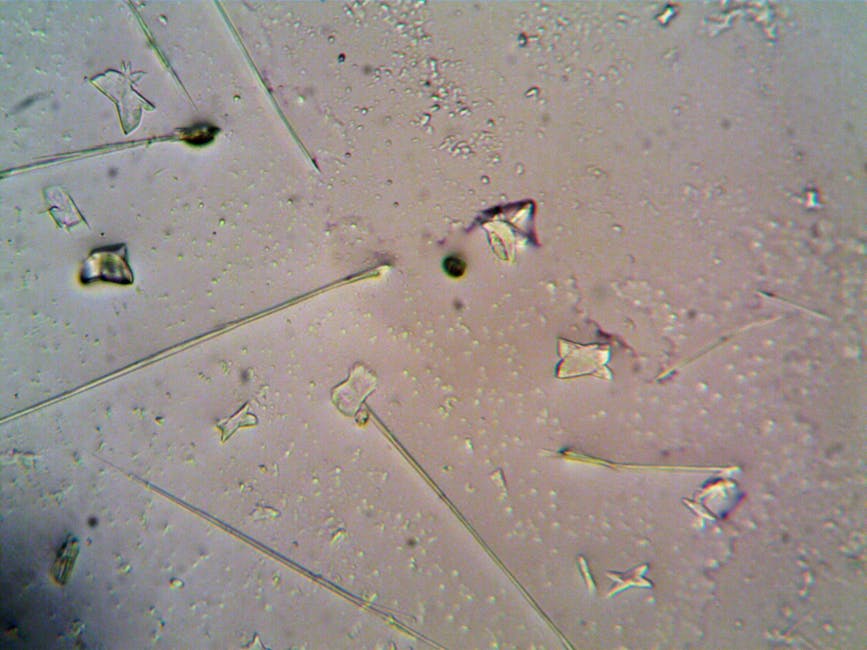
- Scientists have engineered a ‘living plastic’ that self-destructs in 48 hours, offering a potential solution to persistent plastic pollution.
- The new material mimics the durability of conventional plastics but can be triggered to break down rapidly when exposed to blue light or mild heat.
- The innovation uses light-sensitive molecular switches to initiate a complete breakdown into harmless compounds.
- The ‘living plastic’ remains stable during use but disassembles rapidly when triggered, unlike traditional bioplastics.
- This breakthrough raises the possibility of a significant reduction in plastic waste and pollution in the future.
What if plastic could vanish when we no longer needed it? As global plastic waste surpasses 400 million tons annually—with less than 10% recycled—the search for smarter materials has become urgent. Now, scientists have taken a radical step forward by creating a “living plastic” that behaves like conventional polymer but can be triggered to self-destruct within days. This isn’t science fiction: researchers at the University of California, Berkeley have engineered a synthetic material embedded with light-sensitive molecular switches that, when exposed to blue light or mild heat, initiate a complete breakdown into harmless compounds. The innovation raises a compelling question: could this be the end of persistent plastic pollution?
What Is Living Plastic and How Does It Work?

Living plastic refers to a new class of programmable polymers designed to mimic the durability of conventional plastics while incorporating biological-like responsiveness. Unlike traditional bioplastics, which degrade slowly and inconsistently in natural environments, this material remains stable during use but disassembles rapidly when triggered. The key lies in its molecular architecture: scientists embedded dynamic covalent bonds into the polymer chain—bonds that can reversibly break and reform. By integrating photosensitive molecules known as diarylethenes, the team enabled the plastic to respond to specific wavelengths of light. When exposed to blue light (450 nm), these molecules change shape, destabilizing the polymer network and triggering depolymerization. In lab tests, thin films of the material broke down completely within 48 hours, leaving no microplastics behind. The process can also be activated by mild heating, offering flexibility for industrial or consumer applications.
What Evidence Supports This Breakthrough?

Data published in Nature Chemistry demonstrates that the material maintains mechanical strength comparable to polystyrene, resisting cracking and deformation under stress. In controlled experiments, samples retained integrity for weeks under ambient conditions but disintegrated within two days of light exposure. Dr. Ting Xu, lead researcher on the project, explained, “We’ve built waste management into the material’s DNA. It’s stable when you need it, gone when you don’t.” Independent analysis by the National Institute of Standards and Technology (NIST) confirmed that decomposition yields only benign monomers, which can be captured and reused—a closed-loop lifecycle rare in plastic technology. Moreover, the synthesis process uses commercially available precursors, suggesting scalability. Pilot partnerships with packaging firms have already begun exploring applications in single-use containers and medical disposables, where controlled disposal is critical.
What Are the Limitations and Skeptical Views?

Despite its promise, living plastic faces hurdles before widespread adoption. Critics argue that reliance on light activation limits utility in opaque or layered packaging, where inner surfaces may not receive sufficient exposure. Dr. Miriam Rafailovich, a polymer physicist at Stony Brook University, cautioned, “This is brilliant chemistry, but real-world environments are messy. Will it work in a landfill under soil, or in ocean depths without sunlight?” Others note that heat-triggered degradation requires precise temperature control, raising energy costs. There are also concerns about accidental triggering—could a hot car or sunny windowsill set off unintended breakdown? Additionally, scaling production while maintaining molecular precision presents engineering challenges. Some environmental advocates worry the technology might delay systemic shifts toward reuse models, offering a high-tech fix that distracts from reducing consumption altogether. As one BBC commentator noted, “Biodegradable plastic won’t solve overconsumption—it might just make it feel cleaner.”
How Could This Impact Industry and the Environment?

The implications of on-demand degradable plastic span multiple sectors. In healthcare, disposable syringes or diagnostic kits could be programmed to self-destruct after use, reducing biohazard risks. Electronics manufacturers are exploring its use in transient circuit boards that dissolve after product end-of-life, easing e-waste recycling. Fast-moving consumer goods giants like Unilever and PepsiCo have expressed interest in applying the material to sachets and wrappers, particularly in regions with poor waste infrastructure. On a planetary scale, replacing even 20% of single-use plastics with trigger-degradable alternatives could prevent millions of tons of pollution annually. Ocean cleanup initiatives see potential in using the material for temporary buoys or sensors that vanish after data collection. If the monomers can be efficiently recovered, the model aligns with circular economy principles—turning plastic from a linear liability into a regenerative resource.
What This Means For You
For consumers, living plastic could mean safer, more sustainable products without sacrificing convenience. Imagine ordering takeout in a container that dissolves in your backyard with a flashlight, or using a phone case that breaks down when you upgrade. While not yet on shelves, this technology signals a shift toward materials that adapt to human needs and environmental limits. It also underscores the growing role of molecular engineering in solving ecological crises. As these plastics advance, staying informed about disposal protocols will be key—because even smart materials require smart use.
But a critical question remains: can we design our way out of the plastic crisis, or do we need deeper changes in how we produce and consume? If living plastic reduces waste but increases production, have we truly solved the problem? The answer may lie not just in the lab, but in policy, behavior, and whether innovation is paired with responsibility.
Source: Techspot