- U.S. intelligence warns Iran can withstand a Hormuz blockade for months due to logistical and military preparations.
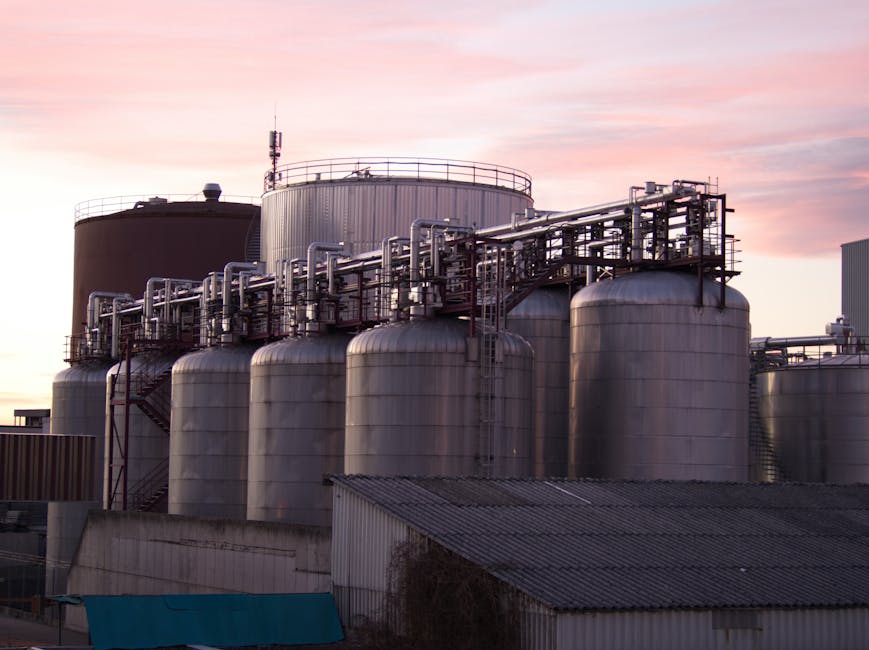
- Iran has amassed 70 million barrels of crude oil in underground and offshore storage facilities.
- Iran secured over $12 billion in non-dollar reserves through barter agreements with China and other nations.
- A U.S.-led blockade may fail to force Iranian concessions and could escalate into a wider conflict.
- Iran’s preparations include expanded fuel depots and increased activity at stealth export terminals.
U.S. intelligence agencies now assess that Iran has the logistical and military capacity to withstand a prolonged blockade of the Strait of Hormuz for several months, challenging any coercive strategy aimed at restricting its oil exports. This assessment, drawn from satellite imagery, intercepted communications, and regional naval observations, underscores Tehran’s extensive preparations for economic and military isolation. The implications are significant: a U.S.-led blockade—particularly under a potential second Trump administration—may fail to force Iranian concessions and could instead escalate into a wider regional conflict with unpredictable global consequences.
Strategic Stockpiles and Energy Reserves

According to declassified portions of a Defense Intelligence Agency (DIA) report from June 2024, Iran has amassed over 70 million barrels of crude oil in underground and offshore storage facilities, enough to sustain targeted exports via alternative routes for up to six months even under a full maritime cordon. Additionally, the country has secured over $12 billion in non-dollar reserves through barter agreements with China, India, and several Central Asian nations, significantly insulating its energy sector from financial sanctions. Satellite data from Maxar Technologies, cited in the report, shows expanded fuel depots near Bandar Abbas and increased activity at the Persian Gulf’s stealth export terminals. These findings confirm Iran’s long-term hedging strategy since the 2019 U.S. ‘maximum pressure’ campaign, which sought to reduce Iranian oil exports to zero. Even if U.S. naval forces intercept shipments, analysts estimate Iran could reroute 40% of its crude through overland pipelines to Pakistan and Iraq, according to a Reuters investigation published in May.
Key Players and Military Posturing

The Islamic Revolutionary Guard Corps (IRGC) Navy remains the central actor in Iran’s Hormuz defense strategy, maintaining a fleet of over 2,000 fast attack craft, anti-ship missiles, and underwater drones capable of swarming larger vessels. Recent exercises in the Strait demonstrated coordinated drone-boat attacks and electronic warfare jamming, simulating disruption of U.S. carrier strike group operations. Meanwhile, Iran’s Quds Force has deepened ties with proxy groups in Yemen, Iraq, and Lebanon, raising the risk of multi-front retaliation in the event of direct confrontation. On the U.S. side, Central Command (CENTCOM) has reinforced the Fifth Fleet in Bahrain with additional Arleigh Burke-class destroyers and P-8 surveillance aircraft, yet Pentagon planners admit that full interdiction of Iranian maritime activity remains impractical without sustained combat operations. The Biden administration has so far avoided direct escalation, but former President Donald Trump’s renewed campaign rhetoric—promising to ‘close the Strait if Iran misbehaves’—has heightened regional anxiety.
Economic and Geopolitical Trade-Offs

Any attempt to blockade the Strait of Hormuz, through which 21 million barrels of oil pass daily—nearly 25% of global seaborne oil trade—risks triggering a sharp spike in energy prices and global market instability. The U.S. Energy Information Administration (EIA) projects that even a partial disruption could push Brent crude above $150 per barrel, surpassing 2008 levels in real terms. Such a shock would disproportionately affect energy-dependent economies in Asia and Europe, potentially undermining Western diplomatic cohesion. Furthermore, military action could unify Iran’s fractious political elite around the regime, strengthening hardliners at the expense of reformists. Conversely, refraining from coercion allows Iran to consolidate influence across the ‘Shia arc’ from Tehran to Beirut. The dilemma leaves U.S. policymakers with few attractive options: containment risks emboldening Iran, while confrontation risks war with no clear exit strategy.
Why the Timing Has Shifted

The current intelligence reassessment follows a series of strategic shifts since 2023, including Iran’s successful commissioning of the underground Karun-3 refining complex and its expanded use of drone-based maritime surveillance. These developments, combined with China’s growing logistical presence at the Iranian port of Chabahar, have altered the balance of regional deterrence. Unlike in 2019, when Iran struggled to export oil after U.S. sanctions, Tehran now operates a resilient shadow fleet of over 150 tankers, many equipped with spoofed transponders and registered under opaque entities in West Africa and the Caribbean. U.S. officials acknowledge that tracking and intercepting these vessels requires international cooperation that may not survive political scrutiny, especially if civilian shipping is caught in the crossfire. The timing of the intelligence leak—amid renewed U.S. election debates over Iran policy—suggests an effort to temper hawkish rhetoric with strategic realism.
Where We Go From Here
Over the next 6 to 12 months, three scenarios appear most plausible. First, a cold conflict may persist, with shadow fleets and proxy engagements continuing at a low simmer, avoiding direct U.S.-Iran clashes. Second, a miscalculation—such as the sinking of a commercial vessel or a drone strike on a U.S. warship—could trigger a retaliatory cycle that escalates into open warfare. Third, diplomatic backchannels, possibly mediated by Oman or Qatar, could yield a limited agreement freezing uranium enrichment in exchange for eased shipping inspections and partial sanctions relief. Each path hinges on U.S. electoral outcomes, Iranian domestic politics, and the stability of Gulf Arab alliances. With both sides possessing escalation dominance in different domains, the margin for error is narrow.
Bottom line — U.S. intelligence confirms Iran can endure a Hormuz blockade for months, rendering coercive naval strategies ineffective without incurring unacceptable economic and military risks, thereby demanding a recalibration of containment policy in the Persian Gulf.
Source: Washingtonpost