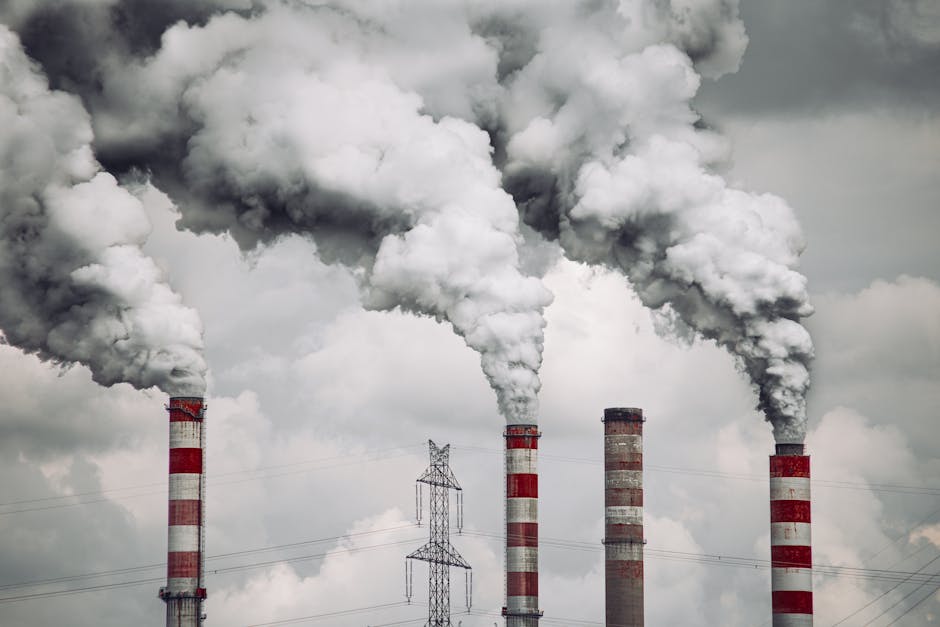
- Global carbon emissions hit a record high of 36.8 billion metric tons in 2023, surpassing 2022 levels by 1.1%
- A post-pandemic industrial rebound, increased coal use in Asia, and insufficient renewable energy fueled the surge in emissions
- The rise in emissions puts the planet on track for a 2.7°C increase in average temperatures by 2100, exceeding the Paris Agreement’s 1.5°C threshold
- Despite over 140 countries declaring net-zero targets, global emissions have not peaked, highlighting a growing credibility gap between national climate pledges and actual energy policies
- Renewed calls for a ‘phase-out’ of fossil fuels at COP28 were watered down to a ‘transition away,’ reflecting political resistance from oil-producing nations
Carbon dioxide emissions from fossil fuels and industry reached a record 36.8 billion metric tons in 2023, according to the latest analysis by the Global Carbon Project, dashing hopes that the world was turning a corner on climate action. This milestone marks a 1.1% increase from 2022 levels and continues a troubling trend: despite over 140 countries declaring net-zero targets, global emissions have not peaked. The rise was fueled by a post-pandemic industrial rebound, increased coal use in Asia, and insufficient renewable energy deployment to meet soaring energy demand. Scientists warn that at this pace, the planet is on track for a 2.7°C increase in average temperatures by 2100 — far beyond the Paris Agreement’s 1.5°C threshold, risking irreversible ecological and societal disruption.
Why Emissions Keep Rising Despite Promises

The persistence of rising emissions underscores a growing credibility gap between national climate pledges and actual energy policies. While COP28 in Dubai saw renewed calls for a ‘phase-out’ of fossil fuels, the language was watered down to a less binding ‘transition away,’ reflecting political resistance from oil-producing nations. Meanwhile, global coal consumption rose by 1.6% in 2023, led by China and India, where energy security concerns outweigh emissions goals. According to the International Energy Agency (IEA), over 70% of new electricity demand was met by fossil fuels last year, even as solar and wind capacity expanded. This imbalance reveals structural challenges: aging infrastructure, fossil fuel subsidies totaling $7 trillion annually (IMF estimate), and inconsistent carbon pricing mechanisms across regions.
Key Contributors and Regional Disparities

China remains the largest emitter, accounting for 30% of global CO₂ output, though its per capita emissions still trail those of the U.S. and Australia. India’s emissions grew by 8.2% in 2023, driven by industrial expansion and coal-fired power plants coming online. The United States, the second-largest emitter, saw a slight dip due to a mild winter reducing heating demand and continued coal-to-gas switching, but transport emissions rose with increased air travel and SUV sales. The European Union reduced emissions by 3.5%, aided by energy efficiency measures and nuclear output in France. However, Africa’s share remains low despite rapid population growth, highlighting global inequities in both emissions and climate vulnerability. Notably, the top 10 emitting countries are responsible for nearly 70% of total emissions, placing disproportionate responsibility on a handful of nations.
Underlying Drivers and Systemic Failures

The root causes of sustained emissions growth are deeply embedded in economic models prioritizing short-term growth over sustainability. Fossil fuels still supply over 80% of global primary energy, and investment in oil and gas exploration reached $540 billion in 2023, up from $450 billion in 2022 (IEA). While renewable energy investment is rising, it remains unevenly distributed, with low-income countries receiving less than 15% of clean energy financing. Furthermore, carbon markets remain fragmented, with only 25% of global emissions covered by a pricing mechanism, and average carbon prices at just $23/ton — far below the $85 needed to meet Paris targets (World Bank). Experts point to policy inertia, lobbying by energy conglomerates, and public resistance to lifestyle changes as critical barriers to decarbonization.
Who Bears the Brunt of Inaction?

The consequences of unchecked emissions fall disproportionately on the most vulnerable. Small island nations and low-lying coastal regions face existential threats from sea-level rise, while sub-Saharan Africa and South Asia endure worsening droughts and crop failures. In 2023 alone, climate-related disasters displaced over 26 million people, according to the Internal Displacement Monitoring Centre. Beyond humanitarian impacts, economic costs are mounting: global losses from extreme weather exceeded $380 billion last year. Urban populations face heightened air pollution, with WHO estimating 7 million premature deaths annually linked to poor air quality. Meanwhile, youth and future generations inherit a destabilized climate system, raising intergenerational equity concerns and fueling global climate litigation, with over 2,000 cases now filed against governments and corporations.
Expert Perspectives
Dr. Fatih Birol, Executive Director of the IEA, warns that ‘we are not on the right track’ and urges stronger policy enforcement. In contrast, some economists, like Bjørn Lomborg, argue that rapid decarbonization could harm growth and advocate for targeted innovation funding instead. Climate scientist Dr. Michael Mann stresses that ‘every fraction of a degree matters,’ emphasizing the need for immediate action. Meanwhile, developing nations call for climate reparations, citing historical emissions from industrialized countries. The debate reflects a broader tension between urgency and feasibility in global climate governance.
Looking ahead, the next critical milestone is COP29 in Azerbaijan, where nations must agree on a new climate finance goal post-2025. The success of carbon border adjustments, such as the EU’s CBAM, may pressure laggard economies to act. Yet, without synchronized global policy, technological breakthroughs in carbon capture, and equitable access to clean energy, emissions are likely to keep climbing. The central question remains: can humanity align economic systems with planetary boundaries before tipping points are crossed?
Source: The New York Times