- AI’s carbon footprint is set to rival that of medium-sized countries due to massive energy consumption.
- Training a single large language model emits over 284 metric tons of CO₂, equivalent to five average American cars.
- AI’s energy use is directly related to its scale, with larger models consuming more resources.
- The AI sector could account for up to 3% of global electricity consumption in the next five years.
- Unchecked growth in AI computing could undermine climate goals unless efficiency and policy reforms are implemented.
The carbon footprint of artificial intelligence could soon match that of medium-sized countries like Greece or Switzerland, according to a new peer-reviewed study published in Nature Climate Change. Researchers found that training a single large language model can emit over 284 metric tons of CO₂—equivalent to the lifetime emissions of five average American cars. As AI adoption accelerates across industries, the cumulative environmental toll could reach levels comparable to entire national economies. With data centers already consuming 1-2% of global electricity, the study warns that unchecked growth in AI computing could undermine climate goals unless urgent efficiency and policy reforms are implemented.
The Rising Energy Cost of Intelligence

Until recently, the environmental impact of AI was largely overlooked amid excitement over breakthroughs in language models, image generation, and autonomous systems. But as models grow larger—OpenAI’s GPT-4, for instance, is estimated to have over 1.7 trillion parameters—so too does their computational demand. The study analyzed energy use across training, inference, and infrastructure, revealing that AI’s carbon footprint is not just a byproduct of innovation but a direct function of scale. With cloud providers forecasting a 10x increase in AI workloads over the next five years, the sector could account for up to 3% of global electricity consumption by 2030. This surge threatens to offset gains made in renewable energy adoption and energy-efficient hardware design.
Behind the Data Centers

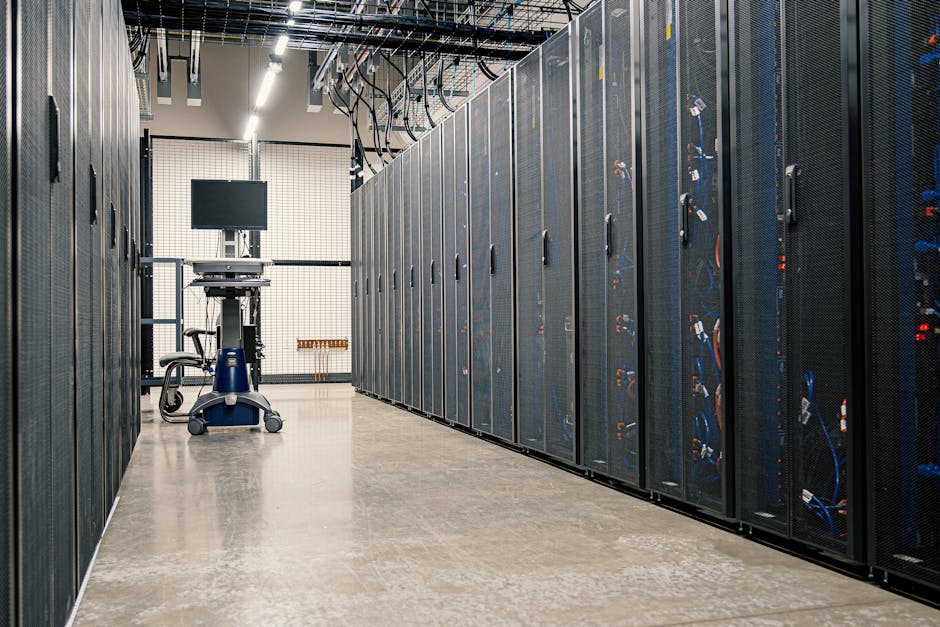
The study focuses on the full lifecycle emissions of AI systems, from model training to real-time inference. Data centers, often powered by fossil fuels in regions like Virginia and Inner Mongolia, bear much of the environmental burden. The researchers tracked energy use across major cloud platforms and found that running a large model like Meta’s Llama 2 for a single day emits roughly 30 metric tons of CO₂. When scaled across millions of daily queries—from chatbots to search engines—the emissions accumulate rapidly. The analysis also highlights the carbon intensity of semiconductor manufacturing, where producing a single AI chip can generate over 700 kg of CO₂. These findings underscore that AI’s environmental cost extends far beyond server rooms, reaching into supply chains and global energy markets.
Why Efficiency Isn’t Keeping Up

While hardware efficiency has improved—modern AI chips deliver more computations per watt—these gains are being outpaced by the exponential growth in model size and usage. The study introduces the concept of “efficiency debt,” where performance improvements are reinvested into larger, more complex models rather than reducing energy use. For example, the computational resources used to train state-of-the-art AI have doubled every 3.4 months since 2012, far exceeding Moore’s Law. This trend, the authors argue, reflects a systemic bias in AI development toward capability over sustainability. Without regulatory pressure or standardized carbon accounting, companies have little incentive to prioritize low-emission models, even as evidence mounts of their climate impact.
Who Bears the Climate Cost?

The consequences of AI’s carbon footprint are not evenly distributed. Developing nations, already vulnerable to climate change, face disproportionate risks from rising global temperatures, even as they benefit least from AI technologies. Meanwhile, tech giants in the U.S. and China dominate AI development and infrastructure, concentrating emissions in specific geographic and economic zones. The study warns that unless carbon pricing, green procurement policies, or international standards are adopted, AI could become a new vector of environmental inequality. Workers in data centers and chip factories also face health and safety risks linked to high energy use and toxic manufacturing processes, adding a social justice dimension to the issue.
Expert Perspectives
Dr. Emma Strubell, a computational linguist at Carnegie Mellon University not involved in the study, called the findings “a wake-up call for the AI community.” She emphasized that “we can’t innovate our way out of climate change if the tools we’re building are accelerating it.” Conversely, some industry researchers argue that AI also enables climate solutions—from optimizing energy grids to monitoring deforestation. “The net impact depends on how we deploy these systems,” said Dr. Andrew Ng, co-founder of DeepLearning.AI. The debate underscores a central tension: whether AI is a climate problem, a solution, or both, depending on governance and design choices.
Looking ahead, the study calls for mandatory carbon reporting for AI systems, similar to financial disclosures. It also advocates for “green AI” research that prioritizes energy-efficient algorithms and renewable-powered data centers. As governments consider AI regulations—from the EU’s AI Act to U.S. executive orders—climate impact could become a key metric. With AI poised to reshape economies and ecosystems alike, the question is no longer just what AI can do, but what it should do in a warming world.
Source: Azocleantech