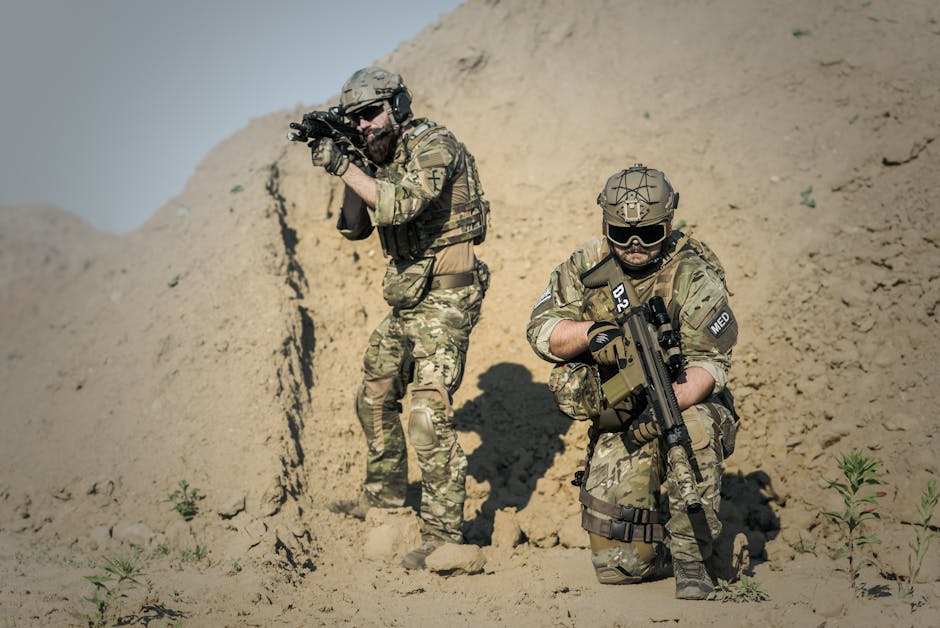
- North Korea has deployed thousands of troops to fight alongside Russian forces in Ukraine, reportedly drawing from elite special operations units.
- Estimates suggest that up to 12,000 North Korean soldiers may have been deployed since late 2023, with 2,300 reportedly killed in combat.
- Satellite imagery has confirmed the presence of North Korean military units training in Russia before being moved toward the front lines in Ukraine.
- The deployment of North Korean troops to Ukraine is a dramatic expansion of the war and draws one of the world’s most isolated regimes directly into a major international conflict.
- The move violates multiple United Nations Security Council resolutions that prohibit North Korea from exporting military personnel.
Are North Korean soldiers now dying on Russian battlefields in Ukraine? Recent satellite images, intelligence assessments, and battlefield reports suggest not only that Pyongyang has deployed troops to support Moscow, but that some 2,300 North Korean soldiers have already been killed in combat. This marks a dramatic and dangerous expansion of the war, drawing one of the world’s most isolated regimes directly into a major international conflict. As evidence mounts, the question is no longer whether North Korea is involved, but how deeply—and what this means for the future of the war, regional stability, and global security.
Did North Korea Send Soldiers to Fight in Ukraine?

Yes—multiple intelligence sources and visual evidence indicate North Korea has sent thousands of troops to fight alongside Russian forces in Ukraine. U.S. and South Korean officials have confirmed that hundreds of North Korean soldiers have been killed, with estimates suggesting as many as 12,000 troops may have been deployed since late 2023. Satellite imagery analyzed by independent researchers shows North Korean military units training in Russia before being moved toward the front lines in Ukraine’s Kursk and Donetsk regions. These soldiers, many drawn from elite special operations units, were reportedly promised financial incentives and better rations. Their deployment violates multiple United Nations Security Council resolutions that prohibit North Korea from exporting military personnel, further isolating Pyongyang on the world stage.
What Evidence Supports North Korean Troop Involvement?

Declassified U.S. intelligence, commercial satellite imagery, and battlefield footage confirm North Korean participation. In January 2024, the U.S. Department of Defense formally accused North Korea of sending troops to Russia for deployment in Ukraine, citing intercepted communications and logistical patterns. Reuters reported that North Korean soldiers were seen in Russian-held areas of eastern Ukraine, wearing standard Russian gear but with distinct physical and linguistic traits noted by local observers. Satellite photos from Maxar Technologies show barracks complexes in western Russia housing troops in formations consistent with North Korean military doctrine. Additionally, Ukrainian intelligence intercepted radio transmissions in Korean from areas near active combat zones. South Korea’s National Intelligence Service stated that casualties among these troops may exceed 2,300, with many killed during failed assaults on entrenched Ukrainian positions in late 2023 and early 2024.
Are There Alternative Explanations for the Evidence?

Some experts caution against overinterpreting the data, noting that visual identification of North Korean troops is difficult without clear uniform markings or official admissions. Russia and North Korea have both denied any troop transfers, with Moscow dismissing the claims as Western disinformation. Skeptics argue that the satellite images could show other foreign volunteers or Russian soldiers trained in Korean language for intelligence purposes. Additionally, the exact number of casualties remains unverified by independent international bodies, relying heavily on South Korean and U.S. intelligence estimates. While circumstantial evidence is strong, definitive proof—such as captured soldiers or authenticated battlefield footage with clear identification—has not yet been made public. Still, the convergence of multiple intelligence streams makes a purely fabricated narrative unlikely.
What Are the Real-World Consequences of This Involvement?

The deployment of North Korean troops fundamentally alters the dynamics of the war. It signals a deepening military alliance between Russia and North Korea, two nations increasingly isolated from the global order. For Ukraine, it means facing a more diverse and potentially unpredictable enemy force. For the international community, it raises serious legal and ethical concerns. The use of North Korean soldiers may constitute a war crime under the Geneva Conventions if they are being used as proxy combatants without proper status. Sanctions enforcement becomes even more complex, as third countries may be complicit in facilitating troop movements. Moreover, if North Korean forces gain battlefield experience, they could return home with skills that threaten regional stability in East Asia, particularly toward South Korea and Japan.
What This Means For You
This development underscores how regional conflicts are becoming increasingly interconnected, with global powers drawing in isolated regimes to gain military advantage. For citizens in democracies, it highlights the importance of transparent intelligence reporting and robust international institutions to hold violators accountable. The war in Ukraine is no longer a regional conflict—it’s a testing ground for new alliances among authoritarian states. As more countries provide material or personnel support, the risk of broader escalation grows.
With troop deployments confirmed and casualties mounting, the next critical question is whether other rogue states or sanctioned militaries will follow suit. Could Iran, Venezuela, or Myanmar be next to send forces to support Russia? And how will the West respond if they do? The precedent being set today could define the rules of warfare for decades to come.
Source: BBC