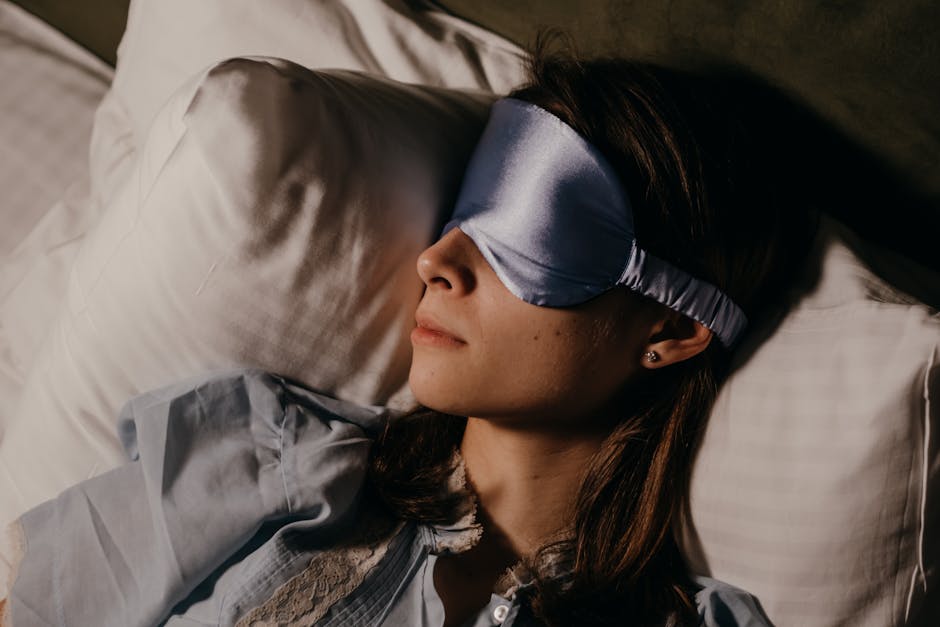
- Humans can experience vivid, dream-like states while fully awake, challenging long-held assumptions about consciousness states.
- Brain imaging reveals unexpected overlaps between sleep and wakefulness, raising questions about reality, memory, and mental health.
- Researchers have identified ‘waking dream states’ or ‘hypnagogic intrusions,’ where individuals experience vivid sensory hallucinations while conscious.
- Spontaneous brain activation in the default mode network and visual cortex suggests the brain’s dreaming machinery can operate independently of sleep.
- This new understanding of brain function has significant implications for cognitive science and our understanding of the human mind.
Is it possible to dream without falling asleep? A growing body of neuroscience research suggests that humans can experience vivid, dream-like states while fully awake — and conversely, maintain a sense of awareness during deep sleep. This challenges long-held assumptions about the rigidity of consciousness states and raises fundamental questions about how we define waking and dreaming. If the brain can simulate dreams without sleep, what does that say about reality, memory, and mental health? These questions are now at the forefront of cognitive science, as advanced brain imaging reveals unexpected overlaps between sleep and wakefulness.
\n\n
What Does It Mean to Dream While Awake?

\n
Researchers have identified a phenomenon known as “waking dream states” or “hypnagogic intrusions,” where individuals experience vivid sensory hallucinations, narrative imagery, and emotional landscapes typically associated with REM sleep — but while remaining fully conscious and alert. A 2023 study published in Scientific Reports used functional MRI to monitor brain activity in 68 participants asked to rest with eyes closed. The scans revealed spontaneous activation in the default mode network and visual cortex — regions strongly linked to dreaming — even when subjects were not asleep. These findings suggest that the brain’s dreaming machinery can operate independently of sleep, particularly during relaxed, meditative, or mind-wandering states. This blurs the line between imagination and hallucination, raising new questions about how consciousness is regulated.
\n\n
What Evidence Supports Awake Dreaming?

\n
The study’s lead author, Dr. Elena Moretti of the University of Geneva, explained that participants who scored high on measures of absorption — a personality trait linked to deep focus and imaginative engagement — were significantly more likely to report dream-like experiences during wakeful rest. “We’re seeing spontaneous reactivation of dream neurocircuitry in people who aren’t sleeping,” she said in an interview with ScienceDaily. EEG data confirmed that these episodes occurred outside of REM or NREM sleep stages. Instead, they were associated with alpha and theta wave patterns typical of relaxed wakefulness. Similar findings have emerged in studies of lucid dreaming and mindfulness meditation, where individuals report conscious control over dream content while maintaining awareness. These overlaps suggest that consciousness is not a binary switch but a spectrum, with transitional states allowing for dream logic to intrude into waking life.
\n\n
Are There Skeptical Views on This Phenomenon?

\n
Despite compelling data, some neuroscientists caution against equating mind-wandering or vivid imagination with true dreaming. Dr. Rajiv Patel, a sleep researcher at Harvard Medical School, argues that “dreaming” should be defined by neurobiological criteria — including muscle atonia, REM eye movements, and disconnection from external stimuli — not just subjective reports of imagery. “Just because someone sees a mental scene doesn’t mean they’re dreaming,” he stated in a commentary for Nature Neuroscience. Others point to the risk of misinterpreting ordinary daydreaming as a neurological anomaly. Conditions like narcolepsy or temporal lobe epilepsy can produce hallucinations that mimic dreams, potentially skewing results. Furthermore, self-reporting is inherently unreliable; people may conflate memory, fantasy, and perception. While the brain activity patterns are real, whether they constitute “dreaming” remains a matter of definition and debate.
\n\n
What Are the Real-World Implications?

\n
Understanding the fluidity between waking and dreaming has practical applications in mental health, education, and artificial intelligence. Clinically, it may help explain symptoms in disorders like schizophrenia, where patients struggle to distinguish internal thoughts from external reality. Therapies based on mindfulness and lucid dreaming are already being tested to improve metacognition in PTSD and depression. In education, fostering controlled dream-like states could enhance creativity and problem-solving. Meanwhile, AI researchers are studying these brain patterns to develop more human-like consciousness models. The military and aviation sectors are also interested in monitoring cognitive states to prevent microsleeps or attention lapses. If the brain can dream while awake, learning to regulate that ability could unlock new forms of cognitive training and mental resilience.
\n\n
What This Means For You
\n
If you’ve ever daydreamed so vividly that it felt real, you may have experienced a waking dream. These moments aren’t just distractions — they’re windows into how your brain constructs reality. Recognizing that consciousness is fluid can help you better understand your thoughts, emotions, and creative impulses. Practices like meditation, journaling, or reality-checking exercises can help you navigate these states mindfully. As neuroscience continues to map the spectrum of awareness, the distinction between dreaming and waking may become less about biology and more about attention and interpretation.
\n\n
But if dreaming can happen without sleep, what truly defines a dream? Is it the content, the brainwaves, or the loss of reality monitoring? And could we someday learn to enter and exit dream states at will, like flipping a mental switch? As research advances, the answer may not lie in sleep labs alone, but in the everyday moments when imagination blurs into experience.
Source: Earth