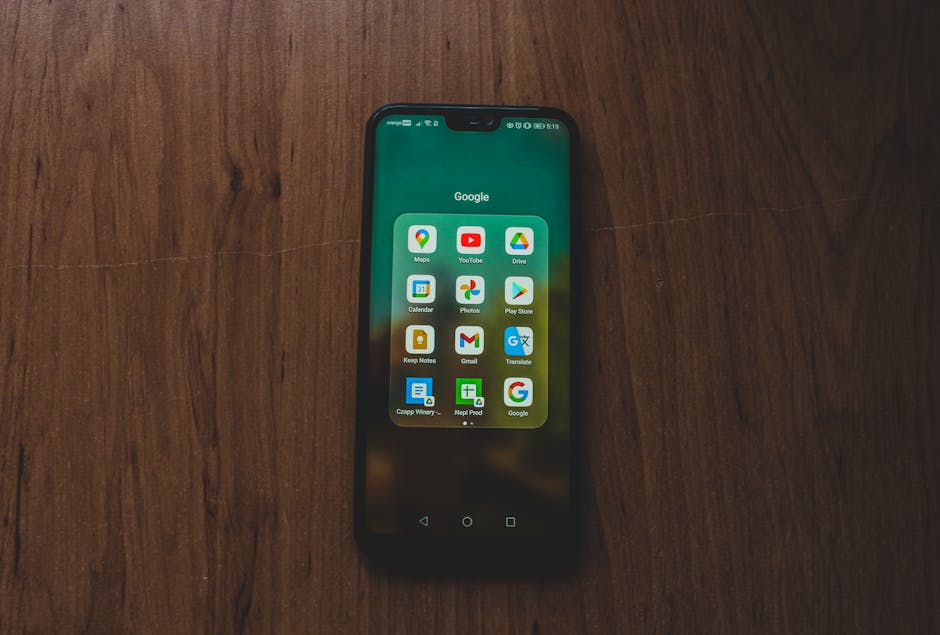
- Google is consolidating its health apps into a single platform called Google Health in 2024.
- Google Fit will be sunset by the end of 2024, while the Fitbit app will be rebranded as Google Health.
- The new platform will offer activity tracking, heart rate monitoring, sleep analysis, and broader wellness metrics.
- Google’s consolidation strategy affects over 30 million active Fitbit users worldwide.
- The move signals Google’s ambition to compete directly with Apple Health and Samsung Health.
In a sweeping move to dominate the digital health space, Google is consolidating its fragmented fitness offerings into a single, unified platform: Google Health. By the end of 2024, the company will sunset Google Fit and rebrand the Fitbit app as Google Health, creating a centralized hub for activity tracking, heart rate monitoring, sleep analysis, and broader wellness metrics. This shift affects over 30 million active Fitbit users worldwide and signals Google’s ambition to compete directly with Apple Health and Samsung Health. The rebrand isn’t just cosmetic—backend integrations with Android, Wear OS, and Google’s AI-driven health analytics are being overhauled to deliver a seamless, cross-device experience. As personal health data becomes increasingly central to consumer tech, Google’s integration strategy could redefine how users interact with their wellness data on a daily basis.
The End of Google Fit and the Rise of a Unified Platform

Google Fit, launched in 2014 as a lightweight activity tracker, has long struggled to gain significant traction against more feature-rich competitors. Despite integration with Android smartphones and third-party apps, it lacked the ecosystem depth offered by rivals. Meanwhile, Fitbit—acquired by Google in a $2.1 billion deal finalized in 2021—brought robust hardware, a loyal user base, and sophisticated health-tracking algorithms. The decision to retire Google Fit reflects Google’s strategic pivot: rather than maintaining parallel services, the company is doubling down on Fitbit’s infrastructure while leveraging its own cloud and AI capabilities. The transition to Google Health is not merely a name change but a full architectural convergence, designed to eliminate redundancy and improve data synchronization across devices. This consolidation arrives at a critical moment, as consumers demand interoperability between wearables, smartphones, and healthcare providers.
What the Rebrand Means for Users and Devices

For users, the shift means the Fitbit app will gradually evolve into Google Health, retaining all existing features while gaining deeper integration with Google services. Fitbit device owners will continue to use their trackers as before, but their data will now sync through the Google Health app, which will also support non-Fitbit wearables and Android phones’ built-in sensors. Google has confirmed that historical data from both Fitbit and Google Fit will be preserved and migrated automatically. The new app will introduce enhanced dashboards, personalized insights powered by machine learning, and better integration with Google Assistant and calendar for proactive health nudges. Importantly, Google emphasizes that Fitbit as a hardware brand is not going away—devices will still carry the Fitbit name and design, but they will be positioned as part of Google’s broader health ecosystem rather than a standalone product line.
Strategic Implications for the Digital Health Landscape

Google’s move underscores a broader industry trend: the convergence of consumer tech and personal health. By unifying its offerings under Google Health, the company positions itself to collect, analyze, and act on comprehensive health datasets at scale. This plays into Google’s long-term ambitions in AI-driven health insights, including early detection of conditions like atrial fibrillation and sleep apnea through wearable data. According to Reuters, regulatory scrutiny around data privacy delayed aspects of the Fitbit integration, but Google has since committed to stricter data governance. The rebrand also strengthens Google’s hand against Apple, whose Health app is deeply embedded in the iPhone ecosystem. With Google Health, the company aims to offer an open, Android-compatible alternative that works across brands and devices—potentially appealing to a more diverse user base.
Privacy, Access, and the Future of Health Data

While the unification promises convenience, it also raises questions about data privacy and control. Google has stated that health data will not be used for advertising and will be protected under its sensitive information policies. However, consumer advocacy groups remain cautious. The centralization of health metrics into a single Google-controlled platform increases the potential impact of data breaches or misuse. On the flip side, improved data standardization could benefit medical research and telehealth integration. If Google partners with healthcare institutions or integrates with electronic health records—as The Verge has speculated—users might one day share verified activity data with doctors seamlessly. The success of Google Health will depend not just on functionality, but on earning and maintaining user trust in an era of heightened data sensitivity.
Expert Perspectives
Health tech analysts are divided on the rebrand’s potential. Some, like Forrester’s Fatima Beck, view it as a necessary step: “Google had too many siloed health offerings—this unification clarifies the value proposition.” Others warn of overreach. Dr. Lisa Sanders, a digital health ethicist at Yale, cautions, “When a tech giant becomes a health gatekeeper, we must ensure transparency and user agency.” The debate centers on whether Google can balance innovation with ethical data stewardship, especially as AI plays a larger role in interpreting personal health signals.
Looking ahead, the full rollout of Google Health will be closely watched by regulators, competitors, and consumers alike. Key milestones include deeper AI insights, potential FDA-cleared health features, and partnerships with healthcare providers. The transition period, expected to conclude by December 2024, offers Google a narrow window to prove that its unified vision enhances—not compromises—personal health management. As the line between fitness tracker and medical device blurs, Google Health may soon be more than an app: it could become a pivotal node in the future of preventive care.
Source: WIRED