- Social justice movements have emerged as a dominant source of moral identity and communal belonging in the West.
- Traditional religious adherence is declining in the West, with younger generations being least religiously affiliated.
- Social justice movements have taken on characteristics similar to organized religions, such as sacred texts and rites of passage.
- The decline of institutional faith has created a moral and communal void that social justice movements are filling.
- The increasing secularization of the West is driving the rise of social justice as a new form of collective belief.
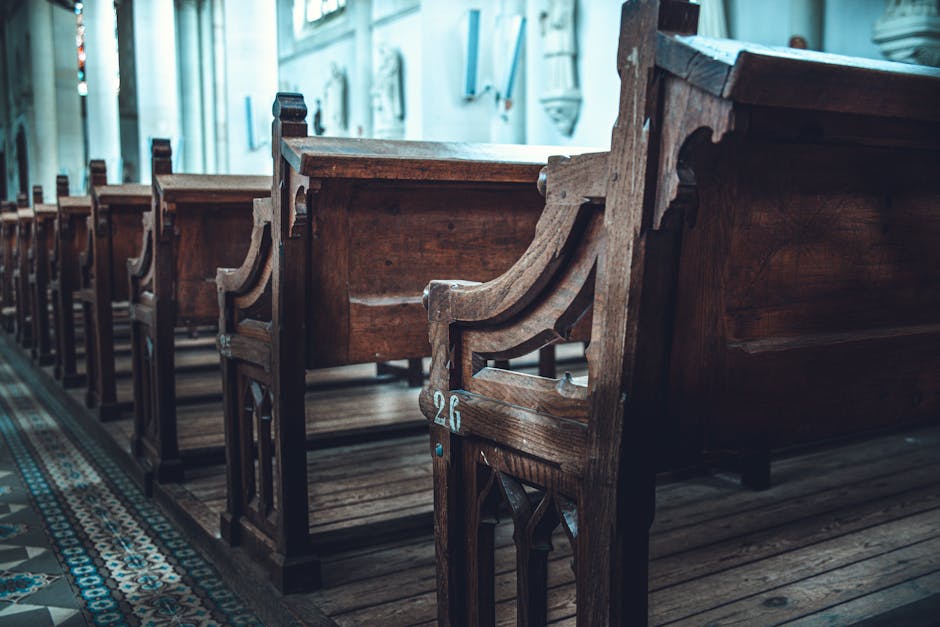
Is social justice the new religion of the West? As church pews empty and institutional faith loses its grip across Europe and North America, a provocative question has emerged: what fills the moral and communal void left behind? Increasingly, scholars, sociologists, and cultural commentators suggest that progressive social movements—centered on racial equity, gender identity, climate justice, and systemic reform—are not just political causes but belief systems with their own doctrines, sacred texts, and rites of passage. Host Mohamed Hassan and a panel of thinkers explore whether today’s activism mirrors the functions once served by organized religion—offering meaning, belonging, and a framework for right and wrong in an increasingly secular age. The debate cuts to the heart of modern identity, moral authority, and the evolving nature of collective belief.
What Happens When Religion Retreats?

As traditional religious adherence declines in the West, social justice has stepped into the vacuum as a dominant source of moral identity and communal belonging. In countries like the United States, the United Kingdom, and Sweden, surveys show a steep drop in religious affiliation, particularly among younger generations. According to Pew Research Center, nearly 30% of Americans now identify as religiously unaffiliated, a figure that jumps to over 40% among adults under 30. With this decline, many have turned not to atheism or apathy, but to social justice causes that provide a clear ethical compass, a sense of purpose, and a community of like-minded believers. These movements often feature confession, repentance, public atonement, and excommunication—practices long associated with religious institutions. The language of sin and salvation resurfaces in discussions of privilege, complicity, and allyship, suggesting that while the theology may have changed, the psychological and social functions remain strikingly similar.
How Social Justice Mirrors Religious Structures

There is growing evidence that modern social justice movements replicate the structural and emotional roles once fulfilled by religion. Sociologist Philip Gorski, a professor at Yale University, argues that ‘civil religion’ is not dead—it has been rebranded. In his work on ‘post-secularism,’ he notes that movements like Black Lives Matter, #MeToo, and climate activism operate with liturgies (protests, vigils), sacred symbols (raised fists, pride flags), and moral authorities (activists, academics, influencers). These communities offer belonging, shared narratives, and rituals that reinforce group identity. A 2022 study published in Nature Human Behaviour found that participants in social justice activism reported levels of existential fulfillment comparable to those found in religious practice. The research highlighted how public declarations of solidarity, self-examination around bias, and calls for institutional ‘conversion’ mirror religious practices of confession and redemption. Even the concept of ‘wokeness,’ critics argue, functions like a state of grace—something to be achieved, maintained, and policed.
Are We Replacing Dogma With New Orthodoxy?

While many see social justice as a necessary moral evolution, others warn of emerging orthodoxy and ideological rigidity that resemble religious fundamentalism. Critics like Canadian psychologist Jordan Peterson and French philosopher Michel Houellebecq have argued that progressive discourse often discourages dissent, punishes heresy, and enforces conformity—traits historically associated with religious institutions. Some university campuses, for example, have seen speakers disinvited over ideological disagreements, and employees fired for expressing nuanced or skeptical views on gender or race. This has led scholars like Mark Lilla of Columbia University to caution against what he calls ‘the new clerisy’—a class of academics, journalists, and activists who wield moral authority in ways that can stifle debate. While social justice aims to correct historical wrongs, its critics contend that when moral fervor replaces open inquiry, it risks becoming less a movement for liberation and more a dogmatic system resistant to self-correction.
What Does This Shift Mean in Practice?

The real-world impact of this cultural shift is visible in institutions from schools to corporations. Diversity, equity, and inclusion (DEI) programs now resemble catechisms, with training modules, required readings, and assessments of ideological alignment. In 2023, over 90% of Fortune 500 companies reported having formal DEI initiatives, many involving mandatory workshops on privilege, bias, and systemic oppression. Public apologies for ‘harmful’ statements or actions—often delivered in highly ritualized formats—are now common among celebrities, politicians, and executives. These acts resemble public penance, complete with confession and a plea for redemption. Meanwhile, social media platforms amplify both righteous outrage and swift condemnation, creating digital courtrooms where reputations can be made or destroyed overnight. The speed and emotional intensity of these dynamics echo religious inquisitions, where moral purity is policed and deviation is punished—a reality that raises urgent questions about free speech, due process, and the balance between accountability and tolerance.
What This Means For You
Whether you embrace or critique social justice as a moral force, its influence is undeniable. For individuals, this means navigating a world where ethical identity is increasingly defined by alignment with progressive causes. Belonging to certain communities—academic, professional, cultural—may depend on affirming specific values, much like religious adherence once did. But it also invites reflection: are we fostering genuine dialogue or enforcing conformity? The shift suggests that humans have a deep need for meaning, community, and moral clarity—needs that persist even in a secular age. Recognizing this can help us engage more thoughtfully, with both compassion and critical awareness.
As social justice continues to shape public life, one question remains: can a moral movement correct societal wrongs without replicating the authoritarian tendencies of the institutions it seeks to replace? And if social justice functions like a religion, who gets to define its doctrine—and who is excluded by it? These are not just academic concerns, but urgent questions for anyone living in a society redefining its values in real time.
Source: Al Jazeera