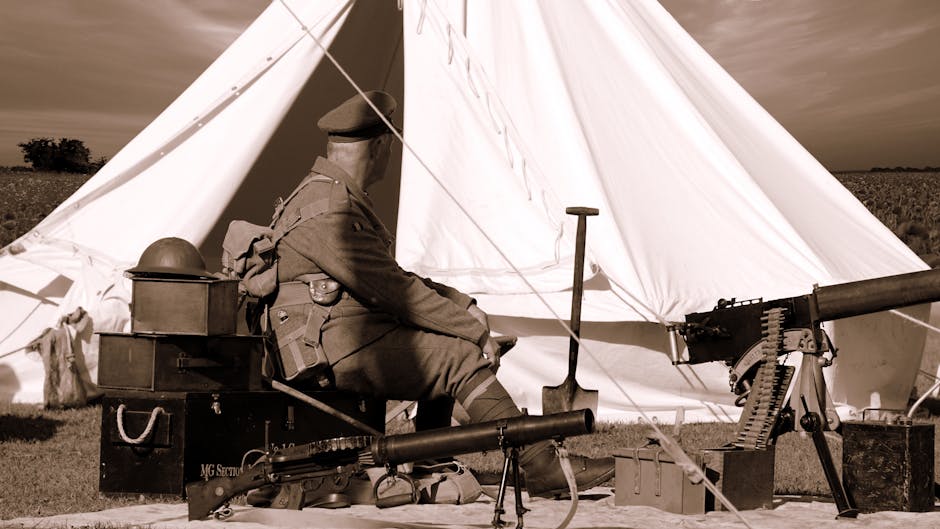
- A fragile ceasefire in Eastern Europe has collapsed, plunging the region into war.
- Troop concentrations have increased by 300% since early May, with heavy artillery deployed near civilian settlements.
- The conflict has become a major humanitarian crisis, with ongoing reports of shelling, casualties, and broken ceasefires.
- The region was once known for its sunflower fields and sleepy railway stops, but has become a war zone.
- The conflict threatens to engulf an entire region, with the OSCE confirming a significant escalation.
Smoke curled into the gray dawn above the village of Novoselivka, where the cracked bell tower of a 19th-century church stood as the only landmark still partially intact. Residents huddled in basements, listening to the distant thud of artillery echoing from the north. A child’s red shoe lay abandoned in a mud-tracked alley, half-buried beneath splintered wood. Just 400 meters beyond the village edge, armored vehicles crept through the fog, their turrets swiveling toward unseen positions. For weeks, this stretch of land—once known only for its sunflower fields and sleepy railway stops—has become the epicenter of a conflict that threatens to engulf an entire region. The air hums with drones, and every hour brings fresh reports of shelling, casualties, or broken ceasefires. This is no longer a simmering dispute. It is war in motion.
\n
Frontlines Ignite Amid Ceasefire Collapse

\n
The fragile truce brokered in Minsk two months ago disintegrated overnight when both sides accused each other of violating the demilitarized zone. Satellite imagery analyzed by Reuters reveals a 300% increase in troop concentrations since early May, with heavy artillery and multiple launch rocket systems now deployed within striking distance of civilian settlements. The Organization for Security and Co-operation in Europe (OSCE) confirmed that over 120 explosions were detected in a 12-hour window along the contact line. Ukrainian officials report that at least 17 civilians have been killed in the past week, while Russian-backed separatist leaders claim Ukrainian forces initiated hostilities. The European Union has called for an emergency summit, but with no neutral ground for negotiations, diplomatic efforts remain stalled. Humanitarian corridors have been proposed, though none have been secured.
\n
Roots of a Fractured Peace

\n
The current escalation traces back to 2014, when Russia annexed Crimea and armed separatist movements seized control of parts of Donetsk and Luhansk. Though the Minsk II agreements nominally ended large-scale combat in 2015, they failed to resolve the core dispute: the status of the breakaway regions. For nearly a decade, the so-called ‘frozen conflict’ smoldered beneath the surface, with periodic skirmishes and political deadlock. Attempts at decentralization and special autonomy for the eastern oblasts were blocked by nationalist factions in Kyiv, while Moscow continued to supply weapons and advisors under the guise of ‘volunteers.’ The 2022 NATO summit, which reaffirmed Ukraine’s eventual membership path, further inflamed tensions. As Western military aid increased, so did Russian paranoia about encroachment. What began as geopolitical maneuvering has now erupted into open warfare, with both sides unwilling to retreat.
\n
Leadership and the Logic of Escalation

\n
At the center of the crisis are three key figures: Ukrainian President Volodymyr Zelenskyy, Russian President Vladimir Putin, and the commander of the Donbas People’s Militia, Denis Pushilin. Zelenskyy, once a wartime symbol of resilience, now faces mounting pressure to reclaim lost territory while avoiding full-scale invasion. Putin, meanwhile, frames the conflict as a defense of Russian-speaking populations and a rejection of NATO expansion—a narrative reinforced through state media. Pushilin, operating with de facto autonomy, has pushed for greater offensives, allegedly with Kremlin backing. Analysts suggest that internal power struggles in Moscow have incentivized hardline actions to demonstrate strength. On the ground, battalion commanders make split-second decisions that outpace political directives, creating a dangerous feedback loop where localized attacks trigger disproportionate retaliation. National pride, territorial claims, and personal legacies now outweigh the calculus of compromise.
\n
Human and Strategic Consequences

\n
The humanitarian toll is mounting rapidly. The United Nations estimates that over 65,000 people have been displaced since the latest hostilities began, with many seeking shelter in overcrowded schools and subway tunnels. Medical supplies are running low, and power outages have crippled water systems in frontline cities. Beyond the human cost, the conflict threatens to disrupt global energy markets. Ukraine is a critical transit route for Russian gas to Europe, and any major damage to pipeline infrastructure could trigger shortages. Financial markets have already reacted, with European defense stocks surging and the euro dipping to a six-month low. More ominously, NATO has placed forces in eastern member states on heightened alert, raising the specter of direct confrontation between nuclear-armed powers. The longer the fighting continues, the greater the risk of irreversible entanglement.
\n
The Bigger Picture
\n
This conflict is not merely a regional dispute; it is a symptom of a fractured global order. The post-Cold War consensus—built on multilateralism, arms control, and diplomatic engagement—has eroded. States now operate in spheres of influence, where power outweighs law. The war in Eastern Europe reflects a broader shift: from conflict prevention to conflict management, from diplomacy to deterrence. It also reveals the limits of international institutions, which struggle to act decisively in the face of veto-wielding powers. As great-power competition intensifies, smaller nations become battlegrounds for ideological and strategic dominance. The world is not sliding into chaos—but it is learning to live with it.
\n
What comes next remains uncertain. A ceasefire may be negotiated, but without political reconciliation, it will be temporary. The villages near the front may change hands again, as they have for decades. Yet, each escalation narrows the path to peace. The international community must decide whether to invest in long-term mediation or brace for prolonged instability. For the people of Novoselivka and hundreds of towns like it, survival is the only immediate goal. But memory runs deep in this region, and every shell crater becomes a marker of a future reckoning.
Source: The New York Times