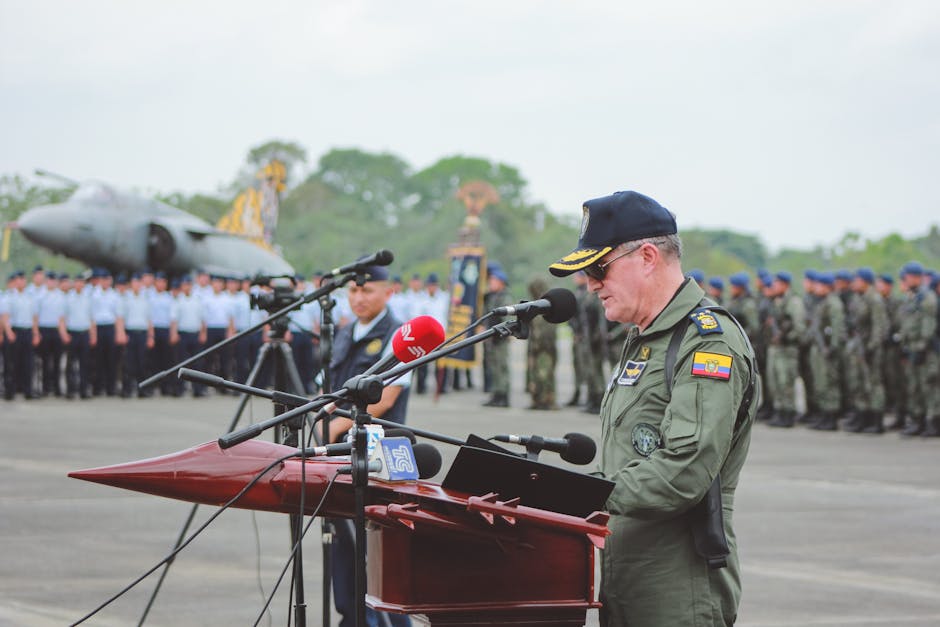
- US Defense Secretary Pete Hegseth confirmed 12 new strikes in the Iran conflict zone.
- The strikes were described as defensive measures to protect American personnel and regional allies.
- Hegseth emphasized that Operation Epic Fury is not a declaration of war, but a calibrated response to Iranian aggression.
- The operation aims to counter ‘persistent and unprovoked aggression’ from Iran’s Islamic Revolutionary Guard Corps (IRGC).
- Hegseth cited intelligence intercepts indicating plans for attacks on US embassies and troop positions.
Is the United States on the brink of a wider war in the Middle East? That’s the question echoing through Capitol Hill after Defense Secretary Pete Hegseth’s first public testimony before Congress since the launch of Operation Epic Fury in late February. With over a dozen U.S. airstrikes reported near Iranian military installations and naval confrontations escalating in the Strait of Hormuz, lawmakers from both parties pressed Hegseth for clarity on the mission’s objectives, legal basis, and potential for regional spillover. The hearing marked a tense moment in an already volatile geopolitical landscape, as Iran’s Revolutionary Guard continues to test American resolve with drone incursions and proxy attacks across Iraq and Syria.
What Did Hegseth Say About U.S. Military Action in Iran?

During his testimony, Hegseth affirmed that U.S. forces have conducted 12 targeted strikes against Iranian-backed militias and surveillance assets since February 24, framing the actions as defensive measures to protect American personnel and regional allies. He emphasized that the operation, codenamed Epic Fury, is not a declaration of war but a calibrated response to what he described as “persistent and unprovoked aggression” from Iran’s Islamic Revolutionary Guard Corps (IRGC). Hegseth cited intelligence intercepts indicating plans for attacks on U.S. embassies and troop positions, though he declined to release specific evidence to the public. He reiterated that the administration remains committed to avoiding full-scale war but will not hesitate to “respond decisively” to further threats, a stance that has drawn both support and concern from members of the Senate Armed Services Committee.
What Evidence Supports the Administration’s Claims?

Support for the Pentagon’s position comes from declassified intelligence briefings shared with select lawmakers, including satellite imagery of weapons transfers from Iran to militia groups in eastern Syria. According to a Reuters report published earlier this month, U.S. naval forces intercepted a vessel allegedly carrying advanced missiles from Iran to Yemen-based Houthi rebels. Hegseth referenced this incident as part of a broader pattern of Iranian destabilization. Additionally, General Laura Mullins, commander of U.S. Central Command, testified that Iranian drones have entered Iraqi airspace over 30 times in the past six weeks, prompting defensive countermeasures. While the administration insists these actions fall within the president’s constitutional authority to protect national security, critics point out that no formal authorization for the use of military force (AUMF) has been sought from Congress, raising constitutional and legal concerns.
What Are the Counterarguments to Hegseth’s Position?

Several lawmakers challenged the administration’s narrative, warning that Operation Epic Fury risks entangling the U.S. in an open-ended conflict without clear exit strategies. Senator Maria Lopez (D-NM) argued that “defensive” strikes based on anticipated threats could set a dangerous precedent, potentially justifying preemptive warfare across multiple regions. Legal scholars, including Professor Daniel Cho at Georgetown Law, have questioned whether the current actions comply with the War Powers Resolution, which requires congressional approval for sustained military engagements. Others note that Iran has not directly attacked U.S. soil and that much of the current escalation stems from proxy confrontations. There is also concern that the administration’s classification of incidents as “defensive” may obscure offensive objectives, particularly as strike locations have expanded beyond immediate threat zones into areas linked to Iranian intelligence infrastructure.
What Are the Real-World Consequences of This Escalation?

The consequences of Operation Epic Fury are already unfolding across the region. Oil prices have spiked nearly 15% since February, driven by fears of disruption in the Strait of Hormuz, through which about 20% of the world’s oil passes. In Iraq, the U.S. embassy in Baghdad has entered lockdown mode multiple times following rocket attacks attributed to Iran-aligned Kata’ib Hezbollah. Meanwhile, Iranian state media have ramped up anti-American rhetoric, and Tehran recently announced it would no longer allow inspections by the International Atomic Energy Agency at certain nuclear sites. On the ground, U.S. troops in al-Asad Airbase have reported heightened alert statuses, with some units placed on 24-hour standby. Diplomats warn that without de-escalation efforts, the current trajectory could fracture fragile alliances and embolden militant actors across the region.
What This Means For You
For Americans, the escalation in the Persian Gulf could mean higher energy costs, increased military deployments, and a resurgence of long-term Middle East entanglements. While the administration insists there are no plans for troop surges or conscription, the open-ended nature of current operations leaves room for rapid changes in strategy. The absence of a congressional war vote also raises democratic accountability concerns, especially as military actions expand in scope. Citizens should stay informed through credible sources and understand that foreign policy decisions made today may shape national security and economic conditions for years to come.
As the situation evolves, one critical question remains unanswered: At what point does a series of defensive strikes constitute an undeclared war — and who gets to decide? With Congress divided and public opinion cautious, the balance between national security and democratic oversight hangs in the balance.
Source: The New York Times