- Trump’s Iran oil blockade has significantly complicated planned trade talks with China, introducing a new layer of tension.
- Beijing views the U.S. blockade as reckless and a provocation, jeopardizing regional stability and Sino-American relations.
- The U.S. Fifth Fleet is enforcing the blockade by intercepting tankers and demanding inspections of Iranian oil exports.
- China’s reliance on affordable Middle Eastern crude makes the blockade a direct economic concern for Beijing.
- The planned Trump visit to China, initially optimistic, now faces the risk of becoming a tense confrontation over Iran.
Beijing’s Forbidden City stands silent under a haze of late-spring smog, but behind its gilded gates, diplomats are moving quickly, recalibrating talking points and contingency strategies. In the marble corridors of Zhongnanhai, China’s leadership is bracing for a high-wire act: hosting President Donald Trump in May amid escalating U.S. tensions with Iran. The planned visit, once framed as a potential breakthrough in trade negotiations, now risks descending into a tense standoff over military brinkmanship. Trump’s decision to impose a naval blockade on Iranian oil exports has sent shockwaves through global markets and infuriated Beijing, which relies heavily on affordable Middle Eastern crude. Chinese officials, typically cautious in public statements, have privately called the move reckless—an unnecessary provocation that threatens not only regional stability but the fragile trust needed for any meaningful Sino-American dialogue.
Escalation in the Persian Gulf

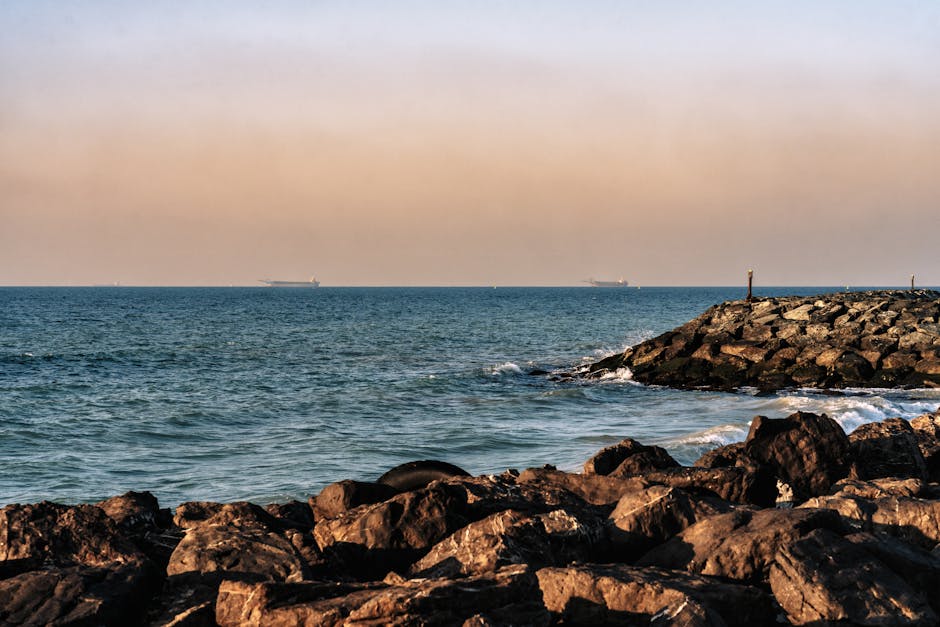
The U.S. Fifth Fleet, operating out of Bahrain, has effectively sealed off key Iranian oil terminals, intercepting tankers and demanding inspections under the justification of enforcing sanctions tied to Iran’s nuclear program and regional proxy activities. The blockade, announced abruptly in early April, marks the most aggressive U.S. action against Iran since the 2019 tanker skirmishes. Washington claims the move is aimed at curtailing Tehran’s funding of militant groups in Yemen, Syria, and Lebanon. But the ripple effects are global. Oil prices have surged past $95 a barrel, triggering inflation concerns across Asia. China, the world’s largest crude importer, absorbs nearly 20% of Iran’s oil exports, much of it purchased through opaque networks to circumvent U.S. sanctions. The blockade has disrupted these flows, forcing Chinese refineries to scramble for alternatives. State-owned enterprises like Sinopec and CNPC face rising costs and logistical chaos, undermining Beijing’s economic stability at a moment of slow post-pandemic recovery. Reuters has reported that at least seven Iranian tankers have been turned back or rerouted since the operation began.
The Road to Confrontation

This crisis did not emerge in isolation. It is the culmination of years of deteriorating U.S.-Iran relations, accelerated by the Trump administration’s 2018 withdrawal from the Joint Comprehensive Plan of Action (JCPOA), the multilateral nuclear deal. Since then, Washington has reimposed crippling sanctions, leading Tehran to gradually abandon its nuclear commitments. By 2024, Iran is estimated to have enough enriched uranium for several nuclear weapons, though it insists its program is peaceful. China, along with Russia and the European Union, has consistently opposed unilateral U.S. sanctions, arguing they undermine diplomatic solutions. Beijing positioned itself as a mediator, even brokering a brief détente between Iran and Saudi Arabia in 2023. But Trump’s blockade cuts across that diplomacy, treating economic warfare as a first resort rather than a last one. The move also contradicts years of Chinese strategic patience, which favored gradual engagement over confrontation.
Leadership and Leverage

At the center of this storm are three key figures: President Trump, Chinese leader Xi Jinping, and Iranian President Mohammad Mokhber. Trump, nearing the end of his term, appears to be leveraging foreign policy to rally domestic support, framing the blockade as a bold stand against terrorism and tyranny. His advisors, including hardline national security figures, argue that maximum pressure forces adversaries to negotiate. Xi, meanwhile, is navigating a delicate balance—protecting China’s economic interests without appearing weak or complicit. His administration has issued measured statements condemning the blockade as a violation of international law, while quietly accelerating efforts to diversify energy sources. Mokhber, under immense pressure at home, has responded with bellicose rhetoric, threatening to close the Strait of Hormuz if the blockade continues. Each leader’s actions are shaped by domestic politics, strategic ambition, and a deep mistrust of the others’ intentions.
Global Consequences and Economic Fallout

The implications extend far beyond the Persian Gulf. China may retaliate economically, slowing purchases of U.S. agricultural goods or delaying commitments on intellectual property protections—key sticking points in trade talks. Financial markets are already jittery; the yuan has weakened against the dollar, and Chinese tech stocks have dipped. More alarmingly, the crisis risks fracturing the limited cooperation that still exists between Washington and Beijing on issues like climate change and North Korea. If the May summit collapses into acrimony, it could mark the definitive end of any pretense of strategic partnership. For ordinary citizens, the costs are tangible: higher fuel prices, supply chain delays, and increased geopolitical risk. Asia, Europe, and Africa—all reliant on stable energy flows—watch closely, fearing a conflict that could spiral beyond control.
The Bigger Picture
This moment reflects a broader shift in global order: the erosion of multilateral norms and the return of great-power coercion. Trump’s blockade is not just about Iran—it signals a willingness to weaponize economic interdependence, a tactic China has long accused the U.S. of deploying. In response, Beijing is accelerating efforts to build alternative financial and trade systems, reducing reliance on dollar-dominated mechanisms. The standoff underscores a world where diplomacy increasingly occurs under the shadow of force, where economic tools are indistinguishable from military ones. As nations choose sides or seek neutrality, the stability of the post-Cold War era frays further.
What comes next depends on whether either side is willing to de-escalate. Backchannel communications suggest limited openness to dialogue, possibly through Omani or Swiss intermediaries. But with Trump’s political incentives favoring confrontation and Xi under pressure to assert sovereignty, compromise seems distant. The May summit may still occur, but its agenda will be narrower, its tone colder. If diplomacy fails, the world could face not just a regional conflict, but a full rupture in the most important bilateral relationship of the 21st century.
Source: The New York Times