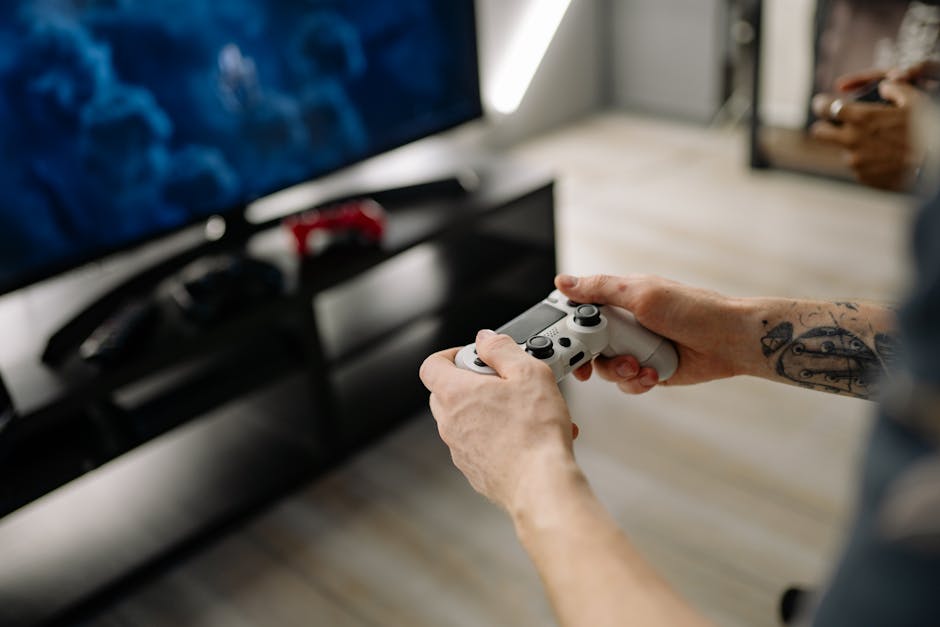
- AI-powered game design can create immersive experiences tailored to individual users’ interests and preferences.
- Generative models like ChatGPT can merge personal preferences with interactive design, enabling adaptive content creation.
- The integration of AI with tools like DALL·E allows for the creation of simulated game environments, further enhancing user experience.
- User-centric game design focuses on real-time adaptation, tailoring environments, narratives, and aesthetics to individual tastes.
- The intersection of AI, user data, and interactive design has the potential to revolutionize the gaming industry.
Artificial intelligence is increasingly capable of generating deeply personalized experiences, and a recent experiment demonstrates its potential in creative entertainment. By leveraging contextual memory and a simple prompt—”Imagine the ultimate video game. Tailored specially to me and my interests. What does it look like?”—ChatGPT produced a detailed, immersive game concept customized to a user fascinated by vintage electronics and Japanese culture. The AI not only described a fictional game but also generated a simulated screenshot using DALL·E integration, illustrating how generative models can merge personal preferences with interactive design. This capability signals a shift toward adaptive, user-centric content creation in gaming, where AI tailors environments, narratives, and aesthetics to individual tastes in real time.
AI-Generated Game Design with Personal Data

When prompted, ChatGPT described a game titled “Neon Solder: Tokyo Circuit Chronicles,” set in a fictional 1980s Tokyo where players restore and repurpose vintage electronics to solve puzzles and power a retro-futuristic city. The game blends point-and-click exploration with resource management mechanics, allowing players to scavenge parts from defunct VCRs, CRT monitors, and floppy disk drives. According to the AI-generated concept, each level is modeled after real-world districts like Akihabara and Shinjuku, reimagined with neon-lit arcades and underground repair shops. The AI also produced a simulated screenshot depicting a dimly lit workshop filled with oscilloscopes, soldering irons, and shelves of analog gear, all rendered in a stylized pixel-art aesthetic. This output was made possible through integration with DALL·E, OpenAI’s image generation model, which translated textual descriptions into visual mockups. Such demonstrations highlight how AI can synthesize personal user data into coherent, multi-modal creative outputs—an emerging frontier in human-AI collaboration.
Key Players: OpenAI and the Generative AI Ecosystem

OpenAI remains at the forefront of this innovation, having integrated memory functions into ChatGPT that allow the model to recall user preferences across sessions. This feature, launched in 2023, enables more contextual and personalized interactions, forming the backbone of experiences like the custom game prompt. Competitors such as Google’s DeepMind and Anthropic are developing similar context-aware models, though OpenAI currently leads in consumer-facing creative applications. Meanwhile, game developers like Mojang and Ubisoft have begun experimenting with AI-generated content for level design and narrative branching, suggesting a broader industry shift. Platforms such as ChatGPT’s expanded functionality are accelerating this trend by enabling non-developers to prototype game ideas without coding. The convergence of memory-enabled AI, generative visuals, and user-driven input is redefining who can create games and how quickly concepts can be tested.
Trade-Offs in Personalization and Creative Control

While AI-driven personalization offers exciting possibilities, it raises critical questions about authorship, originality, and data privacy. Allowing AI to access personal interests enhances relevance but requires careful handling of user data to avoid misuse. Moreover, while the generated game concept reflects the user’s tastes accurately, it draws on copyrighted aesthetics—from retro Japanese design to vintage tech iconography—that could pose legal challenges if commercialized. There’s also a risk of homogenization: if most AI-generated games rely on similar nostalgic motifs, innovation may stagnate. On the other hand, democratizing game design empowers individuals to explore creative visions that might never attract traditional publisher backing. The balance lies in maintaining human oversight while leveraging AI as a co-creator, ensuring outputs remain both imaginative and ethically sound.
Why This Moment Marks a Turning Point

The ability to generate personalized game concepts is not entirely new, but the combination of persistent memory, multimodal output, and accessible prompting marks a significant leap. Until recently, such tasks required specialized software and design expertise. Now, with memory-enabled AI, users can have ongoing conversations with models that remember their preferences, enabling deeper customization. The timing aligns with broader advancements in large language models and public interest in AI creativity, especially following the release of tools like DALL·E and Midjourney. As AI integration accelerates across creative industries, the line between consumer and creator continues to blur, making now a pivotal moment for user-driven content.
Where We Go From Here
In the next six to twelve months, we can expect three likely developments: first, AI-generated game prototypes will become more sophisticated, incorporating playable mechanics via no-code platforms. Second, major game studios may adopt AI personalization for dynamic content, such as side quests tailored to player interests. Third, ethical and copyright debates will intensify as AI-generated assets challenge existing intellectual property frameworks. These trajectories suggest a future where games are not only personalized but continuously evolve based on user feedback and memory. The implications extend beyond entertainment, potentially influencing education and therapy through customized interactive experiences.
Bottom line — AI’s ability to generate personalized, multimodal content represents a transformative step in human-computer collaboration, blending individual passion with machine creativity in ways previously confined to science fiction.
Source: I