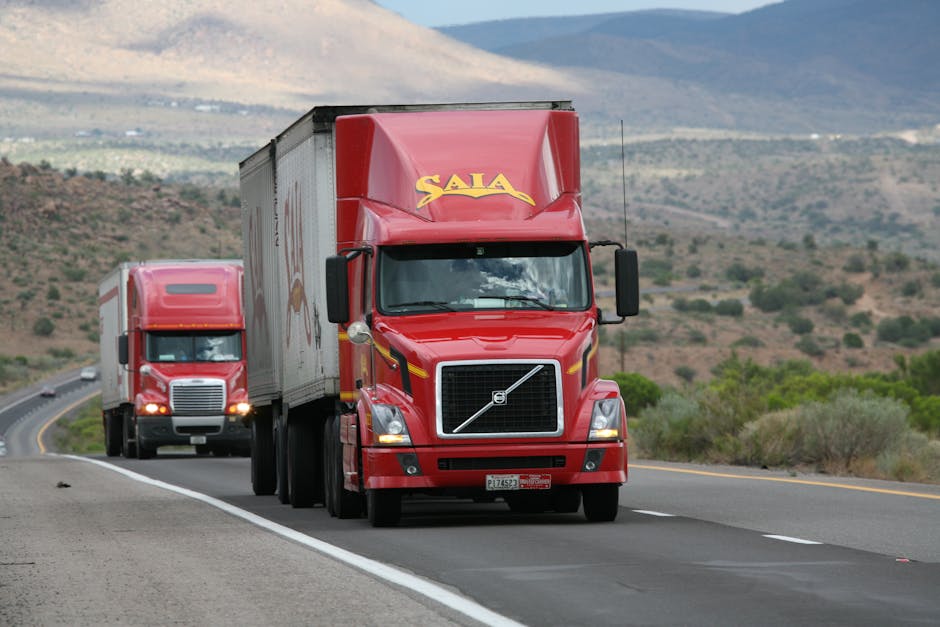
- Amazon’s move to open its logistics network to external businesses threatens delivery giants UPS and FedEx.
- Amazon’s proprietary supply chain infrastructure, including warehousing and delivery fleets, gives it a cost and efficiency advantage.
- The global parcel delivery market is valued at $512 billion, with UPS and FedEx commanding over 50% of U.S. package volume.
- Amazon’s internal logistics network handles approximately 70% of its own deliveries, up from 15% in 2015.
- Amazon’s ability to absorb fixed costs across a broader client base gives it a structural pricing advantage.
Amazon’s surprise move to open its vast logistics network to external businesses has sent shockwaves through the delivery sector, triggering double-digit stock declines for UPS and FedEx. The e-commerce giant, long reliant on these carriers for last-mile delivery, is now positioning itself as a direct competitor. By monetizing its proprietary supply chain infrastructure—including warehousing, routing algorithms, and delivery fleets—Amazon threatens to undercut traditional operators on cost and efficiency, reshaping the economics of parcel delivery in the process.
Delivery Market Valuation at Risk

Hard data underscores the magnitude of Amazon’s looming competitive threat. The global parcel delivery market was valued at $512 billion in 2023, with UPS and FedEx collectively commanding over 50% of U.S. package volume, according to Pitney Bowes Parcel Shipping Index. Amazon’s internal logistics network already handles approximately 70% of its own deliveries, up from just 15% in 2015, per Morgan Stanley Research. The company operates more than 1,000 delivery stations and 50 air hubs across the U.S., along with a fleet of over 70,000 custom delivery vans. With delivery costs estimated at $46 billion in 2023, Amazon’s ability to absorb fixed costs across a broader client base gives it a structural pricing advantage. Analysts at Bernstein estimate Amazon could offer comparable shipping rates at 20–30% below current market prices.
Key Players and Strategic Shifts

Amazon has spent over a decade building a vertically integrated logistics operation, but its decision to serve external clients marks a strategic pivot. The company launched Amazon Delivery Service Partners in 2018, incentivizing entrepreneurs to operate local delivery routes using Amazon-branded vehicles. Now, with the expansion of its Managed Transportation Services (MTS) platform, third-party sellers and even rival retailers can access Amazon’s warehousing, cross-docking, and last-mile capabilities. Meanwhile, UPS has been investing in automation and healthcare logistics to diversify its revenue, while FedEx recently exited its U.S. home delivery partnership with Amazon to focus on B2B and express freight. Both carriers now face margin compression as their largest customer becomes their most formidable competitor.
Trade-Offs of Vertical Integration

Amazon’s logistics expansion brings both strategic advantages and systemic risks. On one hand, opening its network improves asset utilization and creates a high-margin revenue stream from logistics-as-a-service. It also enhances delivery speed and reliability for Amazon Marketplace sellers, tightening their dependence on the platform. However, the move risks alienating third-party sellers who may view Amazon as increasingly predatory. Regulatory scrutiny is another concern; the U.S. Federal Trade Commission has signaled growing attention to Amazon’s dominance in e-commerce infrastructure. Moreover, scaling logistics services to external clients requires significant investment in customer support, compliance, and network flexibility—areas where Amazon has limited track record. For UPS and FedEx, the trade-off is starker: reduced volume from Amazon means idle capacity, forcing difficult decisions on workforce and fleet downsizing.
Why This Moment Marks a Turning Point

The timing of Amazon’s announcement reflects a confluence of technological readiness, market saturation, and shifting consumer expectations. After years of refining its logistics algorithms and expanding physical infrastructure, Amazon now has the operational maturity to support external clients without compromising its core retail business. Simultaneously, e-commerce growth has plateaued post-pandemic, pressuring Amazon to find new revenue streams beyond retail. The rise of same-day and next-day delivery as standard customer expectations has also eroded the cost advantage of traditional carriers, who rely on consolidated, multi-day routes. With inflation driving businesses to cut shipping expenses, Amazon’s low-cost model arrives at a moment of heightened price sensitivity.
Where We Go From Here
In the next 6 to 12 months, three scenarios could unfold. First, Amazon could rapidly onboard thousands of sellers onto its MTS platform, capturing 10–15% of non-Amazon U.S. parcel volume by 2025, accelerating stock declines for UPS and FedEx. Second, regulatory intervention could delay or restrict Amazon’s expansion, particularly if lawmakers invoke antitrust concerns under the American Innovation and Choice Online Act. Third, UPS and FedEx may respond with aggressive pricing, strategic mergers, or deeper alliances with non-Amazon e-commerce platforms like Shopify or Walmart. Each path hinges on execution risk, regulatory posture, and the elasticity of business demand for lower-cost shipping alternatives.
Bottom line — Amazon’s entry into third-party logistics marks not just a competitive threat, but a fundamental reordering of the delivery economy, where scale, data, and integration will define winners and losers.
Source: CNBC