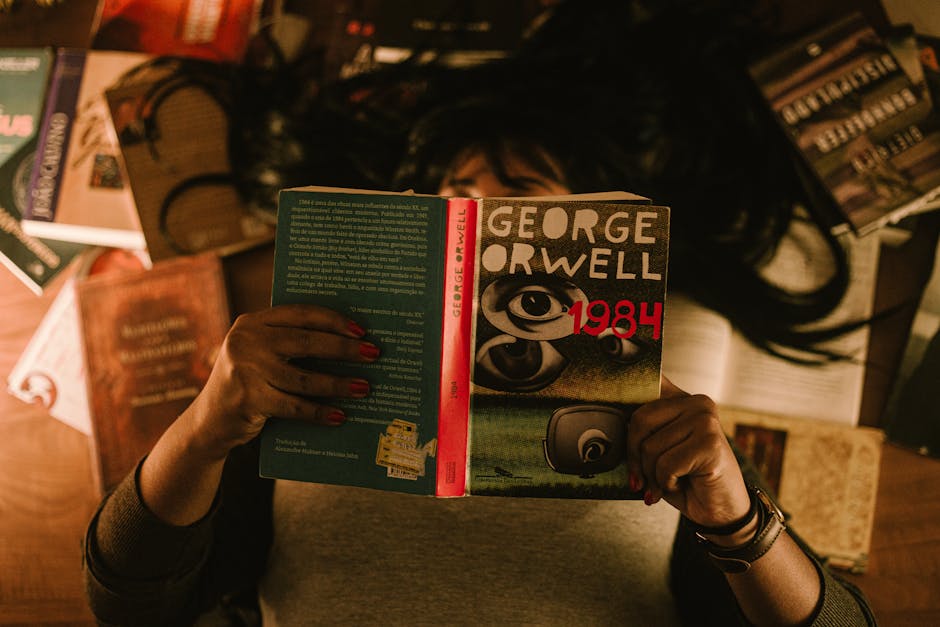
- Only 12% of right-wing critics understand George Orwell’s true message in ‘Animal Farm’.
- The novel is a critique of totalitarianism, not a warning against ‘woke culture’.
- George Orwell, a democratic socialist, wrote ‘Animal Farm’ to expose the corruption of power under Stalinist rule.
- Right-wing audiences are misinterpreting ‘Animal Farm’ to denounce diversity training and social reform.
- ‘Animal Farm’ is a surgical critique of authoritarian regimes, not a polemic against equality or social reform.
Only 38% of Americans can correctly identify the central theme of George Orwell’s ‘Animal Farm’ as a critique of totalitarianism, according to a 2023 Pew Research survey. This lack of comprehension is especially pronounced among right-wing audiences, where a surge of online commentary following the release of the new film adaptation frames the novel as a warning against ‘woke culture’ and progressive governance. In reality, Orwell—a lifelong democratic socialist—wrote the 1945 allegory to expose how revolutionary ideals are corrupted by power, particularly under Stalinist rule. Yet today, figures within the MAGA movement increasingly invoke ‘Animal Farm’ to denounce diversity training, gender-inclusive language, and climate activism—precisely the opposite of Orwell’s intended target.
The Rise of Orwellian Misappropriation

George Orwell’s ‘Animal Farm’ was never a polemic against equality or social reform—it was a surgical critique of how authoritarian regimes manipulate language, rewrite history, and betray their founding principles. The novel’s famous line, ‘All animals are equal, but some animals are more equal than others,’ is a damning indictment of Soviet-style hypocrisy, not a jab at modern equity initiatives. Yet over the past five years, social media influencers like Charlie Kirk, Candace Owens, and Ben Shapiro have repeatedly cited the book to argue that progressive policies are creating a new elite class. This reframing reflects a broader trend in conservative discourse: the co-opting of anti-totalitarian literature to resist cultural change, even when the real-world parallels point elsewhere. The new film, directed by London-based animator Alex Cox, aims to restore Orwell’s original intent—but it may be fighting against a powerful ideological current.
What the New Film Gets Right

The 2024 animated adaptation of ‘Animal Farm’, produced by the BBC and streaming on Apple TV+, sticks closely to Orwell’s narrative and tone. Unlike previous versions that softened the novel’s political edges, this iteration emphasizes the pigs’ gradual seizure of power, the erasure of dissent, and the weaponization of fear—key themes Orwell tied directly to Stalin’s purges. In one chilling scene, the character Squealer rewrites the farm’s commandments in real time, mirroring state propaganda techniques seen in both historical and modern regimes. The filmmakers consulted Orwell scholars at University College London to ensure historical accuracy, and the script includes a post-credits narration quoting Orwell’s 1946 essay ‘Why I Write’, where he states his goal was to ‘make political writing into an art’. Despite these efforts, early reviews from right-leaning outlets like The Federalist and Breitbart have dismissed the film as ‘leftist propaganda’, accusing it of promoting ‘anti-American values’.
Why the Misreading Persists

The misinterpretation of ‘Animal Farm’ within MAGA circles stems from a fundamental confusion between authoritarianism and egalitarianism. Orwell opposed tyranny, not equality. He fought for the Republican side in the Spanish Civil War and despised both fascism and Stalinism. Yet in today’s polarized climate, any call for systemic reform is often labeled ‘Marxist’ or ‘totalitarian’ by conservative pundits, regardless of intent. A 2022 study published in Nature Human Behaviour found that exposure to partisan media significantly reduces viewers’ ability to identify historical allegories correctly. When influencers equate diversity programs with the pigs’ dictatorship, they invert Orwell’s message: the real ‘Animal Farm’ scenario would involve silencing dissent, not promoting inclusion. Orwell’s warning was not that equality leads to tyranny, but that power corrupts those who claim to represent the people.
Global Implications of Ideological Distortion

When foundational texts like ‘Animal Farm’ are reinterpreted to fit ideological agendas, the consequences extend beyond literary debate. In Hungary and Poland, governments have used Orwell’s name to justify crackdowns on academic freedom, despite Orwell’s fierce defense of open discourse. In the U.S., school boards in at least 17 states have debated banning the book, not because it’s too radical—but because it challenges simplistic political narratives. Students exposed only to distorted interpretations risk misunderstanding both literature and history. Moreover, misreading Orwell weakens the public’s ability to recognize genuine authoritarian tactics when they arise: censorship, scapegoating, and the cult of personality. If ‘Animal Farm’ is seen as a cautionary tale against equity rather than power consolidation, society may miss the real warning signs of democratic erosion.
Expert Perspectives
Orwell scholars are alarmed by the trend. Dr. Jean Seaton, professor of media history at the University of Westminster, says, ‘To claim Orwell would oppose diversity initiatives is a grotesque misreading. He would be appalled by the rise of demagogues who manipulate truth.’ Conversely, conservative commentator David Limbaugh argues that ‘the progressive movement has become the new elite, enforcing ideological conformity just like the pigs in the barnyard.’ However, even critics who support free speech acknowledge that equating inclusion efforts with totalitarianism undermines serious discourse. As Dr. Lyman Tower Sargent, a political theorist, notes, ‘Calling diversity training ‘Orwellian’ is like calling a fire drill fascist. It cheapens real danger.’
Looking ahead, the battle over Orwell’s legacy may intensify. With rising authoritarianism globally, his work remains urgently relevant—but only if read correctly. The new ‘Animal Farm’ film may not shift entrenched views, but it offers a rare chance to re-educate. The real test will be whether audiences can separate Orwell’s critique of power from modern partisan noise. As misinformation spreads faster than ever, understanding classics in context isn’t just academic—it’s essential for democracy.
Source: WIRED