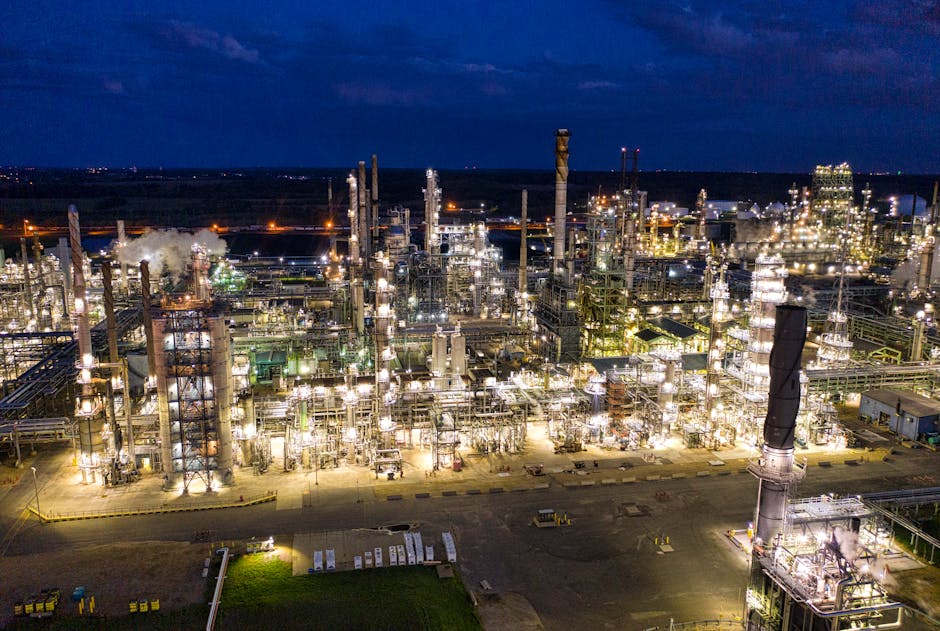
- Ukraine launched a drone attack on Russian oil storage tanks in Tuapse, igniting massive fires and releasing black smoke.
- The attack targeted a critical fuel distribution nexus in southern Russia, undermining Russia’s logistical resilience.
- The Tuapse oil terminal is a linchpin in Russia’s southern energy supply chain, handling over 10 million tons of refined products annually.
- Ukraine’s strategy has shifted from battlefield attrition to degrading Russia’s energy infrastructure.
- The attack suggests a deliberate timing to coincide with Ukrainian counteroffensives in the east.
In a bold escalation of its long-range strike campaign, Ukraine reportedly launched a drone attack on Russian oil storage tanks in the Black Sea port city of Tuapse on Monday morning, igniting massive fires just hours after emergency crews had contained blazes from a prior assault. Satellite imagery and local emergency reports confirm that at least three large storage tanks were struck, releasing thick plumes of black smoke visible from over 30 kilometers away. The attack marks one of the deepest penetrations into Russian energy infrastructure since the war began, striking a critical nexus for fuel distribution in southern Russia. According to regional authorities, the facility stores diesel, gasoline, and aviation fuel destined for military and civilian use across the North Caucasus and Crimea. The timing—amid ongoing Ukrainian counteroffensives in the east—suggests a deliberate strategy to undermine Russia’s logistical and economic resilience.
A Calculated Blow to Russia’s Energy Backbone

The Tuapse oil terminal, operated by Rosneft, is a linchpin in Russia’s southern energy supply chain, handling over 10 million tons of refined products annually. Its strategic location on the Black Sea allows for maritime transport to occupied Crimea and overland distribution to Russian military units in southern Ukraine. The repeated targeting of such infrastructure signals a shift in Ukraine’s war strategy: moving beyond battlefield attrition to systematically degrade Russia’s capacity to sustain prolonged conflict. Analysts at the Institute for the Study of War note that attacks on fuel depots have surged by over 60% since mid-2023, coinciding with increased drone production and extended operational ranges. These strikes not only disrupt supply but also erode domestic morale and inflate war costs—a pressure campaign designed to strain Moscow’s political and economic endurance.
Drone Warfare Reaches Deeper Into Russian Territory

Intelligence sources indicate that the attack involved a swarm of at least 15 modified Ukrainian long-range drones, likely adapted from Soviet-era jet engines and equipped with precision guidance systems supplied by Western allies. The drones flew a circuitous route over the Black Sea, evading Russian air defenses before converging on the Tuapse facility in a coordinated strike. Russian air defense units reportedly intercepted several drones, but at least four reached their target. This marks a significant advancement in Ukraine’s ability to project power deep inside Russian territory, surpassing previous strikes on refineries in Krasnodar and Rostov. The Russian Ministry of Defense confirmed the incident, calling it a “terrorist act,” while local authorities declared a state of emergency due to environmental hazards from burning hydrocarbons. No casualties were reported, but the fire burned for over 12 hours before being contained.
Strategic Rationale Behind Energy Infrastructure Targeting

Ukraine’s campaign against Russian fuel infrastructure is rooted in both military necessity and economic warfare. Fuel is essential for Russian armored units, supply convoys, and air operations, and disruptions can stall offensive actions on the frontlines. A report by the Center for Strategic and International Studies (CSIS) estimates that each major refinery or storage facility attack reduces Russia’s refined fuel output by 3–5%, compounding existing shortages in high-octane aviation fuel. Moreover, repeated strikes force Russia to divert air defense assets from frontline zones to protect rear-area facilities, diluting their combat effectiveness. While Russia has responded with retaliatory strikes on Ukrainian energy grids, experts argue that Ukraine’s offensive drone operations are more cost-effective and geopolitically sustainable, especially as Western support for drone technology intensifies.
Escalating Costs and Regional Fallout

The consequences of these attacks extend beyond the battlefield. In Russia, fuel prices in southern regions have spiked by up to 18% since the start of the drone campaign, according to data from Reuters. Meanwhile, environmental groups warn of long-term damage from oil fires, which release carcinogenic polycyclic aromatic hydrocarbons and sulfur dioxide into the atmosphere. In Ukraine, the success of these missions boosts domestic morale and signals technological parity with a larger adversary. However, the risk of escalation remains high—Russia could respond with more aggressive strikes on Ukrainian cities or even energy infrastructure in NATO-bordering countries. The European Union has urged restraint, emphasizing that attacks on civilian energy systems could violate international humanitarian law if not directed at legitimate military objectives.
Expert Perspectives
Military analysts are divided on the long-term efficacy of Ukraine’s energy targeting. Dr. Maria Kurach of the Kyiv Security Institute argues that “degrading Russia’s fuel logistics is a force multiplier that directly impacts frontline operations.” In contrast, Dr. Pavel Felgenhauer, a Moscow-based defense analyst, warns that “these strikes risk provoking disproportionate retaliation and could push Russia toward more desperate measures.” Meanwhile, NATO officials privately acknowledge the strategic value but stress the need for careful target selection to avoid civilian harm and maintain international support.
As both sides adapt, the drone war is poised to intensify. Ukraine is reportedly developing even longer-range unmanned systems with larger payloads, while Russia is fortifying key facilities with layered air defenses and decoy installations. The world will be watching whether this shadow campaign alters the war’s trajectory—or accelerates its descent into broader regional instability.
Source: Kyivindependent