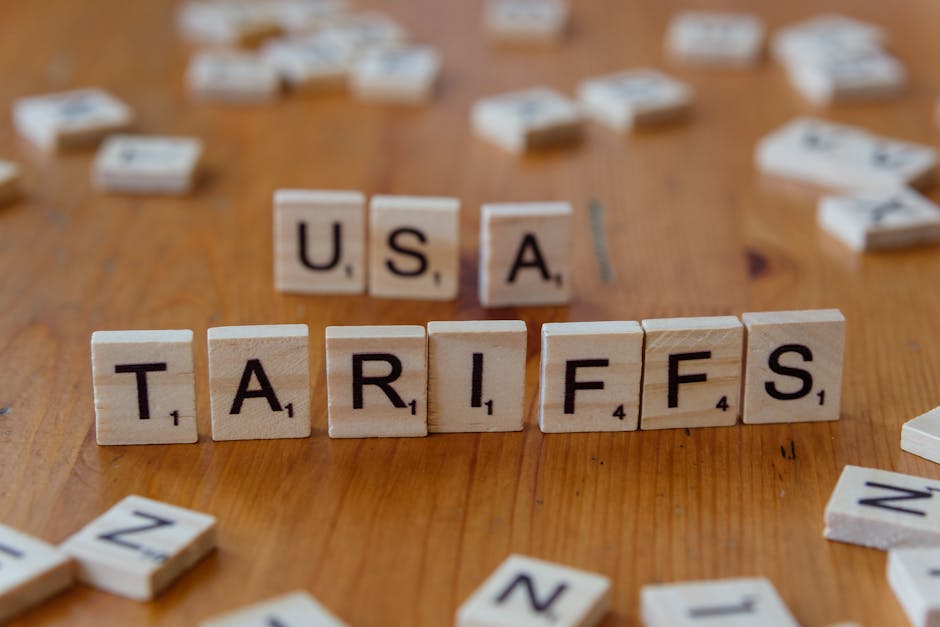
- One-third of US tariff-relief agreements have failed to result in measurable trade barrier reductions.
- Loopholes, lack of enforcement mechanisms, and exemptions for critical industries render tariff deals economically insignificant.
- Canada’s Finance Minister Mark Carney criticizes performative trade diplomacy from Washington.
- Symbolic trade agreements project economic strength without enacting substantive change.
- US average tariffs on industrial goods remain near 2.7%, little changed from a decade ago.
One-third of U.S. tariff-relief agreements signed over the past decade have failed to result in measurable reductions in trade barriers, according to an internal Canadian government assessment cited by Finance Minister Mark Carney in a recent CBC interview. Despite public proclamations of diplomatic victories, these deals often contain loopholes, lack enforcement mechanisms, or exempt critical industries, rendering them economically insignificant. Carney’s remarks come amid rising frustration in Ottawa over what it sees as performative trade diplomacy from Washington, where announcements are celebrated politically but deliver little on the ground. This growing skepticism threatens to erode trust between North America’s largest trading partners at a time when global supply chains are already under strain from geopolitical tensions and protectionist policies.
Why Symbolic Deals Undermine Real Trade

Carney’s critique highlights a broader concern: the increasing use of symbolic trade agreements to project economic strength without enacting substantive change. While the U.S. has announced over a dozen tariff-relief deals since 2018, many exclude key sectors such as steel, aluminum, and electric vehicles—precisely the industries where trade disputes have flared. According to trade data from the World Bank, U.S. average tariffs on industrial goods remain near 2.7%, little changed from a decade ago, despite repeated claims of liberalization. Carney argued that real trade progress requires enforceable market access, not press releases. With global trade growth slowing to 1.5% in 2023—the weakest pace since the pandemic—according to the WTO, allies like Canada fear that superficial deals distract from the deeper reforms needed to sustain open markets.
The Anatomy of a Flawed Agreement

The most recent flashpoint emerged in early 2024, when the U.S. and several allies, including Canada, finalized a deal to lift tariffs on specialty steel products. While hailed as a breakthrough, Carney noted that the agreement covered less than 5% of affected trade volume and included stringent certification requirements that deter small and medium exporters. The deal also preserved national security justifications under Section 232 of the Trade Expansion Act, allowing Washington to reimpose tariffs unilaterally. Behind the scenes, Canadian officials say U.S. interagency disagreements—particularly between the Department of Commerce and U.S. Trade Representative—have led to watered-down outcomes. A Reuters investigation confirmed that only three of seven proposed tariff exclusions were approved, with the rest blocked over vague ‘security concerns.’
Economic and Geopolitical Fallout

Carney warned that inconsistent and non-binding trade deals are not only economically inefficient but also geopolitically destabilizing. When allies perceive U.S. trade policy as unpredictable or insincere, they are less likely to cooperate on broader strategic initiatives, from green energy supply chains to critical mineral partnerships. Canada, for instance, has delayed finalizing its joint clean energy corridor agreement with the U.S., citing concerns over arbitrary tariff threats. Economists at the Brookings Institution estimate that policy uncertainty stemming from ad hoc trade measures has shaved 0.4% off annual North American GDP growth since 2021. Carney emphasized that trust, once broken, is difficult to restore: ‘If agreements aren’t durable or reciprocal, they aren’t partnerships—they’re transactions.’
Implications for North American Integration

The erosion of confidence in U.S. trade commitments could have lasting consequences for the future of North American economic integration. Canada and Mexico may increasingly look to diversify trade relationships, potentially accelerating negotiations with the Indo-Pacific and the European Union. For U.S. manufacturers reliant on cross-border supply chains, particularly in autos and aerospace, inconsistent policies raise compliance costs and delay investment. Small exporters, lacking the legal teams to navigate shifting rules, are especially vulnerable. Carney suggested that Canada may begin publishing a public ‘trade integrity index’ to assess the real impact of bilateral agreements—an implicit rebuke to Washington’s current approach.
Expert Perspectives
Trade experts are divided on whether Carney’s criticism is overdue or diplomatically risky. Dr. Kimberly Ann Elliott, a senior fellow at the Center for Global Development, agreed that ‘the U.S. has prioritized optics over outcomes in trade talks,’ weakening its credibility. In contrast, former USTR advisor Jeffrey Schott cautioned that ‘allies must understand domestic political constraints in the U.S., where any perceived concession faces scrutiny.’ Meanwhile, analysis by the BBC shows that EU and Asian nations are increasingly inserting automatic review clauses in trade pacts to guard against sudden policy reversals, a trend likely to spread.
Looking ahead, the Biden administration faces mounting pressure to demonstrate that its trade agenda delivers tangible benefits. With the 2024 election cycle amplifying protectionist rhetoric, meaningful reform may be delayed. However, Carney’s comments signal that U.S. allies are no longer willing to accept symbolic gestures in place of durable economic cooperation. The question now is whether Washington will respond with substance—or more announcements.
Source: Bloomberg