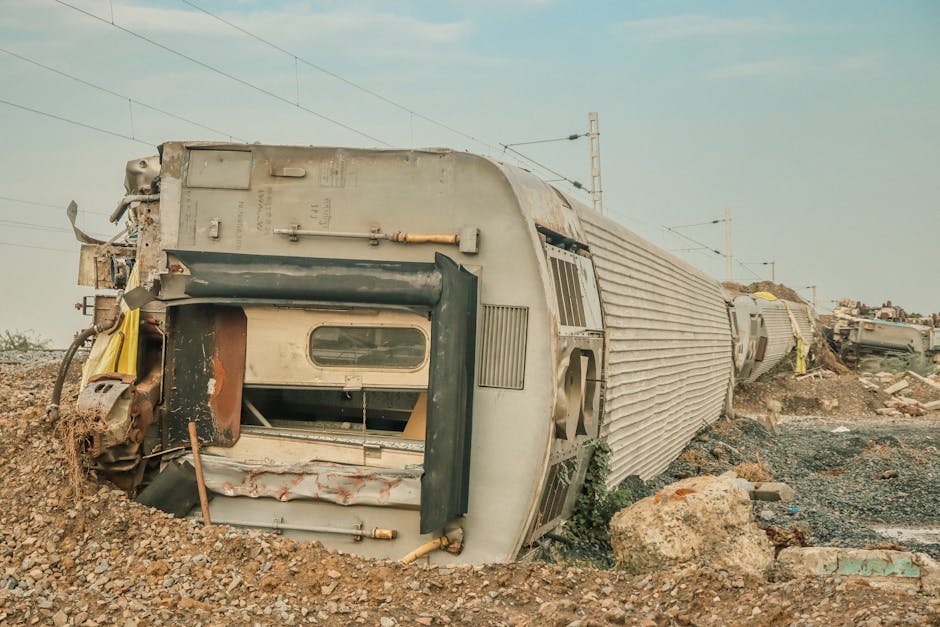
- A train collision in Indonesia killed 14 people and injured 84 others, highlighting concerns over the country’s aging rail infrastructure.
- The accident involved a long-distance train and a commuter line train near Jakarta, with two passengers still trapped in the wreckage.
- Emergency responders used heavy machinery to dismantle the twisted steel carriages and free survivors.
- The death toll rose steadily as medical teams assessed the impact of the disaster, one of Indonesia’s worst rail accidents in over a decade.
- The collision has reignited concerns over the safety and modernization of Indonesia’s rail network, which serves over 300 million passengers annually.
In a devastating incident that has shocked the nation, a head-on train collision near Jakarta has claimed 14 lives and left 84 others injured, with emergency crews laboring through the night to free two passengers still trapped in the crumpled wreckage. The crash, which occurred just after 9:30 PM local time in Bekasi, a densely populated satellite city east of Indonesia’s capital, involved a long-distance Argo Parahyangan Express traveling from Bandung to Jakarta and a commuter line train on the Cikarang-Jakarta route. First responders used hydraulic cutters and heavy cranes to dismantle the twisted steel carriages, as survivors recounted scenes of chaos and panic. Bloodied passengers were carried on makeshift stretchers, while others climbed through shattered windows to escape. The death toll, initially reported as seven, climbed steadily through Tuesday morning as medical teams assessed the full impact of the disaster — one of Indonesia’s worst rail accidents in over a decade.
Why This Collision Shook Indonesia’s Rail Confidence

The Bekasi crash has reignited long-standing concerns over the safety and modernization of Indonesia’s aging rail infrastructure, which serves over 300 million passengers annually across Java and Sumatra. While the country has invested in high-speed rail projects like the Jakarta-Bandung line, much of the conventional network still relies on outdated signaling systems, overworked rolling stock, and manual coordination between train operators. The collision occurred on a double-track segment where strict separation protocols are supposed to prevent such incidents. Experts point to chronic underfunding, operational lapses, and a patchwork of management between the state-owned operator PT Kereta Api Indonesia (KAI) and private contractors as systemic vulnerabilities. With urban populations swelling and commuter traffic increasing by nearly 7% per year, the pressure on rail safety has intensified — making this disaster not just a tragic accident, but a stark warning of systemic risk.
What Happened in the Moments Before Impact

According to preliminary reports from KAI, the long-distance Argo Parahyangan train was traveling at approximately 80 km/h (50 mph) when it collided with the stationary commuter train, which had stopped just past the Cikarang station due to a reported signal issue. Investigators believe the express train failed to decelerate despite visible warning signals, suggesting either a failure in the automatic braking system or miscommunication between the driver and dispatchers. Black box data retrieved from both locomotives shows the commuter train had come to a complete halt, while the express train showed no evidence of emergency braking before impact. The collision tore open multiple carriages, with the lead engine of the express train embedding itself into the rear car of the commuter train. At least two passengers remain trapped in the wreckage, with rescue teams carefully cutting through debris to avoid further structural collapse. The National Transportation Safety Committee (KNKT) has launched a formal inquiry, focusing on signal logs, train speed data, and crew communication records.
Root Causes: Signals, Staff, and Systemic Gaps

Preliminary analysis suggests the crash may have stemmed from a failure in the Automatic Train Stop (ATS) system, which is designed to halt trains approaching red signals. Indonesia’s rail network uses a mix of ATS and manual dispatching, but coverage is inconsistent, especially on older lines like the one in Bekasi. Engineers familiar with the system note that ATS malfunctions have been reported in previous incidents, including a 2022 near-miss in Central Java. Human error is also under scrutiny — the express train’s driver, a 48-year-old veteran with 18 years of service, may have missed critical signals due to fatigue or distraction. Shift patterns for train operators often exceed 12 hours, increasing the risk of lapses. Data from the International Union of Railways shows that 40% of rail accidents in Southeast Asia involve signal misreading or system failure. With over 6,000 kilometers of track in Java alone, many of which are over 50 years old, experts warn that Indonesia’s rail safety culture must evolve beyond reactive fixes to proactive monitoring and automation.
Who Bears the Impact of the Bekasi Tragedy

The human toll of the collision extends far beyond the 14 confirmed dead and 84 injured. Families across West Java are now mourning loved ones, while hospitals in Bekasi and Jakarta have activated emergency protocols to handle the influx of trauma cases, including fractures, internal injuries, and psychological shock. Survivors face long recoveries, and many rely on public transport daily for work — raising fears of lasting anxiety and reduced ridership. PT Kereta Api Indonesia has suspended operations on the affected line, disrupting the commutes of tens of thousands. The economic ripple effect includes lost productivity, increased insurance claims, and reputational damage to the national rail brand. More broadly, the crash threatens public trust in state-run infrastructure, especially as Indonesia pushes forward with ambitious transport projects like the $20 billion Greater Jakarta LRT network. Without transparent accountability and rapid reforms, confidence in rail travel may erode further.
Expert Perspectives
Rail safety experts are divided on the best path forward. Dr. Lina Hidajati, a transportation engineer at the Bandung Institute of Technology, argues that Indonesia must accelerate the rollout of Automatic Train Protection (ATP) systems nationwide, which can override human error. “This wasn’t an act of fate — it was a preventable failure,” she told BBC News. In contrast, former KAI official Bambang Sutrisno cautions against over-technologizing, emphasizing better training and maintenance: “You can have the best signals, but if staff aren’t empowered to act, systems fail.” International observers note that India and the Philippines have faced similar challenges, with mixed success in modernization. The Reuters investigation into past rail incidents highlights recurring lapses in oversight and delayed safety upgrades.
As rescue operations conclude and recovery begins, scrutiny will intensify on whether Indonesia can implement sweeping rail reforms before the next tragedy. The KNKT is expected to release an interim report within 30 days, but long-term change will require political will, sustained funding, and a cultural shift in safety accountability. With a new national rail safety task force announced by the Ministry of Transportation, the world will be watching to see if lessons are truly learned — or if this disaster becomes another footnote in a pattern of preventable failures.
Source: The Guardian