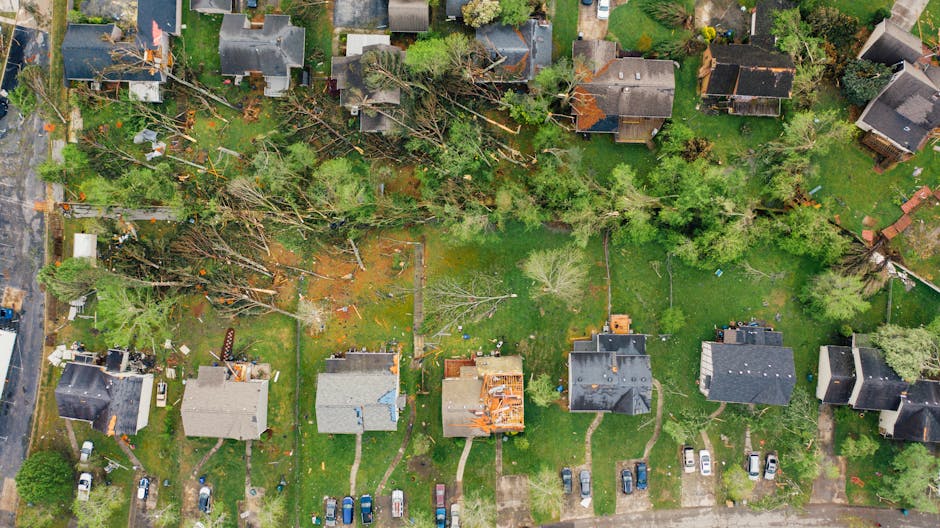
- At least two people have died in a violent outbreak of tornadoes in northern Texas, with widespread destruction reported.
- The tornadoes, including one rated EF-3 with winds up to 165 mph, left entire neighborhoods reduced to rubble.
- Over 100,000 customers lost electricity, and emergency responders spent the night searching for survivors.
- The devastating storm highlights the growing vulnerability of densely populated areas to extreme weather.
- The outbreak underscores the need for residents in northern Texas to be prepared for increasingly severe weather events.
At least two people have died and entire neighborhoods reduced to rubble after a violent outbreak of tornadoes swept across northern Texas, shattering the region’s sense of calm and marking one of the most destructive weather events of 2024. The National Weather Service confirmed multiple tornado touchdowns near the Dallas-Fort Worth metroplex, with one twister rated EF-3 packing winds up to 165 mph. Homes were flattened, power lines downed, and vehicles tossed like toys as the storms ripped through rural towns and suburban enclaves alike. Over 100,000 customers lost electricity, and emergency responders spent the night searching through debris for survivors. The devastation underscores the growing vulnerability of densely populated areas to extreme weather, even as climate scientists warn of lengthening tornado seasons and more volatile storm systems emerging across the central United States.
Why This Outbreak Was Particularly Dangerous

This week’s tornado event stands out not only for its intensity but for its timing and location. Unlike the traditional ‘Tornado Alley’ core that spans parts of Oklahoma and Kansas, northern Texas has seen a noticeable uptick in severe weather impacts in recent years, with urban sprawl placing more people in harm’s way. The storms developed rapidly on Tuesday evening amid unstable atmospheric conditions—warm, moist air from the Gulf of Mexico colliding with a strong cold front moving eastward. The National Oceanic and Atmospheric Administration (NOAA) had issued high-risk warnings hours in advance, a rare designation indicating a significant threat of long-track, violent tornadoes. Despite early alerts, the speed and ferocity of the tornadoes limited evacuation efforts, particularly in mobile home communities and unincorporated areas with fewer storm shelters. Experts say such outbreaks are becoming harder to manage as development encroaches on historically rural zones.
What Happened and Who Was Affected

The most destructive tornado touched down near the town of Justin in Denton County, carving a path over 15 miles long and up to half a mile wide. Aerial footage from Reuters showed entire subdivisions reduced to foundations, with personal belongings scattered across fields. Local authorities confirmed two fatalities—one in a collapsed single-family home and another in a vehicle. At least 25 people were injured, with several in critical condition. First responders from multiple counties mobilized search-and-rescue teams, aided by drones and K-9 units. Among the hardest-hit areas was the community of Ponder, where the volunteer fire department sustained major damage. Schools were closed for the remainder of the week, and temporary shelters were set up at local churches and community centers to house displaced families.
Climate and Urban Factors Amplifying Risk

While tornadoes are not new to Texas, the conditions fueling their increased severity are evolving. A 2023 study published in Nature Climate Change found that the frequency of days conducive to tornado formation has risen over the past four decades, particularly in the southern Plains. Warmer Gulf waters are feeding more moisture into storm systems, while shifting jet stream patterns may be prolonging high-risk weather setups. At the same time, rapid population growth across the Dallas-Fort Worth region has led to sprawling developments in areas without robust emergency infrastructure. Many homes lack basements, and outdoor warning sirens are inconsistently maintained. Urban heat island effects may also be altering local wind patterns, potentially influencing tornado behavior near cities—a phenomenon still under scientific investigation.
Who Bears the Brunt of the Damage

The human toll of the tornadoes extends beyond the immediate fatalities and injuries. Hundreds of residents now face uncertain futures, with insurance claims expected to reach tens of millions of dollars. Low-income families and elderly homeowners are especially vulnerable, many of whom live in older structures not built to withstand extreme winds. Mobile home parks, which are disproportionately affected in tornado events, accounted for a significant portion of the destruction. In addition, local economies—reliant on small businesses and agricultural operations—face disruptions as roads remain blocked and power outages persist. Mental health professionals are also warning of long-term psychological impacts, including PTSD, particularly among children who experienced the storm firsthand. The Federal Emergency Management Agency (FEMA) is assessing the damage to determine whether federal aid will be deployed.
Expert Perspectives
Dr. Angela McElroy, a meteorologist at Texas Tech University, emphasized that early warning systems saved lives but noted a growing mismatch between forecast accuracy and public response. “We can predict these events better than ever, but if people don’t have safe places to go, the warnings only do so much,” she said. Meanwhile, urban planners like Carlos Navarro from the University of Texas argue that building codes must be updated to reflect new climate realities. “We’re still constructing homes as if the risk profile hasn’t changed in 50 years,” Navarro warned. Others caution against over-attributing individual storms to climate change, stressing the need for long-term data analysis even as the trend lines point toward more frequent extremes.
As recovery efforts begin, questions remain about how communities will rebuild—and whether they will do so more resiliently. Meteorologists are monitoring the southern Plains for additional storm systems in the coming week, raising concerns about compounding impacts. With the official peak of tornado season still ahead, northern Texas may not have seen the last of its 2024 threats. The event serves as a stark reminder that in an era of intensifying weather, preparedness must extend beyond warnings to include infrastructure, equity, and long-term adaptation.
Source: Denver7