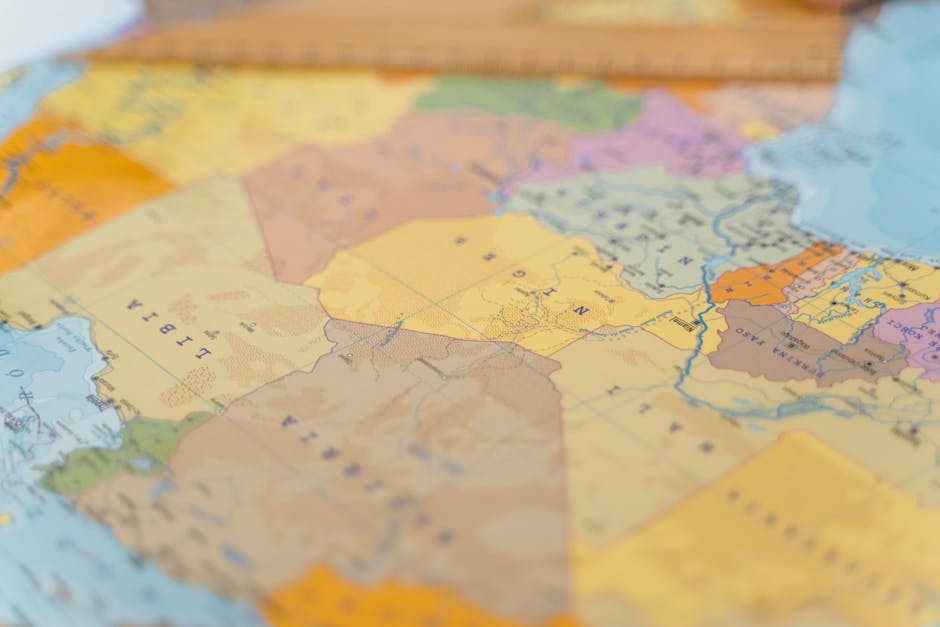
- Malian rebel forces launched a series of coordinated attacks across central Mali, targeting military bases and supply routes linked to the ruling junta and Russian allies.
- The assault resulted in dozens of casualties and the temporary seizure of key towns, marking a significant shift in the balance of power.
- Insurgent groups have evolved from fragmented cells into organized coalitions capable of sustained military operations.
- Mali’s military government has increasingly relied on the Russia-linked Africa Corps to maintain control and combat insecurity.
- The resurgence of rebel forces underscores a deepening crisis in Mali, where political instability and jihadist insurgency have created a vacuum exploited by foreign powers.
In a dramatic escalation of West Africa’s simmering conflict, Malian rebel forces launched a series of coordinated attacks across central Mali in early 2024, targeting military bases, supply routes, and outposts linked to the country’s ruling junta and its Russian allies. According to reports from the United Nations and regional security analysts, the assaults—among the most sophisticated in the Sahel in recent memory—resulted in dozens of casualties and the temporary seizure of key towns, including Nampala and Diabaly. The offensive marks a significant shift in the balance of power, demonstrating that insurgent groups have evolved from fragmented cells into organized coalitions capable of sustained military operations. This resurgence comes at a time when Mali’s military government, having seized power in two coups since 2020, has increasingly relied on the Russia-linked Africa Corps—a shadowy paramilitary unit widely believed to be an extension of the Wagner Group—to maintain control and combat rising insecurity.
Why This Offensive Changes the Sahel’s Geopolitics

The latest wave of violence underscores a deepening crisis in Mali, where political instability and jihadist insurgency have created a vacuum exploited by both local militants and foreign powers. Since the 2020 coup that ousted President Ibrahim Boubacar Keïta, Mali has drifted toward authoritarianism under the leadership of Colonel Assimi Goïta, whose second seizure of power in 2021 cemented military rule. As Western nations, including France and the United States, scaled back their counterterrorism missions due to strained relations with the junta, Russia stepped in, offering security cooperation through private military contractors. The Africa Corps, operating with limited transparency, has been accused of human rights abuses while presenting itself as a stabilizing force. However, the recent rebel successes suggest that this arrangement has not only failed to quell violence but may have further inflamed local resistance, turning Russian-backed forces into high-value targets and symbols of foreign occupation.
Key Players in the Escalating Conflict

The offensive was orchestrated by a coalition of ethnic Tuareg and Arab militias, primarily the Permanent Strategic Framework (CSP-DPA), a northern alliance opposed to both the junta and jihadist groups. Unlike the Islamic State in the Greater Sahara (ISGS) or al-Qaeda-affiliated Jama’at Nusrat al-Islam wal-Muslimin (JNIM), the CSP-DPA is largely secular and driven by regional autonomy demands. Their ability to coordinate multi-front attacks indicates improved logistics, intelligence, and possibly external support. Meanwhile, the Malian Armed Forces (FAMa), weakened by desertions and poor morale, have struggled to respond effectively. Russia’s Africa Corps, deployed in key garrisons and reportedly involved in training and direct combat, has also come under fire, with satellite imagery showing damaged military installations near Sévaré and Mopti. The junta has responded with curfews and internet blackouts, further isolating the affected regions and limiting independent reporting.
Roots of the Rebellion and Regional Fallout

The resurgence of anti-junta forces is rooted in long-standing grievances over marginalization, governance failures, and the militarization of ethnic conflicts. Central Mali, home to Fulani, Dogon, and Tuareg communities, has been a flashpoint for violence for over a decade, exacerbated by climate change, food insecurity, and competition over land. While the junta and its Russian allies framed their partnership as a solution to terrorism, many Malians view it as a Faustian bargain that trades sovereignty for security. According to a 2023 report by Reuters, local sentiment toward Russian forces has turned increasingly hostile, with allegations of extrajudicial killings and looting. Furthermore, data from the Armed Conflict Location & Event Data Project (ACLED) shows a 40% increase in violent incidents in central Mali since 2022, contradicting official claims of progress. Analysts warn that the junta’s reliance on foreign mercenaries may be fueling a nationalist backlash, empowering rebels who frame their struggle as both political and anti-imperialist.
Who Stands to Lose — and Gain — in Mali’s New War

The implications of this offensive extend far beyond Mali’s borders. A weakened junta could accelerate state fragmentation, creating safe havens for transnational jihadist networks and threatening neighboring countries like Burkina Faso and Niger, which are also under military rule and grappling with similar insurgencies. The European Union and former colonial power France, which withdrew its troops in 2022 after a decade-long mission, now face difficult choices about re-engagement or containment. For Russia, the setbacks undermine Moscow’s narrative of being a reliable security partner in Africa, potentially damaging its broader strategic ambitions on the continent. Meanwhile, civilians bear the brunt: over 5 million Malians are in need of humanitarian assistance, and displacement has surged, with the UN estimating more than 350,000 internally displaced persons in 2024 alone. The collapse of basic services and rule of law in conflict zones risks a protracted humanitarian catastrophe.
Expert Perspectives
Security analysts are divided on the long-term trajectory. Some, like Dr. Stephanie Wolters of the Institute for Security Studies, argue that “the junta’s dependence on foreign forces has eroded its legitimacy and sparked a nationalist resistance that could prove more resilient than jihadist groups.” Others, such as Dr. Alex Vines from Chatham House, caution that “without inclusive political dialogue, any military gains will be temporary, and the region risks descending into full-scale civil war.” There is broad consensus, however, that external interventions—whether Western or Russian—have failed to address the root causes of instability.
Looking ahead, the resilience of the rebel coalition will be tested by internal cohesion and access to resources. The international community now faces a dilemma: how to support peace and governance without legitimizing an authoritarian regime or enabling further foreign interference. With regional elections indefinitely postponed and no clear path to civilian rule, Mali’s crisis is far from over. The world will be watching whether diplomacy can catch up with the battlefield.
Source: The New York Times