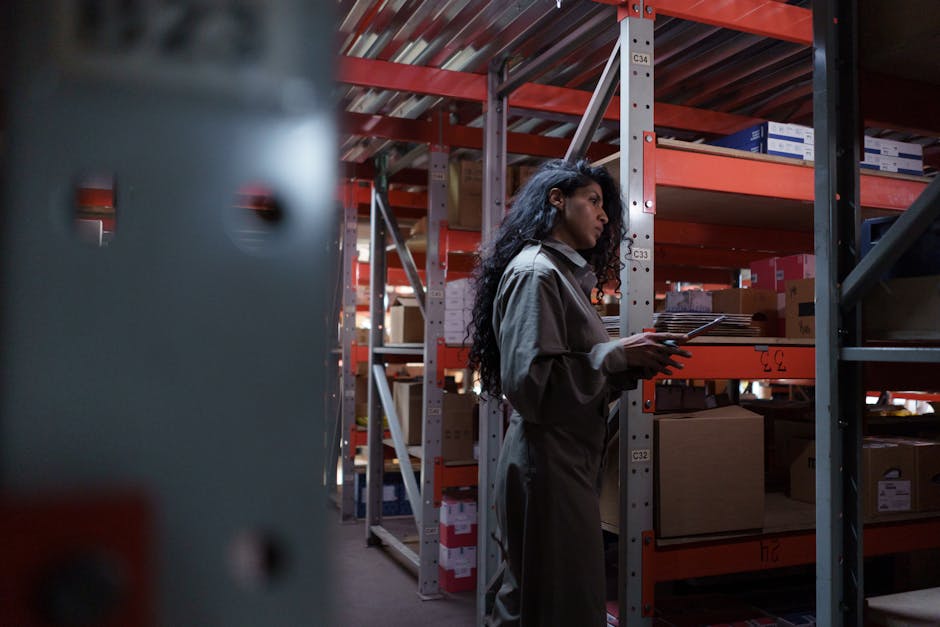
- ICE is building an 80,000-square-foot warehouse in Adelanto, California, without completing environmental impact reviews.
- The project’s proximity to residential neighborhoods raises concerns about air pollution and public health.
- ICE claims a ‘categorical exclusion’ exemption, but critics argue this is a loophole being misapplied to avoid community input.
- The High Desert region already has poor air quality, making unchecked development a significant concern.
- Environmental reviews are mandatory for projects that may affect the environment or public health, as per federal law.
In a move that has ignited controversy among environmental advocates and immigrant rights groups, U.S. Immigration and Customs Enforcement (ICE) is pressing forward with a warehouse construction project in Adelanto, California—despite failing to complete mandatory environmental impact reviews. The 80,000-square-foot facility, intended to store seized assets and equipment, would be built adjacent to residential neighborhoods where predominantly low-income, Latino families live. According to federal environmental laws, including the National Environmental Policy Act (NEPA), such projects must undergo rigorous assessments if they may significantly affect the environment or public health. Yet, ICE has proceeded under a controversial exemption claim, asserting the project qualifies for a ‘categorical exclusion’—a loophole critics argue is being misapplied to bypass transparency and community input. With air quality in the High Desert region already among the worst in the nation, residents fear increased truck traffic, pollution, and long-term health consequences from unchecked development.
Why Environmental Reviews Matter Now

The absence of a formal environmental review raises urgent questions about regulatory accountability, especially in communities historically burdened by industrial and governmental projects. Adelanto, located in San Bernardino County, lies within the Mojave Desert and has long been a site of federal and state detention infrastructure, including a now-closed ICE detention center operated by a private prison company. The area already contends with elevated levels of particulate matter due to windblown dust, industrial activity, and proximity to major freight corridors. According to the American Lung Association’s 2023 “State of the Air” report, the Inland Empire region, which includes Adelanto, ranks among the top three most ozone-polluted areas in the United States. Building a large-scale warehouse without assessing traffic patterns, emissions, or noise pollution could exacerbate these conditions. Environmental justice advocates argue that bypassing NEPA undermines democratic safeguards, particularly in marginalized communities with limited political influence. The timing is critical: as federal agencies face heightened scrutiny over equity in infrastructure spending, ICE’s actions appear to contradict Biden administration promises to prioritize environmental justice.
Project Details and Key Players

The warehouse project, first revealed in internal procurement documents obtained by Reuters, is set to be constructed on a 10-acre parcel owned by the federal government near the former Adelanto Detention Center. The facility would support ICE’s Enforcement and Removal Operations (ERO), storing vehicles, confiscated electronics, and evidence related to immigration enforcement activities. The General Services Administration (GSA), which manages federal real estate, is overseeing construction, with an initial budget estimated at $12 million. While GSA claims the project falls under a categorical exclusion for ‘minor construction,’ watchdog groups note that the warehouse’s size, location, and operational scope exceed typical thresholds for such exemptions. Local officials, including members of the Adelanto City Council, say they were not formally consulted. Community organizations such as Inland Coalition for Immigrant Justice and Center for Community Action and Environmental Justice have since filed public records requests and are preparing legal challenges to halt construction pending a full environmental impact statement.
Analysis: Regulatory Gaps and Legal Risks

Experts in environmental law suggest ICE may be stretching the boundaries of federal compliance. Categorical exclusions under NEPA are designed for low-impact projects like office renovations or minor repairs, not large industrial warehouses in environmentally sensitive zones. “Just because a project is ‘federal’ doesn’t mean it’s immune to environmental accountability,” said Dr. Sarah Fields, a policy analyst at the Environmental Justice Foundation. “Agencies can’t simply self-declare exclusions without justification—and that justification must be made public.” Past litigation, such as the 2021 case Center for Biological Diversity v. DHS, has ruled that federal agencies cannot bypass NEPA for projects with foreseeable environmental consequences. Moreover, the U.S. Environmental Protection Agency has repeatedly emphasized that environmental justice must be integrated into federal decision-making, particularly in overburdened communities. If challenged in court, ICE and GSA could face injunctions, project delays, or orders to conduct retroactive assessments—potentially costing millions and damaging public trust.
Who Stands to Be Affected

The implications of the warehouse expansion extend beyond environmental concerns. For Adelanto residents, many of whom are immigrants or have family members in mixed-status households, the project symbolizes the expansion of a deportation infrastructure they view as hostile and opaque. Increased ICE presence—both physical and symbolic—can erode community trust in local institutions. Public health experts also warn that diesel emissions from frequent truck traffic could elevate risks for asthma, cardiovascular disease, and premature death, particularly among children and the elderly. Schools and homes within a half-mile radius may bear the brunt of new pollution sources. Furthermore, if the project sets a precedent, other federal agencies might pursue similar exemptions in vulnerable areas, weakening environmental oversight nationwide. The lack of transparency also undermines efforts by the Biden administration to reform immigration enforcement practices and rebuild trust with immigrant communities.
Expert Perspectives
Legal scholars are divided on whether ICE’s approach is defensible. Some argue that agencies have discretion in applying NEPA exemptions, especially for national security-related operations. “ICE facilities often involve sensitive operations,” said Michael Reynolds, a former DHS counsel. “Some streamlining is necessary.” However, others counter that logistics warehouses are not inherently security-sensitive and that transparency should prevail. “This isn’t a border surveillance radar; it’s a storage facility,” noted Elena Rodriguez, an environmental law professor at UCLA. “There’s no legitimate reason to bypass community review. This is about expediency, not necessity.”
Looking ahead, the project’s fate may hinge on federal oversight and public pressure. The EPA’s Office of Inspector General and the Government Accountability Office could initiate inquiries if formal complaints are filed. Meanwhile, grassroots coalitions are mobilizing for public hearings and demanding a halt to construction until a full environmental review is completed. As the 2024 election cycle amplifies debates over immigration and environmental justice, the Adelanto warehouse may become a national flashpoint—one that tests whether federal agencies will be held accountable to the very communities they impact most.
Source: The New York Times