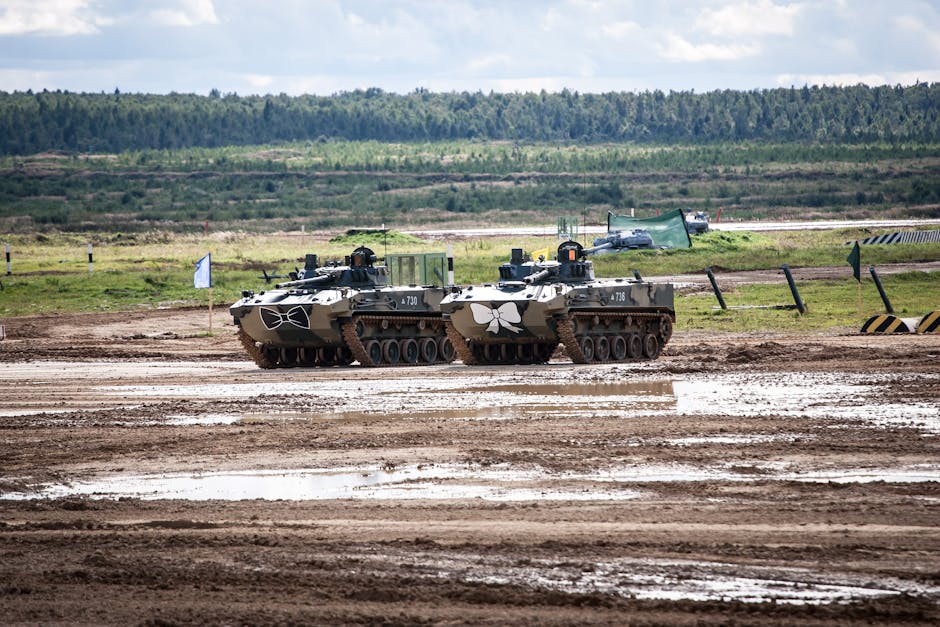
- Ukraine plans to deploy 25,000 ground robots to manage frontline logistics, reducing soldier risk.
- The robots will operate in convoys or individually, navigating using GPS and AI-assisted terrain recognition.
- The program aims to shift the burden of logistics from human soldiers to machines in Ukraine’s war zone.
- Human-led convoys have proven unsustainable, with over 2,300 casualties reported during resupply missions in 2023.
- Western allies are providing advanced technology to support Ukraine’s robotic logistics initiative.
Ukraine is preparing to deploy an unprecedented fleet of 25,000 ground robots to manage frontline logistics, marking one of the most ambitious military automation efforts in modern history. According to senior defense officials, the initiative aims to drastically reduce the number of soldiers exposed to high-risk supply missions in active combat zones. With over 500,000 troops mobilized since the start of Russia’s full-scale invasion, Ukraine faces severe strain on manpower, particularly in transporting ammunition, food, and medical supplies through mined and shelled terrain. These robots, ranging from small tracked carriers to larger autonomous vehicles, will operate in convoys or individually, navigating using GPS and AI-assisted terrain recognition. If fully implemented, the program could redefine how wars are fought, shifting the burden of logistics from human soldiers to machines in one of the world’s most active war zones.\n\n
A Strategic Shift in Wartime Logistics

\nUntil now, frontline resupply in Ukraine has relied heavily on human-led convoys, often at great cost. Soldiers risk ambushes, artillery strikes, and landmines every time they move supplies across the 1,000-kilometer front line. In 2023 alone, Ukrainian military sources reported over 2,300 casualties during resupply missions—an unsustainable toll. The decision to scale robotic logistics emerged from battlefield necessity and technological opportunity. With Western allies providing advanced components and Ukrainian engineers innovating rapidly, the country has become a de facto testing ground for military robotics. The 25,000-unit target, announced by Deputy Defense Minister Hanna Malyar, reflects a phased rollout over the next two to three years. The initial phase includes 3,000 domestically produced robots, many developed by startups like UkrRobotics and FrontLine Robotics, with plans to integrate foreign-made systems as funding and production capacity expand.\n\n
From Concept to Battlefield Deployment

\nThe robotic fleet will consist primarily of unmanned ground vehicles (UGVs) designed for rugged terrain and modular payloads. Models such as the Vortex-9 and the ScoutBot-3 are already undergoing field tests in the Kharkiv and Zaporizhzhia regions. These robots can carry up to 300 kilograms of supplies, move at speeds of 15 km/h, and operate up to 20 kilometers from their control points. Some are equipped with counter-drone jammers and basic armor, while others feature autonomous navigation systems trained on local topography. The Ukrainian military is also developing a centralized command interface to coordinate thousands of units simultaneously, reducing the need for individual operators. International support is growing: Poland has pledged funding for 500 units, while Canada and the UK are supplying navigation and AI components. Crucially, the robots are intended not for direct combat but for sustainment roles—transporting shells to artillery units, evacuating wounded soldiers, and delivering food and water to entrenched positions.\n\n
The Rise of Autonomous Warfare

\nThe surge in military robotics reflects broader trends in defense innovation driven by necessity and technological advancement. Ukraine’s robotics push is not isolated; it follows documented increases in drone warfare, electronic countermeasures, and AI-driven surveillance. According to a 2024 report by the Royal United Services Institute (RUSI), Ukraine has already used over 10,000 drones per month in various roles, creating a battlefield ecosystem where machines play an outsized role. The logistics robot initiative reduces exposure of personnel to danger while increasing operational tempo. Experts note that automating supply chains can compress response times—critical in a war of attrition. However, challenges remain: GPS jamming by Russian electronic warfare units, limited battery life in cold weather, and vulnerability to anti-drone systems. Still, the momentum is clear. As the BBC has reported, Ukraine’s defense sector is fast-tracking innovation cycles once reserved for peacetime research.\n\n
Global Implications of Robotic Resupply

\nThe implications extend far beyond Ukraine’s borders. If successful, this initiative could serve as a blueprint for future militaries seeking to reduce human risk in combat support roles. NATO officials have expressed interest in adapting similar programs, particularly for operations in high-threat environments. For smaller nations with limited manpower, robotic logistics could offer asymmetric advantages. Conversely, the proliferation of autonomous military systems raises ethical and strategic concerns. While these robots are not weaponized, their widespread deployment blurs the line between support and combat systems. There are also fears that reliance on AI and automation could lead to reduced human oversight in critical decisions. Moreover, the program highlights the growing role of civilian tech startups in national defense, shifting power from traditional defense contractors to agile, innovation-driven firms.\n\n
Expert Perspectives
\nMilitary analysts are divided on the long-term impact. Dr. Emily Thompson of King’s College London argues that “Ukraine’s push is a wartime necessity that could revolutionize military logistics,” comparing it to the introduction of motorized transport in World War I. Others, like retired U.S. Army Colonel James Reardon, caution that “autonomy is not a panacea—robots break down, get hacked, and fail in unpredictable ways.” Meanwhile, AI ethicists warn of a slippery slope toward fully autonomous combat units. As Reuters has noted, international regulations on military robotics remain underdeveloped, leaving a governance gap as technology outpaces policy.\n\n
Looking ahead, the success of Ukraine’s 25,000-robot plan will depend on funding, technical reliability, and battlefield adaptation. If proven effective, it may herald a new era in warfare where machines shoulder the burden of survival as much as offense. The world will be watching not just the battlefield, but the ethical and strategic precedents being set in real time.
Source: Militarytimes