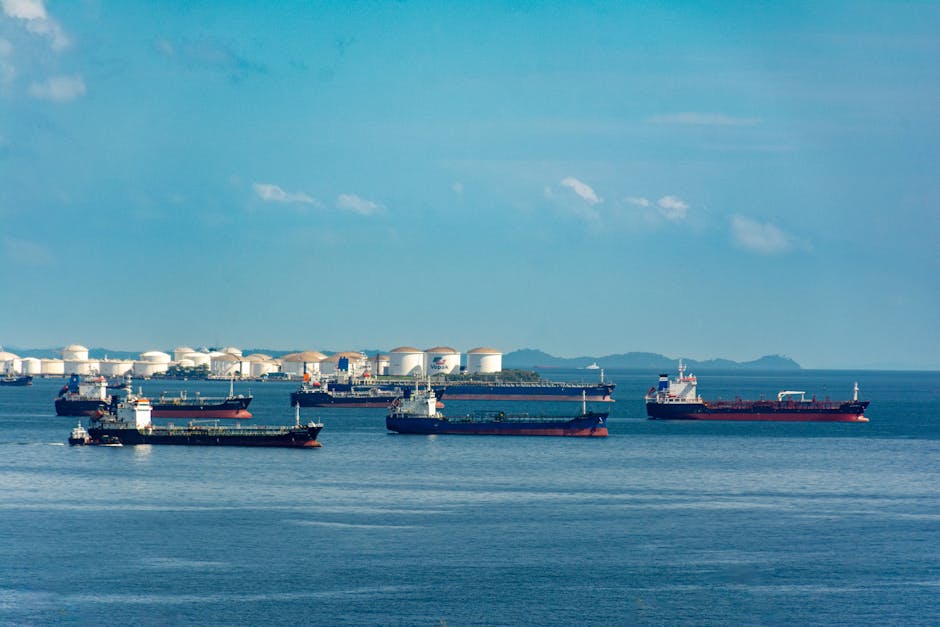
- Iran is conditioning the reopening of the Strait of Hormuz on the lifting of US sanctions and an end to what it describes as an economic war.
- The Strait of Hormuz is a global flashpoint due to its strategic importance as the only sea route from the Persian Gulf to the open ocean.
- Iran has repeatedly threatened to close the waterway during moments of heightened tension, leveraging its geographic advantage as a form of asymmetric power.
- US sanctions have severely curtailed Iran’s ability to export crude, cutting its oil sales by more than 80% since 2018.
- The current standoff between the US and Iran threatens to disrupt global energy markets and further inflame tensions between the two nations.
The Strait of Hormuz, through which nearly 21 million barrels of oil pass each day—accounting for about 30% of the world’s seaborne oil shipments—now hangs in the balance as Iran conditions its reopening on the lifting of U.S. sanctions and an end to what it describes as an economic war. Officials in Tehran have declared that the vital maritime chokepoint, already subject to periodic closures and military posturing, will remain restricted unless Washington lifts its naval blockade and sanctions regime targeting Iranian oil exports. This latest escalation threatens to disrupt global energy markets and further inflame tensions between Tehran and Western powers, particularly the United States, which has maintained a robust naval presence in the Persian Gulf to safeguard shipping lanes.
Why the Strait Is a Global Flashpoint

The strategic importance of the Strait of Hormuz cannot be overstated. Nestled between Iran and the Arabian Peninsula, this 21-mile-wide passage serves as the only sea route from the oil-rich Persian Gulf to the open ocean. Over the past decade, Iran has repeatedly threatened to close the waterway during moments of heightened tension, leveraging its geographic advantage as a form of asymmetric power. With U.S. sanctions severely curtailing Iran’s ability to export crude—cutting its oil sales by more than 80% since 2018—Tehran now frames its actions as a response to what it calls unlawful economic aggression. The current standoff arrives amid renewed instability in the Middle East, including ongoing conflicts in Yemen and Gaza, which have further strained regional diplomacy and amplified fears of broader military confrontation.
Iran’s Conditional Offer and U.S. Response

Iranian foreign ministry officials confirmed that Tehran is prepared to reopen full navigation through the Strait of Hormuz if the United States lifts its naval blockade and terminates sanctions that have crippled Iran’s economy. The offer, communicated through diplomatic backchannels and state media, stops short of a formal proposal but signals a willingness to de-escalate under strict conditions. Iran asserts that its actions are defensive, pointing to U.S. naval deployments and sanctions as acts of war that justify restrictions on maritime traffic. In contrast, U.S. Central Command maintains that its presence is purely protective, aimed at ensuring freedom of navigation. A Pentagon spokesperson stated that the U.S. “will not be blackmailed” and reaffirmed the right of all nations to traverse international waterways unimpeded, citing the United Nations Convention on the Law of the Sea.
Roots of the Crisis: Sanctions and Energy Leverage

The current crisis is rooted in the collapse of the 2015 Iran nuclear deal (JCPOA) after the U.S. unilaterally withdrew in 2018 and reimposed sweeping sanctions. These measures targeted Iran’s energy, banking, and shipping sectors, drastically reducing its oil exports from over 2 million barrels per day to less than 300,000. In response, Iran has gradually breached the JCPOA’s nuclear limits and increased its regional activities, including support for proxy forces in Iraq, Syria, and Yemen. Analysts argue that Tehran’s control over the Strait is both a tactical and symbolic move—using its geographic leverage to force renegotiation of sanctions. According to the Reuters, Iranian crude exports reached record lows in late 2023, intensifying economic pressure that has fueled domestic unrest and inflation exceeding 50% annually.
Global Energy and Military Implications

A sustained closure of the Strait of Hormuz would trigger immediate spikes in global oil prices, potentially exceeding $150 per barrel, according to estimates from the International Energy Agency. Major importers like China, India, Japan, and South Korea rely heavily on Gulf oil, making them vulnerable to supply disruptions. Insurers would likely raise premiums for vessels transiting the region, and alternative routes—such as overland pipelines—lack the capacity to compensate. Militarily, any attempt by Iran to forcibly block the strait could prompt a U.S.-led coalition response, risking direct conflict. The U.S. Fifth Fleet, based in Bahrain, has long been tasked with safeguarding the area, and recent deployments of destroyers and surveillance assets underscore Washington’s commitment to maintaining open passage.
Expert Perspectives
Analysts are divided on Iran’s long-term strategy. Some, like Dr. Sanam Vakil at Chatham House, argue that Tehran’s threats are primarily deterrent-based, designed to extract concessions without triggering war. Others, such as military strategist Michael Knights, warn that miscalculation is a real danger, especially if Iranian naval forces interfere with commercial shipping. Meanwhile, Gulf Cooperation Council states like Saudi Arabia and the UAE have called for de-escalation, fearing regional spillover. The European Union has urged renewed diplomacy, suggesting that a revived JCPOA could alleviate tensions. However, with U.S.-Iran relations at a near standstill and Iran’s nuclear program advancing, prospects for negotiation remain dim.
Looking ahead, the world will be watching not only for Iranian actions in the Strait but also for diplomatic signals from Washington and European capitals. A breakthrough in nuclear talks could pave the way for sanctions relief and maritime normalization. But absent such progress, the risk of a military incident—whether through accidental engagement or deliberate provocation—remains high. As energy markets tighten and geopolitical fault lines deepen, the fate of one of the world’s most critical waterways may hinge on a fragile balance of power and restraint.
Source: AP News