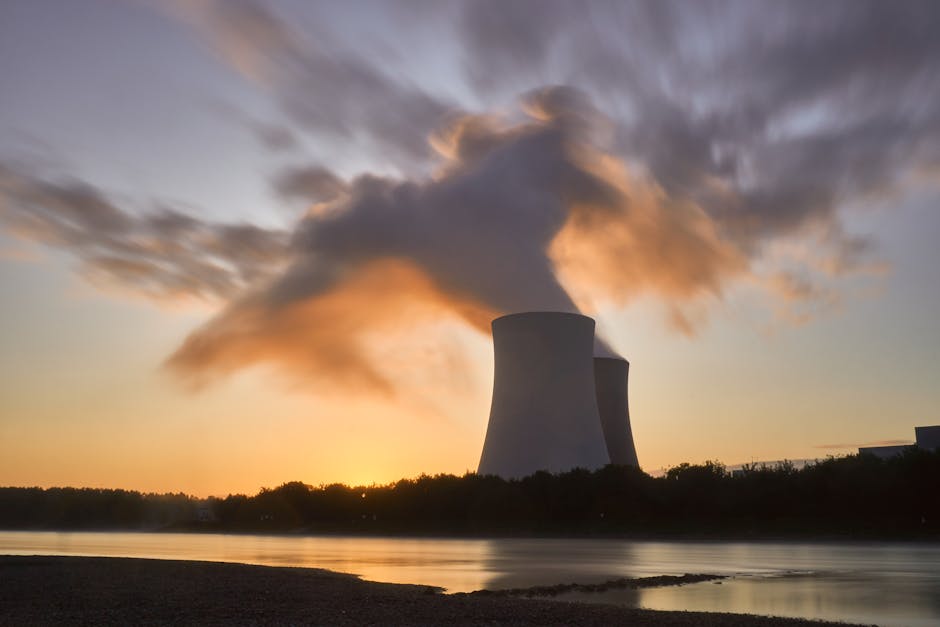
- The Chernobyl disaster released 400 times more radioactive material than the atomic bomb dropped on Hiroshima, contaminating a vast area.
- The Soviet Union evacuated over 115,000 people from nearby areas, including the entire city of Pripyat, following the disaster.
- The 2,600-square-kilometer Exclusion Zone around Chernobyl remains largely uninhabitable due to high levels of radiation.
- The disaster exposed the fragility of nuclear technology and the dangers of state secrecy in the face of public catastrophe.
- The RBMK reactor design flaws, combined with operator errors, led to the uncontrollable power surge that caused the explosion.
On April 26, 1986, Reactor No. 4 at the Chernobyl Nuclear Power Plant exploded during a poorly designed safety test, releasing an estimated 400 times more radioactive material than the atomic bomb dropped on Hiroshima. In the immediate aftermath, firefighters rushed to the scene unaware of the lethal radiation levels, with many dying within weeks. Within days, the Soviet Union evacuated over 115,000 people from nearby areas, including the entire city of Pripyat. Today, satellite imagery and declassified photographs reveal the eerie stillness of a landscape frozen in time—abandoned schools, overgrown playgrounds, and rusting infrastructure—all within a 2,600-square-kilometer Exclusion Zone that remains largely uninhabitable. The disaster not only exposed the fragility of nuclear technology but also the dangers of state secrecy in the face of public catastrophe.
The World’s Worst Nuclear Accident Unfolds

The Chernobyl disaster occurred during a late-night test aimed at simulating a power outage to assess whether the reactor’s turbines could provide enough energy to cool the core during a shutdown. A series of design flaws in the RBMK reactor, combined with operator errors and disabled safety systems, led to an uncontrollable power surge. At 1:23 a.m., the reactor exploded, blowing off a 2,000-ton steel lid and sending a plume of radioactive isotopes—especially iodine-131, cesium-137, and strontium-90—high into the atmosphere. The Soviet government initially concealed the scale of the disaster, but rising radiation levels detected in Sweden forced a belated acknowledgment. It wasn’t until April 28 that Soviet television aired a brief statement, confirming an accident had occurred. This delay in transparency not only endangered lives but also eroded public trust in state institutions across the Eastern Bloc and beyond.
Immediate Response and Mass Evacuation

In the days following the explosion, Soviet authorities mobilized over 600,000 emergency workers—known as “liquidators”—to contain the damage. Dressed in rudimentary protective gear, they bulldozed contaminated villages, buried radioactive debris, and constructed a massive concrete sarcophagus to entomb Reactor No. 4 by November 1986. Helicopters dropped thousands of tons of sand, lead, and boron to smother the burning core, often flying through highly radioactive clouds. Meanwhile, the evacuation of Pripyat, a model Soviet city built for plant workers, was conducted with alarming haste. Residents were told they would return in three days, but never did. Over time, the Exclusion Zone expanded to encompass areas in Ukraine, Belarus, and Russia, displacing more than 350,000 people. The human cost was immense: immediate casualties included 31 confirmed deaths among plant staff and emergency responders, though long-term estimates of radiation-related deaths range from 4,000 to over 60,000, depending on the methodology.
Environmental and Health Consequences

Radiation from Chernobyl spread across Europe, contaminating soil, water, and food supplies from Scandinavia to the Balkans. Belarus bore the brunt, with 70% of fallout landing on its territory. The World Health Organization (WHO) has linked the disaster to a significant increase in thyroid cancer, particularly among children exposed to iodine-131 through contaminated milk. Over 6,000 cases of thyroid cancer have been documented in the region, many treatable but lifelong in their impact. Ecosystems within the Exclusion Zone have shown both resilience and mutation—wolves and lynx thrive in the absence of humans, yet studies reveal elevated DNA damage in birds and small mammals. Cesium-137, with a half-life of 30 years, remains detectable in mushrooms, game, and soil across Central and Eastern Europe, prompting ongoing food monitoring in countries like Germany and Sweden.
Global Reassessment of Nuclear Power

Chernobyl fundamentally altered the trajectory of nuclear energy. In the West, public opposition surged, leading to construction delays, policy reversals, and the cancellation of planned reactors. Italy voted to phase out nuclear power entirely by 1990. The International Atomic Energy Agency (IAEA) strengthened safety protocols, and the Convention on Nuclear Safety was adopted in 1994 to promote transparency and regulatory cooperation. Yet, the debate persists: while some nations, like Germany, have committed to nuclear phaseouts, others—including China, India, and France—continue to expand their atomic energy programs, citing climate change and energy security. The 2011 Fukushima disaster in Japan echoed Chernobyl’s lessons, reinforcing the need for fail-safe designs and open crisis communication. As the world seeks low-carbon energy, Chernobyl serves as a sobering reminder of the risks inherent in nuclear technology.
Expert Perspectives
Experts remain divided on Chernobyl’s long-term implications. Some, like physicist David Bodansky, argue that nuclear power, despite its risks, remains one of the most reliable low-emission energy sources available. Others, such as environmental scientist Helen Caldicott, stress that the human and ecological toll of nuclear accidents is too high to justify continued reliance. The BBC has documented how misinformation and fear often outweigh scientific data in shaping public perception, complicating rational energy policy. Meanwhile, researchers at the World Health Organization continue to monitor affected populations, emphasizing the importance of long-term health surveillance in radiation-exposed regions.
As the 40th anniversary of the disaster approaches, Chernobyl has become a paradox: a site of death and decay, yet also of scientific study, dark tourism, and even rewilding. The New Safe Confinement, a €1.5 billion arch completed in 2016, now encases the aging sarcophagus, designed to last a century and allow for the eventual dismantling of the reactor. Yet, questions remain about the long-term stability of the site and the broader ethics of nuclear energy in an age of climate crisis. How do we balance energy needs with existential risks? And can transparency and technology prevent another Chernobyl? The answers may determine the future of power for generations to come.
Source: The New York Times