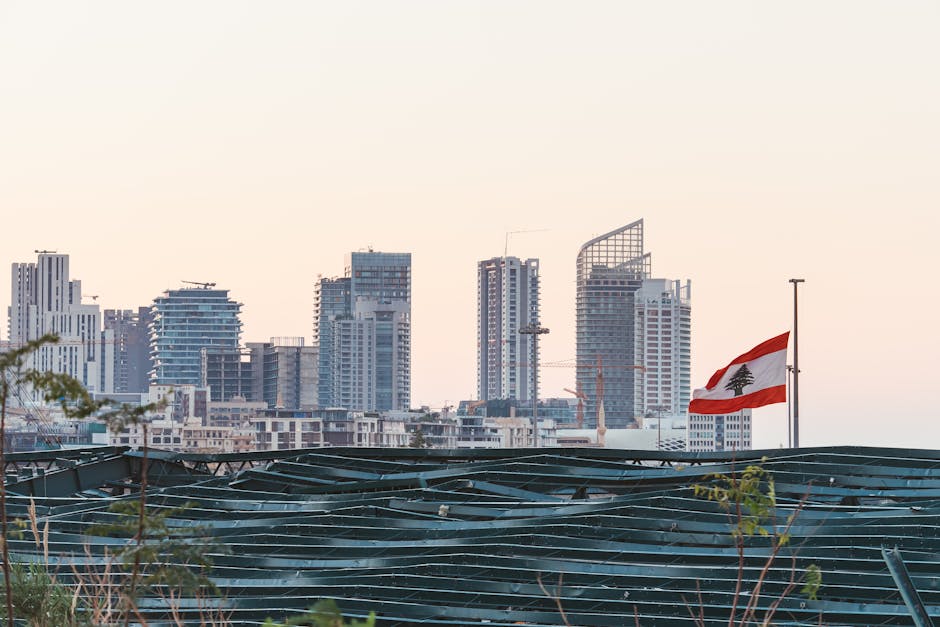
- Elie Saab maintains his Beirut atelier despite war, viewing it as a statement of identity and survival.
- Saab’s decision reflects a broader narrative of artistic continuity as resistance among Lebanon’s cultural figures.
- The Lebanese designer has remained in Beirut despite war, economic collapse, and the 2020 port explosion.
- Elie Saab’s name is synonymous with opulence, worn by Oscar winners, royalty, and first ladies.
- Saab’s loyalty to Lebanon is unwavering, despite the country’s history of war and instability.
On a quiet morning in September 2024, as air raid sirens echoed across Beirut and smoke rose from southern suburbs, Elie Saab’s atelier in the city’s Achrafieh district remained open. Seamstresses in white smocks moved quietly between mannequins draped in silk and tulle, hand-stitching gowns destined for red carpets in Cannes and Milan. Less than 15 miles away, Israeli airstrikes had struck Hezbollah positions, shaking windows in the design studio. Yet no one paused. For Saab, continuing to create haute couture amid war is not defiance for its own sake—it’s a statement of identity, survival, and unwavering loyalty to a country that has shaped his global legacy.
Roots in Ruin: The Making of a National Icon

Elie Saab’s journey began in 1964 in Damour, a coastal town south of Beirut that was destroyed during the Lebanese Civil War. At 18, he opened his first atelier in the capital, crafting bridal wear for Beirut’s elite. Over decades, his name became synonymous with opulence—worn by Oscar winners, royalty, and first ladies. But unlike many Lebanese creatives who relocated amid political instability, Saab kept his headquarters in Beirut, even as war, economic collapse, and the 2020 port explosion devastated the city. His decision is not merely sentimental; it reflects a broader narrative among Lebanon’s cultural figures who see artistic continuity as resistance. In an interview with BBC News, Saab stated, “To leave would be to admit defeat. This soil gave me my soul—how can I abandon it when it needs me most?”
Creating Couture in a Conflict Zone

Today, the Elie Saab brand operates globally, with boutiques from Paris to Dubai and collections showcased at Paris Haute Couture Week. Yet the heart of production remains in Beirut, where 120 artisans work in a climate of unpredictability. Power outages, fuel shortages, and internet disruptions complicate operations, but the team adapts—using generators, hand tools, and encrypted messaging to coordinate deliveries. In July 2024, as cross-border attacks intensified, Saab’s fall collection was finalized under blackout conditions, with final fittings conducted by candlelight. His son, Rami Saab, who now co-runs the business, told Reuters, “Every stitch is a refusal to let fear dictate our rhythm. The world sees war, but we are still here—designing, creating, living.”
Beauty as Resistance: The Cultural Frontline
Saab’s persistence taps into a long tradition of art as resistance in conflict zones. From Palestinian embroidery to Ukrainian symphonies during Russian bombardment, cultural expression often becomes a tool of sovereignty. In Lebanon, a nation fractured by sectarianism and foreign intervention, figures like Saab represent a rare unifying presence—apolitical yet deeply patriotic. His gowns, often inspired by Phoenician motifs and Mediterranean light, evoke a pre-war Lebanon of cosmopolitan elegance. Economically, the brand sustains dozens of skilled workers in a country where 44% of the population lives in poverty and unemployment exceeds 35%. Analysts at the American University of Beirut argue that preserving such institutions is vital not just for morale, but for retaining human capital. As Dr. Lara Deeb noted, “When creators stay, they anchor hope—and opportunity—in place.”
Global Glamour, Local Struggle
The contrast between Saab’s international acclaim and domestic hardship is stark. While a single couture gown can sell for over $100,000 and grace the Met Gala, many of his employees struggle to afford fuel for their generators or bread for their families. Yet few blame the designer for this disparity. Instead, his atelier is seen as a rare island of stability. Employees cite job security, medical support, and pride in their work as reasons to stay. The brand also partners with local silk producers in the Bekaa Valley, sustaining rural supply chains despite smuggling and inflation. Still, critics argue that such efforts, while commendable, cannot compensate for systemic failures—corruption, lack of governance, and regional proxy warfare—that continue to plague Lebanon. The fashion house’s resilience, they say, should not obscure the state’s collapse.
Expert Perspectives
Cultural historian Samir Khalaf describes Saab’s stance as “aesthetic patriotism”—a way of claiming national dignity through craftsmanship. “In the absence of functional institutions, beauty becomes a form of civic duty,” he says. Conversely, political analyst Dina Matar warns against romanticizing individual resilience. “One designer cannot rebuild a nation,” she argues. “Symbolism is powerful, but it must be matched with structural change.” Both agree, however, that figures like Saab play a crucial role in shaping Lebanon’s external image—a country often reduced to headlines about violence and debt.
Looking ahead, the future remains uncertain. As regional tensions persist and Lebanon teeters on further economic freefall, even stalwart institutions face existential threats. Yet Saab shows no sign of retreat. His upcoming haute couture collection, themed “Phoenix,” is rumored to incorporate fabric woven from recycled debris from the port explosion. Whether this act of artistic rebirth will inspire broader renewal—or remain a solitary beacon in the dark—depends not just on creators, but on the world’s willingness to see Lebanon not only as a site of conflict, but as a cradle of enduring culture.
Source: The New York Times