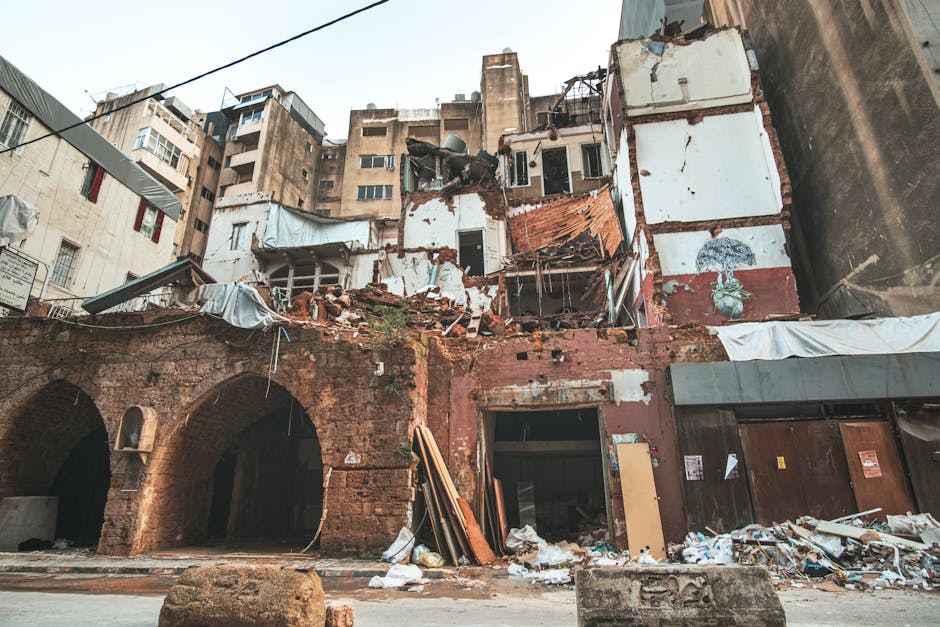
- Over 60 people have been killed and over 100,000 displaced in Lebanon and northern Israel since 2023.
- The conflict between Israel and Hezbollah has escalated into the deadliest cross-border attacks in nearly two decades.
- Israeli airstrikes targeted Hezbollah command centers in southern Beirut and the Bekaa Valley.
- Hezbollah has launched over 120 rockets into northern Israel, damaging civilian infrastructure.
- Regional analysts fear the conflict could spiral into a full-scale war involving Iran and multiple proxy forces.
More than 60 people have been killed and over 100,000 displaced in Lebanon and northern Israel since the latest wave of cross-border attacks began in October 2023, marking the deadliest escalation between Israel and Hezbollah in nearly two decades. In the past 48 hours alone, Israeli airstrikes targeted Hezbollah command centers in southern Beirut and the Bekaa Valley, while the Iran-backed militant group launched over 120 rockets into northern Israel, damaging civilian infrastructure and forcing schools and businesses to shut down. The rapid exchange of fire has pushed both sides to the brink, with Israeli Defense Forces (IDF) placing armored divisions on high alert near the border and Hezbollah warning of ‘unprecedented retaliation’ if attacks continue. Regional analysts now fear the conflict could spiral into a full-scale war that draws in Iran, Israel, and multiple proxy forces across the Middle East.
From Border Skirmishes to Regional Flashpoint

What began as retaliatory strikes following the October 7 Hamas-led attack on Israel has evolved into a sustained and increasingly dangerous confrontation between Israel and Hezbollah, a Shiite militant group backed by Iran and armed with an estimated 150,000 rockets. While Israel has focused much of its military campaign on Gaza, Hezbollah has exploited the chaos to launch near-daily attacks on Israeli military outposts, aiming to open a second front and pressure Israel to halt operations in Gaza. Israel has responded with increasingly precise airstrikes, targeting Hezbollah’s entrenched tunnel networks and rocket depots. Despite repeated calls from the United Nations and the U.S. State Department for de-escalation, diplomatic channels have failed to gain traction. The absence of direct negotiations between Washington and Tehran—whose influence over Hezbollah is pivotal—has left a vacuum in crisis management, allowing violence to escalate unchecked.
Key Players and Escalation Timeline

The current cycle of violence traces back to October 8, 2023, when Hezbollah initiated rocket and drone attacks on Israeli positions in the Golan Heights and Upper Galilee, claiming solidarity with Hamas. Israel retaliated with artillery barrages and drone strikes, killing several Hezbollah operatives, including senior commander Ali Karaki in a targeted airstrike in January 2024—a move widely seen as a strategic escalation. Since then, both sides have intensified operations: Hezbollah has deployed long-range Fadi-1 rockets capable of reaching Haifa, while Israel has conducted over 1,200 airstrikes across southern Lebanon, according to data from the Armed Conflict Location & Event Data Project (ACLED). Lebanese civilians have borne the brunt, with entire villages evacuated and critical infrastructure, including power stations and roads, severely damaged. Meanwhile, Iran has maintained a position of strategic ambiguity, publicly urging restraint while continuing to supply Hezbollah with advanced weaponry through Syria.
Analysis: The Calculus Behind the Conflict
Military analysts suggest that Hezbollah’s actions are less about immediate territorial gains and more about strategic deterrence and regional positioning. By keeping Israel engaged on a second front, Hezbollah aims to weaken Israel’s military capacity in Gaza and bolster Iran’s influence in the broader axis of resistance—a coalition of anti-Israel and anti-U.S. groups stretching from Tehran to Beirut. Data from Reuters conflict mapping shows a 300% increase in cross-border incidents since October 2023 compared to the previous year. On the Israeli side, the government faces domestic pressure to respond forcefully, especially as displaced residents in northern Israel demand action. However, a full-scale invasion of southern Lebanon—last seen in the 2006 war—carries significant risks, including high casualties and potential involvement of Iranian forces. The lack of U.S.-Iran diplomacy further undermines conflict resolution, as both nations remain at odds over nuclear enrichment and regional security guarantees.
Human and Geopolitical Repercussions
The ongoing hostilities have devastated Lebanon’s fragile economy and infrastructure, already crippled by years of political instability and financial collapse. The United Nations reports that over 85,000 people have fled southern Lebanon, overwhelming shelters and straining humanitarian resources. Israeli communities near the border, including Kiryat Shmona and Safed, remain under constant threat, with many residents living in bomb shelters for months. Beyond the immediate human toll, the conflict risks drawing in other regional actors: Syria could become a launchpad for Iranian-backed militias, while Jordan and Egypt fear destabilization that could spill across their borders. Economically, oil prices have fluctuated in response to escalation fears, with Brent crude spiking above $90 per barrel in early 2024. The longer the violence persists, the greater the likelihood of miscalculation leading to uncontrollable escalation.
Expert Perspectives
Security experts are divided on the path forward. Dr. Dania Thafer of the Gulf International Forum argues that ‘Hezbollah is acting as Iran’s proxy to bleed Israel strategically, not to trigger all-out war.’ In contrast, former Israeli intelligence officer Brig. Gen. (ret.) Michael Herzog warns that ‘the current trajectory makes a major war not just possible, but probable within months.’ Meanwhile, diplomatic analysts at the Carnegie Middle East Center stress the urgent need for backchannel negotiations, noting that ‘the absence of U.S.-Iran talks removes the only viable mechanism for de-escalation.’ Without such dialogue, even minor incidents could cascade into broader conflict.
As the situation remains volatile, the international community faces a narrowing window to prevent full-scale war. Key indicators to watch include the movement of Iranian military advisors in Syria, Hezbollah’s use of precision-guided missiles, and any shift in U.S. policy toward resuming nuclear talks with Iran. With ceasefire proposals stalled at the UN Security Council due to geopolitical divisions, the onus may fall on regional mediators like Qatar or Oman. Yet, without mutual incentives to disengage, the cycle of retaliation appears set to continue—raising the grim possibility that the current clashes are not a prelude to war, but the opening phase of one.
Source: The New York Times